The red folder in my office had Brittany’s name on the tab, and it had been there for years. I’d kept it in the bottom drawer, under old tax files, because I thought having it ready was the same as having a plan. The night of her eighteenth birthday, I drove away with the Mercedes key in my hand and told myself I was only taking back a car. By three in the morning, I was reading the papers about the house where my daughter thought her father had finally made a home.
I’m Jocelyn. I live and work in Chicago, and I own a small real estate company. I’ve been divorced from Travis since Brittany was four. I’m not telling this because I think I handled everything right. I’m telling it because I let a bad decision turn into a whole way of living, and by the time I admitted that, my daughter had already started believing the version of me her father told her.
The birthday party had been on my calendar for months. I rented a private room outside the city, ordered lemon cake from the bakery Brittany liked as a kid, and put framed photographs along the entrance wall. I don’t know why I remember the piece of tape behind the kindergarten picture. I’d used a strip from my desk drawer to keep the frame from tipping forward. She had a red backpack then, too big for her, and she’d held my hand so tightly that I had to pry one finger loose to get her to wave at the teacher.
I’d put the graduation portrait at the end of the display. That one was recent, and I’d paid for it because she liked the photographer’s studio. She looked grown up in it. I remember adjusting the frame twice, though it was already straight. I was proud of her, and I was also nervous about turning eighteen. I thought that was normal. I didn’t know I’d be standing in front of all those pictures later that night, trying to make sense of the fact that a birthday party can feel like a public vote.
Travis had been around more for the last two years. Before that, he missed plenty. He’d call late, cancel weekends, send a gift card instead of showing up. I didn’t stop Brittany from seeing him. I believed she deserved to make up her own mind, and honestly, I didn’t want her to grow up thinking I had taken her father away. That was my excuse, anyway. It let me avoid saying the harder thing, which was that I wanted him to be a better dad than he’d been.
Then an article about my company ran in a local business paper. Travis called the same week. He said he was proud of me. He said he’d been thinking about how much he’d missed. I should have asked why he’d waited until my name was in print. I didn’t. I told myself people could change. Brittany was sixteen, old enough to notice the difference between a missed call and an in-person visit, and she lit up when he started showing up.
He didn’t make her do homework or ask why she was late. He didn’t tell her that spending money she didn’t have was a bad idea. I did those things, so I became the parent who made everything difficult. Travis said I worried too much. Vanessa, his wife, told Brittany she was “mature enough to make her own choices.” I heard that phrase often enough that I started doubting my own rules. I was strict about her car, her grades, and where she slept. I was also quick to remind her how much I paid for. I knew that wasn’t fair. I did it anyway.
The house came into the picture before the article. Travis was behind on his mortgage, and the bank had sent a notice. Brittany had started spending weekends there and loved having a room that was hers. She liked the school district, the back patio, the way Vanessa kept snacks in a basket by the stairs. She didn’t know the bank had sent the notice. I’d already made my own bad decision by then. I bought the house through my company so it wouldn’t go into foreclosure, and I let Travis stay there under a written agreement.
He signed every page. The deed was in my company’s name. The agreement said Travis could live there while Brittany was in high school, and that I’d review the arrangement after her eighteenth birthday. It also said Brittany could stay in the house if she wanted while she attended college, with a separate agreement. I told myself I was buying her time, not buying her affection. But I never told her the truth about the deed. I let her believe her father had saved the house himself.
That silence had a price. I paid the property taxes. I covered repairs when the water heater went and when the roof needed work. I even paid one late utility bill after Travis said he was short that month. I told myself it was for Brittany. It was partly for her. It was also because I wanted to keep the peace, and because I didn’t want her to see her father fail again. I had become very good at making a choice and calling it protection.
By the time I got to the party, the room was full. A jazz trio was playing near the windows. Brittany stood by the stage in a silver dress, laughing with Travis and Vanessa. I saw the three of them together and felt glad for her. Then I felt guilty for feeling glad, which is the sort of thing I did back then. I’d made it so I couldn’t just watch my daughter have a good time without checking whether I was being replaced.
I carried a small black gift box to the stage before the cake. Inside was the key to a Mercedes she’d admired for months. I’d planned it out carefully. The car was titled to my company, and I’d explained to Brittany that she needed to finish a driving course and sign an insurance agreement before I transferred ownership. I had offered to cover the insurance while she was in college. I thought the rules were sensible. I also knew, if I’m honest, I liked being the person who could give her something that big.
When she opened the box, her face changed. For a few seconds, she looked like my kid again. She hugged me. Her friends went to the windows to see the car, and the room clapped. I thought, there, maybe we’re all right. It didn’t last long. Travis leaned toward her and said something I couldn’t hear. She looked down at the key, then at me, and the smile was gone.
Brittany picked up a glass of sparkling cider and went to the microphone. She thanked her friends and Vanessa for helping her choose her dress. She thanked Travis for being there when it mattered. Then she looked straight at me and said I’d made her feel like another project. She said I used money to control her and kept track of every sacrifice. I wanted to tell her I’d also sat up with her through the flu, learned which songs she could sleep through, and made three different breakfasts when she went through that phase where everything tasted wrong. None of that would have helped. I had been keeping score, even when I pretended I wasn’t.
Then she said she wished she’d never been my daughter.
I could hear the photographer lower his camera. My brother Evan started to stand, and his wife Kendra touched his sleeve. Travis put a hand on Brittany’s shoulder. He didn’t tell her to take it back. I was waiting for my face to do something dramatic, I guess. It didn’t. I felt my ears get hot, and I noticed that I was holding the empty box so tightly the cardboard had bent.
I walked over and held out my hand. Brittany gripped the key. I said I needed it back. She reminded me that I’d given it to her. I explained that the title hadn’t changed and the insurance forms weren’t signed. Travis stepped closer and told me not to embarrass her. I looked at him and said the car was still mine. That was all I had in me to say.
Brittany laughed under her breath and said there were always conditions with me. Maybe she was right about that. I told her I’d heard what she said about not wanting me involved in her life or her choices. I said I’d respect that. She stared at me, like she was waiting for the anger or the speech she’d prepared herself to fight. I took the key from her hand and left.
Outside, the valet brought the car around. A white envelope with Brittany’s name was on the passenger seat. It held the insurance agreement and a note I’d written by hand. I’d planned to give it to her later, somewhere quiet. The note said, “No mistake you ever make matters more to me than knowing you made it home safely.” I put the envelope in the glove box. I couldn’t bring myself to throw it out. I couldn’t bring myself to bring it inside, either.
My phone started lighting up before I reached the expressway. First Brittany asked me to bring the car back. Then she said I couldn’t take away her birthday present because I was upset. Then Travis texted that his lawyer would be in touch. I knew he didn’t have a lawyer on standby. I knew he wanted me to call him, so he could tell me I was making things worse. I turned the phone facedown.
I was angry, and I was ashamed of how much I wanted her to call again. I was also relieved to be alone in the car, which made me feel mean. I kept driving downtown. At a red light, I looked over and saw the empty passenger seat. The envelope was still in the glove box. That little note had sounded loving when I wrote it. Now it felt like a thing I’d prepared for a daughter who was still willing to hear it.
My office was almost empty when I got there. I unlocked the bottom drawer and pulled out the red folder. The deed was in front. Travis’s agreement was behind it, with his signature on every page. I laid out the trust papers, the vehicle title, and the old letters I’d kept. The letters were from Brittany when she was little. She used to write her name in large uneven letters and leave notes on my desk. One said I was the best mom in the world. I didn’t read it. I didn’t think I could handle that kind of evidence.
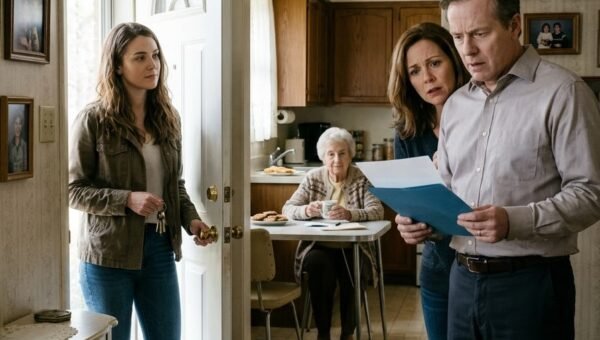
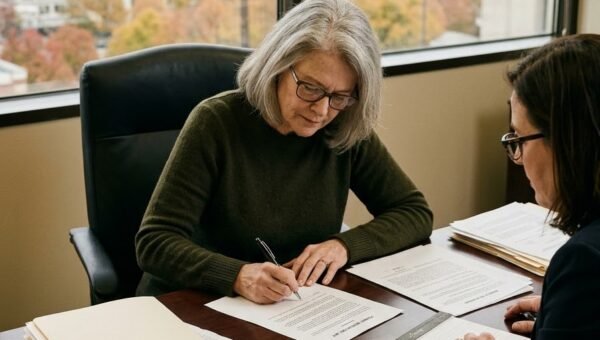
I called Kendra. She was my sister-in-law and my attorney, and she had prepared the trust years earlier. She came in at 3:07 with my brother Evan and three coffees. Mine had too much cream. She always remembered that. I said I wanted to stop protecting Travis from the agreement he signed. Kendra didn’t tell me what I wanted to hear. She asked if I was doing this to punish him, or because the birthday had forced me to look at the paperwork again. I said I didn’t know. She told me not to send anything until I could tell the difference.
That was fair. I’d spent years being the quiet one and then acting surprised when people thought my silence meant yes. I had let Travis keep the house because I thought taking it away would hurt Brittany. I had also let him call it his house when I knew it wasn’t. If Brittany found out from someone else, she’d have every reason to think I’d been waiting for a chance to use the truth against her. I sat there while the office coffee went cold and tried to find a clean choice. There wasn’t one.
Kendra read the agreement again. The house arrangement ended for Travis on Brittany’s eighteenth birthday, but he had ninety days to move out after written notice. Brittany’s option to stay in the house was separate. The agreement didn’t give Travis ownership or let him transfer the property. It was plain language. I’d paid an attorney to make sure of that, then buried the folder so I wouldn’t have to face what it meant.
“Do you want to keep the house for Brittany?” Kendra asked.
I said yes. Then I added that I didn’t want to keep paying Travis’s bills. I could hear how neat that sounded, and it wasn’t neat at all. I wanted my daughter to have a home she could come back to. I didn’t want to keep making her father look dependable with my money. Both things were true. Kendra said we could send the notice, make a written offer for Brittany to stay under a new agreement, and keep the trust separate from Travis. She also said I should tell Brittany before the formal papers arrived.
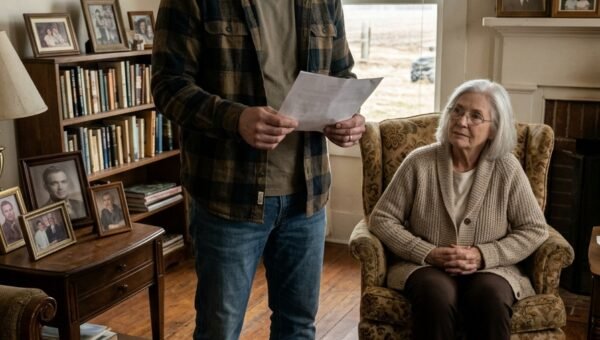
I called Brittany that morning. She didn’t answer. I left one message saying I needed to talk about the house and that it wasn’t an emergency, but it was important. She wrote back two hours later: “Dad says there’s nothing to discuss.” I stared at that text for a while. I could have sent a picture of the deed. I could have told her the house was mine and watched her decide whether to believe me. I didn’t. I said the papers would explain the arrangement and that she could call me when she wanted the rest from me.
The formal notice went to Travis by certified mail. Kendra sent it, not me. The letter gave him ninety days and offered Brittany the chance to remain in the house under a new lease while she attended school. I didn’t ask for money from her. I also didn’t promise that the house would be hers someday. I’d learned the hard way that a promise can become a leash if the person offering it expects gratitude in return.
Travis called the next day. He said I was using a legal trick to take his home. I reminded him that his own signature was on the agreement. He said he’d only signed because I told him it was temporary. I said it had been temporary. Then he told me Brittany would never forgive me. I didn’t argue. Maybe she wouldn’t. For years, I’d used the possibility of her anger to avoid doing what I knew I had to do. I wasn’t going to use it to make the call go longer.
That afternoon, Brittany called. She didn’t ask about the car. She asked if I’d bought her father’s house. I told her I’d bought it through my company when he was behind on the mortgage, and that I’d kept it out of foreclosure. I told her I should have said so sooner. She asked if I’d been pretending all this time. I said I hadn’t told her the truth, which wasn’t the same as pretending, but I knew it could feel the same from where she stood. I didn’t defend myself after that.
She said Travis told her I was trying to take the house because she’d rejected me. I told her that wasn’t why I’d bought it, and it wasn’t why I was sending the notice. The agreement had always required me to review the arrangement when she turned eighteen. I should have told her before the party, maybe before the whole year. I said that plainly. I didn’t ask her to forgive me. She got quiet, then said she needed time.
I told her she could have it. I meant it, but I also knew I was saying the one thing that might keep the door open. That’s the trouble with being a mother. I couldn’t always tell where love stopped and my need to be wanted began. I had made a lot of choices for Brittany while saying I was doing them for her. I didn’t want to make one more and call it selfless.
The car stayed at my office. A few days later, Brittany asked if I could send the insurance agreement so she could read it. I mailed it to her with the note still inside the envelope. I didn’t add anything. I didn’t ask if she’d read the handwritten line. She didn’t text me about it.
The next ninety days were not dramatic. They were forms, phone calls, and a home inspection. Travis argued about the repair costs. Kendra answered him. Vanessa called once and said I’d embarrassed everyone at the party. I said I was sorry the night had ended that way, but I wasn’t sorry I’d taken back the key. It was the only answer I had that didn’t turn into a whole old fight.
On the last week of the notice period, I drove past the house. I don’t know why. I’d been there plenty of times when Brittany was younger, but I hadn’t gone by since the birthday. A moving truck was parked out front. Travis was carrying a box, and Vanessa was holding the screen door open. I kept driving. I didn’t wave. I didn’t stop to watch.
Brittany stayed. We signed the new agreement through Kendra, and I made sure the terms were clear. She could live there while she attended college, and she’d be responsible for the ordinary bills. The house stayed in my company’s name. That part was hard for her. It was hard for me, too, because the easy thing would have been to give it to her and hope that turned into a family again. I didn’t do that. A deed shouldn’t be a substitute for a conversation.
She still didn’t call me Mom when she called. For a while, she only emailed about the house and the car paperwork. I kept my replies short. I didn’t remind her about the party or ask her to take back what she said. I didn’t want to make her apology another thing she owed me. Maybe that was the right choice. Maybe it was one more way I avoided asking for what I wanted.
The car went back into the company’s name and was sold. I put the money in Brittany’s trust, where it would be there for school or a car later, if she wanted it. I didn’t tell her I’d done that until the trust statement came. By then, the house was quiet again, and her father was gone from it. The school pictures were still on the wall in my office, including the one with the red backpack.
I sometimes think about the envelope in the Mercedes. I should have given it to her before the party, not tucked it away until the moment had passed. I should have told her about the house years earlier. I should have asked Travis to be honest with her instead of letting my money cover the part where he wasn’t. I did none of those things. I made a good life possible for my daughter and then expected the good part to be obvious.
The last time Brittany came by the house, she was picking up a box of old books. She stayed less than twenty minutes. At the door, she said the house was strange without her dad’s things in it. I told her I understood. She looked toward the living room, then back at me. She didn’t hug me, and I didn’t reach for her. Before she left, she asked if I’d kept the lemon cake recipe from her sixth birthday. I said I had it somewhere. She nodded and went out to her car.
I found the recipe card later, tucked behind the trust papers. There was a smear of flour across the corner and my old handwriting on the back: “Brittany’s cake.” I put it in the red folder, not because a folder could fix anything, but because I didn’t want to lose it. The house had been mine on paper long before I admitted what that meant. The cake card still had both our names on it. I left it there.