Why did my son need me to leave a house he didn’t own? I still ask myself that, even though I know the answer has nothing to do with the house. Greg had my suitcase by the front door and a nursing-home form on top of it. A bed number was circled in red. He was standing at my kitchen table with a pen in his hand, waiting for me to sign over a place I had lived in since 1974. I didn’t sign. I sipped my tea, which had gone cold, and said, “First ask the man who owns this house.”
Greg laughed. He said the only man who’d ever owned it was buried two years ago. He meant Walter, his father, my husband. Walter had built the house with his own hands, though he wasn’t a carpenter by trade. He worked at the county shop and came home smelling of oil, then spent evenings putting up the walls one board at a time. I used to keep his screws in an old coffee tin because he never put them back where he found them. That tin is gone now. I mention it because I remember small things better than I remember the exact day I stopped believing Greg would help me.
Walter died after a short illness, and Greg and Dana came to stay three days after the funeral. Greg said I shouldn’t be alone, and I wanted to hear that as love. I did hear it as love. They had a moving truck, two children’s beds, and more boxes than I could count, though the children stayed with Dana’s sister for most of that first week. By the end of the month, Greg and Dana were sleeping in my bedroom, and I was on a folding bed in the sewing room. I told myself it was temporary. I said the word so often it started to sound like a plan.
I was eighty-one then. I could still drive, still cook, still get to my doctor without help. But I was lonely, and Greg knew that. He’d bring me groceries sometimes, or sit at the kitchen table while I made coffee, and those little things made me let the bigger things go. I didn’t ask when they were moving back out. I didn’t ask why Dana started calling it “our house” at Thanksgiving. I was afraid if I made a fuss, the visits would stop altogether. That is an ugly thing to admit about my own son, but it’s true.
Then Greg began taking three hundred dollars from my pension each month. He said it was my share of the bills. I could have asked to see the bills. I didn’t. I’d fold the cash into an envelope and hand it over, and he’d say, “Everybody pays their share, Mom.” His new truck was often parked in my driveway, clean enough that I could see the sun in the hood. I noticed that every time. I still handed him the money. I wasn’t a prisoner in my own home, and I knew it, but I acted like asking for a receipt would make me a bad mother.
That March, I got up after midnight for a glass of water. I heard Greg talking on the phone in the kitchen, so I stopped at the sewing-room door. He said I was eighty-one and the house was worth four hundred thousand dollars, easy. He said they’d list it the day I was out. Then the person on the other end said something I couldn’t hear, and Greg laughed. I wish I could tell you I heard every word clearly. I didn’t. I heard enough. The laugh was what stayed with me, the way it went on after he’d said my age like it was a problem to be cleared away.
I went back to the folding bed and lay there with my eyes open. I did not cry. By morning, I had made up my mind, though I didn’t yet know how I was going to do it. The next few days I watched Greg leave for work, watched Dana go to her sister’s, and kept thinking that if I waited until I felt brave, I’d never move. I had Walter’s old leather folder in a drawer. I had the deed and my checkbook. So I called a taxi and told the driver to take me to a lawyer’s office I’d heard about through church.
Dana asked where I’d been when I got home. I said there’d been a luncheon at church. That wasn’t even a full lie. There had been a luncheon, just not that day. Dana looked at her phone and said, “Nobody misses you here anyway.” I put my coat away and didn’t answer. I’m not proud of that. I could have told her then. I could have asked her to say it again while looking at me. Instead, I went to the kitchen and checked the flour tin where I’d hidden the lawyer’s card. I had started keeping things there because nobody in my family ever baked.
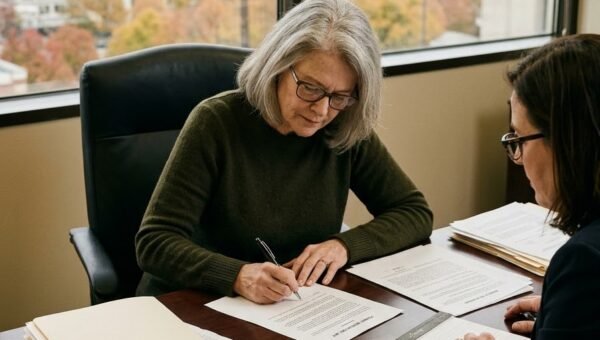
The lawyer’s name was Mr. Alvarez. I don’t remember what kind of tea he offered me, only that the cup had a little chip near the handle and I kept turning the chip away from my thumb. He asked if I understood what selling the house meant. I said yes. He asked if I had anyone I trusted to help, and I said there was one person, though I hadn’t spoken to her properly in years. He checked the deed, asked me the same question two more ways, and wrote down the answers. I was embarrassed by that. I also knew why he was doing it.
I wanted Greg to know I’d heard him. That was part of it, and I don’t want to dress it up as some noble plan. But I also wanted to stay in my home without asking permission from the person who was waiting for me to leave. Mr. Alvarez explained a sale with a written right for me to live there for the rest of my life. I’d pay one dollar a year in rent. The new owner would be responsible for the property, but couldn’t make me move. I asked him to explain it again. Then I asked him to write it down. I had spent too many years nodding when I wasn’t sure.
The new owner was Emily, Greg’s daughter from his first marriage. She was grown by then, but I still thought of her as the little girl who used to put stickers on my kitchen calendar. Greg stopped calling her after he married Dana. He told people Emily had gone wild and disappeared. She hadn’t disappeared. She sent me a birthday card every year. Some years it had a picture of a bird or a flower on the front, and a note inside that said, “I’m thinking of you, Grandma.” I kept every card in a drawer. I didn’t call her back often enough. I was ashamed of that too.
Emily had sat with me at Walter’s funeral, in the back row. Greg told her she wasn’t welcome in the front with the family. I should have said something right there. Instead I held her hand under the program and let Greg decide where she belonged. She didn’t make a scene. She was wearing a dark blue sweater, and the cuff had come loose on one side. That little thread kept catching on my sleeve. It’s strange what I remember. I should remember the hymn. I remember the thread.
In March, after I met with Mr. Alvarez, I called her from his office. I was scared enough that I had to read the number off the card twice. Emily answered on the fourth ring. I told her what Greg had said about the house. There was a quiet stretch, and then I heard her crying. Not loud. Just enough that I knew she was trying to speak. She said, “I thought you didn’t want me around.” I said I was sorry. It was too small an answer. I knew it when I said it.
She told me she couldn’t take the house from me. I explained the deal. She asked if I was sure I wanted her name on the deed. I said I was sure I wanted my right to stay written down where Greg couldn’t talk over it. She asked if I wanted her to think about it overnight. I said yes, and I hung up before I could change my mind. The next morning, she called back and said she’d do it. She didn’t ask what she would get from it. That was the first kindness I’d let myself count in a long time.
We signed the papers that week. The sale was legal, recorded at the county office, and checked by a second lawyer Emily chose. The deed named Emily as owner, and the other paper protected my right to live there until I died. I sold the house for less than the market value because I wanted a quick, clean sale and a clear record. The number was still enough for my own savings and to settle what I owed. I didn’t take money from Emily. She didn’t take money from me. When it was done, she hugged me so long Mr. Alvarez turned away and pretended to look for something in a file cabinet.
I didn’t tell Greg. I know how that sounds. He was my son, but he’d already been talking about listing my home without asking me. I kept the new deed copy folded inside the flour tin. I also kept the lawyer’s number there. The tin was beside the stove, where it had been for years. Greg and Dana had never once cooked anything in my kitchen, so I thought it was a safe place. I had a mean little thought when I put the papers there. I thought, let them find it when they’re hungry.
For the next six months, I lived in the house with them and acted like nothing had changed. That was hard in a stupid, ordinary way. Dana picked paint colors for “the buyers” while I sat at the table sorting coupons. Greg brought a realtor named Chuck to look through the rooms. I poured coffee for both men because I didn’t know what else to do with my hands. Greg walked Chuck from the front room to the kitchen, then toward the sewing room. He pointed at my folding bed and joked that the old lady came with the house for now, but not for long. Chuck laughed. I refilled his cup.
I could have stopped the whole thing right there. I could have taken the deed out of the flour tin and put it on the table. I didn’t. I wanted Greg to show me what he thought he could get away with, and I wanted the truth to be said where I could hear it. That may not have been wise. It may just have been anger wearing a sensible coat. Either way, I let him keep planning. I listened to Dana talk about paint and watched Greg make calls from the same kitchen where I’d heard him laughing about my age.
The suitcase appeared the night before Greg told me to sign. He carried it from the sewing room and set it by the front door. There were two dresses inside, one pair of shoes, and my pill case. I hadn’t packed it. He had. The nursing-home form sat on top with the bed number circled in red. I asked him who had chosen the place. He said it was close and had a good staff. I asked if he’d visited. He said he’d looked online. I didn’t raise my voice. I was trying to hear whether any part of him knew what he was doing.
The next morning he slid a transfer paper and pen across the kitchen table. Dana stood beside the counter with her arms crossed. I read the first page, then the second. My name was typed under the words “current owner.” I knew I was not the current owner, but I wanted them to say what they were asking. Greg said the realtor was coming Friday at ten and the van at noon. “Sign it before that, and this stays friendly.” Dana hit her cup on the counter hard enough to splash coffee. She said Walter was dead and I was confused. Then she said confused old women got locked rooms, not sewing rooms.
I looked at the suitcase, then at the paper. I had spent most of my life trying to make things easier for Greg. I let him call the bedroom his, let him take money without showing me a bill, and stayed quiet when he pushed Emily out of the family. I had thought silence was the same as keeping peace. It wasn’t. Sometimes it only gave the person with the louder voice more room. I set my tea down. “First ask the man who owns this house,” I said. Greg laughed again, but this time it sounded short and forced.
Friday came. Greg put on his good shirt. Dana set cookies on my mother’s china plate, the one she only used when company came. The transfer paper stayed on the table, with the pen placed across it. My suitcase was still by the door. I had washed the cup I used that morning and set it upside down in the rack. I don’t know why I remember that. Maybe because everything else in the house felt like it belonged to someone else.
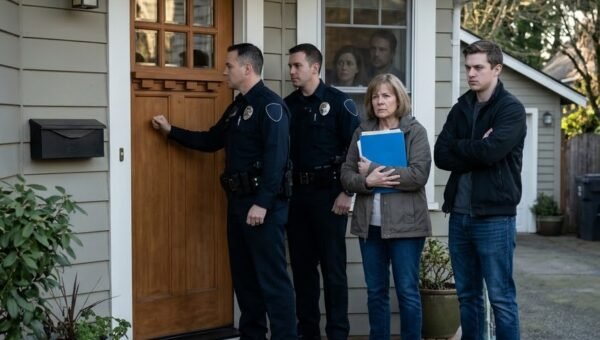
At ten, the doorbell rang. Greg smoothed the front of his shirt and opened the door. It wasn’t Chuck. A young woman stood on the porch holding a blue folder and a ring of keys. Greg looked at her and said, “You.” Dana came up behind him and asked who she was. Greg said, “Nobody. She doesn’t come in this house.” Emily stepped past him into the hallway. “That’s strange,” she said. “I have the keys.”
I had not seen her in person since the funeral. She looked older, of course. So did I. She put the folder down on the table, beside the paper Greg wanted me to sign. Greg grabbed it and opened it with hands that were moving too fast. I watched his eyes go over the deed once, then go back to the owner line. Dana asked him what it said. He didn’t answer her. He read the name again, softer this time, like he was hoping he’d got it wrong.
“Read the name out loud, Dad,” Emily said. “Read it to Dana.” Greg said it wasn’t possible. He asked how she could afford it. Emily told him she hadn’t bought the house with money from me. I corrected her, because even then I was worried somebody would misunderstand the deal. “I sold it to you,” I said. “And I kept the right to stay.” I turned the other paper toward them. My name was there, and so was the agreement that gave me a home for the rest of my life.
Greg asked why I’d do this to him. I said I hadn’t done anything to him. I’d sold my house to his daughter, legally, with my own lawyer there. Dana said they’d been living in the house for two years. Emily said that didn’t make them owners. She wasn’t shouting. I noticed her thumb rubbing the edge of the folder, back and forth, the way she used to rub the seam on her sleeve when she was little. I wanted to reach for her hand. I didn’t, because Greg was still there and I didn’t want to make her stand between us again.
The realtor didn’t come that day. Emily had called Chuck before she arrived and told him the house had been sold. Greg started to say the sale could be challenged. I told him Mr. Alvarez had already checked the papers, and he could talk to him if he wanted. The suitcase stayed by the door until after lunch. Then I took it back to the sewing room and unpacked the dresses. I put the pill case in the drawer where I always kept it. The nursing-home form went into the trash, but I didn’t tear it up. I just folded it once and dropped it in.
Emily and I sat at the kitchen table while Greg and Dana went into the bedroom to talk. She asked if I had meant to surprise him. I said no. I meant to make sure I could stay. I didn’t say that I also wanted him to feel, for once, what it was like to hear a decision had been made without him. Emily didn’t ask me to explain. She said she’d come by the next morning, and I said she didn’t have to. She said, “I know. I want to.” I let that be enough for the day.
Mr. Alvarez sent Greg and Dana a formal notice about moving out. I didn’t handle the papers myself. That was Emily’s job as the owner, and she wanted to do it by the book. They had time to find another place. They complained that I had betrayed them, and Greg said he’d never expected his own mother to choose Emily over him. I told him I hadn’t chosen between my children. I’d chosen not to be put out of my own home. He didn’t answer. I still wish I’d said it sooner, before he’d made his daughter feel like a stranger.
They moved out a few weeks later. Greg carried boxes to the truck without looking at me. Dana said the house had been wasted on an old woman. I don’t think she meant for me to hear, but I did. I could have answered her. I was tired by then, and I had no good words left. Emily stood beside me in the doorway while the last box went out. She didn’t touch my shoulder or tell me everything would be fine. She just stayed there until the truck pulled away.
Greg hasn’t called since he left. Emily calls every Sunday, sometimes from her car before she goes into the grocery store. We are learning each other again, which is not the same as getting back what we lost. She still sends me birthday cards, even though now she can hand them to me herself. I told her she could stop. She said, “I know.” Then she brought one anyway. It cost us something, this choice. I know that. There is a place at the table where I still expect Greg to sit.
I keep the deed in the flour tin, though I don’t need to hide it now. Emily is the owner, and I have my right to stay, written down and recorded. I bake more often these days, mostly because Emily likes the little cinnamon biscuits Walter used to ask for. The flour tin gets empty, then full again. When I reach in for the deed, I can feel the paper folded against the bottom. And beside it, in the drawer, are all those birthday cards I should have answered sooner.