The produce aisle at the Kroger on Gallatin Pike is where my son told me I wasn’t welcome at Thanksgiving.
I had a squash in one hand and my phone in the other. The message said, “Mom, I know you just got us the house, but Lauren’s dad doesn’t want you at Thanksgiving.” I read it twice because the first time I thought I’d missed a word that would make it less ugly.
I’d paid $350,000 for that house. The closing had been less than a week earlier.
I stood there with the squash getting cold against my palm while carts went by. I started typing a long reply, deleted it, then typed another. I wanted to remind Evan that he’d asked me to help. I wanted to ask why Lauren’s dad got to decide who sat at the table. I wanted to say plenty of things that would have made the rest of the family pick sides.
I sent, “Okay.”
That was all.
My name’s Carol Bennett. I’m sixty-two, retired from a county office, and I’ve always been the person in my family who can make a problem go away by writing a check.
I’m not proud of that. I liked being needed. I told myself it was love, and sometimes it was. The trouble was, I couldn’t tell when it stopped being love and started being the only reason my phone rang.
I left my cart beside the apples and went home.
The squash was still in my hand when I got there. I set it on the counter and didn’t put it away. I don’t know why I remember that. Maybe because it was the only thing I’d bought for a dinner I wasn’t invited to.
Evan had been my one child, and I’d spent most of his life trying to make sure he never felt the money problems I’d grown up with.
I worked, saved, and did without. When he was little, I bought the off-brand cereal and told him I liked it better. I drove an old sedan long after the air conditioner started making a sound like a fork in a garbage disposal.
He was good company then. He’d sit at my kitchen table after school and tell me every detail of whatever had happened, even the parts I didn’t need. He still called me when he met Lauren. He still asked my opinion on things. I thought we were close.
Then there was the wedding.
Lauren wanted a reception at a place with a view of the river, and her parents said they couldn’t cover the whole cost.
Evan called me from the parking lot at work. He said they were short $28,000 and asked if I could help. I told him I’d think about it, then called back before the end of the day and said yes.
I remember the relief in his voice. “You saved us, Mom.”
I heard that as gratitude. Maybe it was. I didn’t hear the rest, which was that he’d learned I would come through if he asked the right way.
The requests kept coming. His transmission went, so I paid $12,400 toward another car. Their power bill got behind, so I sent money. When they moved into a small apartment, I covered furniture because Lauren didn’t want used things. I told myself these were one-time helps. There were enough one-time helps to fill a folder.
Evan would say, “I hate asking.”
I’d say, “Don’t worry about it.”
I never asked when he’d pay me back. Most of it wasn’t a loan. I knew that, even while I kept adding it up in my head.
The house was different. Or I told myself it was.
Evan and Lauren had been renting for years. They wanted a place with a yard, somewhere they could have kids someday, but prices had gone up and their savings hadn’t. Evan called me one Sunday night and said they’d found a house north of town. The seller wanted a quick close. They couldn’t get a mortgage they liked.
He didn’t ask for $350,000 at first. He asked if I’d consider helping with the down payment. I went to see the house with them. There was a narrow kitchen and a little patch of grass out back. Lauren pointed to a spot where she said a table would fit. Evan looked at me like he was trying not to ask.
I could afford to buy it outright. That’s what I told myself. I’d saved for years, and what was money for if not family?
I did have one hesitation. The attorney who’d helped me with my will said not to hand over the deed before we talked through the tax and estate details. So I bought the house in my name and signed a written occupancy agreement. It said Evan and Lauren could live there without rent while we sorted out the next steps. It also explained that they didn’t own it and that I could end the arrangement with sixty days’ notice.
Evan knew that. He said it was fine. “We’ll get all the paperwork cleaned up after the holidays,” he told me.
That was the plan, or the story I chose to hear. I pictured the deed in his name eventually. I pictured a family Christmas in the house and grandchildren running around the back yard. Lauren had started calling it “our place” before we even closed. I didn’t correct her. I wanted to believe that one day it would be true.
At the closing, I signed the purchase papers and handed Evan a key. It was an ordinary brass key on a plain ring. He spun it once around his finger and said, “We’re really home.”
I was happy for him. I was also proud of myself. Those two things can sit together, apparently.
The first few days after closing were busy. I paid a plumber, ordered a washer and dryer, and sent the last bit of money for the furniture they’d picked. Lauren texted me a picture of the living room with two boxes still on the floor. She wrote, “It’s coming together.”
Evan called to thank me. “We couldn’t have done this without you.”
I saved the message. I didn’t know I was saving it as evidence against my own bad judgment.
Then the Thanksgiving text came.
After I sent “Okay,” Evan didn’t call right away. I finished the day at home, though I barely ate. The squash sat on the counter until I put it in the fridge the next morning. I kept checking my phone. I felt foolish doing it, but I checked anyway.
At 8:16 that night, he finally called.
“Mom, are you mad?”
I said I wasn’t sure what he expected me to feel.
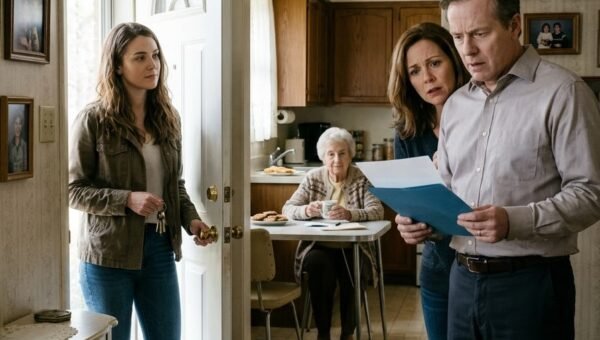
He sighed. He said Lauren’s dad, Greg, had invited them to dinner. Greg had a bigger house, and Lauren’s sister and her kids would be there. Greg had apparently said he didn’t want tension at the table.
“What tension?” I asked.
Evan said Greg thought I’d been too involved in their choices. I’d questioned the house location. I’d asked about their budget. I’d paid for things and then brought them up later.
I wanted to tell him I had not brought them up. Not unless he called saying they couldn’t make a payment. But I also knew I’d sometimes used my help as a way to keep a say in things. I’d asked too many questions after handing them money. I’d shown up with cleaning supplies and started scrubbing before Lauren had asked. There were times I’d made a gift feel like a job she had to pass.
So I said, “You’re saying I can’t come to the house I bought?”
He went quiet.
“Mom, don’t make it sound like that.”
“It is what it sounds like.”
He said Greg was just trying to keep the peace. He said I could come by another day. He said it wasn’t about the house.
I asked if he had told Greg that the house was in my name.
Evan paused. Then he said, “It’s ours. We’re going to take care of the paperwork.”
That was the first time I heard how he’d been describing it to other people.
I didn’t yell. I said I needed to get off the phone. Then I sat at the kitchen table for a while with my hands flat on the wood. I was still trying to find a way to make his answer acceptable. That was an old habit.
The next morning, I found the closing folder in the hall closet. I’d put it there because I didn’t want paperwork scattered around while Evan and Lauren were moving. The folder had a coffee ring on one corner from the day I signed everything. I had made a point of telling myself the agreement was just temporary.
I read it again. It was plain. Evan and Lauren had permission to live there. The deed was not theirs. Either side could end the arrangement under the terms we’d signed.
I had understood those words when I signed them. I’d just hoped I wouldn’t need them.
I called Rachel Sterling, the attorney who’d handled the purchase. I told her what happened. She didn’t tell me to punish my son. She didn’t say I could take back all the money I’d given over the years. She asked me to send the agreement and the text.
Then she said, “Those other payments were gifts unless you have a clear loan agreement. Don’t pretend they’re debts now.”
That stung because it was fair.
I had spent the previous night adding up years of checks and transfers. The total was $184,612, not counting the house. Wedding, car, bills, furniture, and the little amounts that didn’t seem like much when I sent them. I’d written the number on a notepad, then sat looking at it like the number might tell me what my son owed me.
Rachel wouldn’t let me use it that way. She said I could make choices about my property, but I couldn’t turn old gifts into loans because I was hurt now.
I said, “I know.”
I did know. I just didn’t want to.
Rachel explained that the house was still mine. There was no legal trick in that. The deed said what it said, and the occupancy agreement gave Evan and Lauren sixty days after written notice. If they refused to leave, she’d have to handle it through the proper process. She couldn’t promise the outcome or make it fast.
I asked if I was being cruel.
She said, “That’s not a legal question.”
I almost laughed. It came out as a cough.
For two days, I did nothing. I waited to see if Evan would call and apologize, or if Lauren would send me some version of what she’d said after Greg made his rule. I did not get either. I got a text from Evan asking if I could send him the $1,700 they were short on a cabinet order.
I read it at my kitchen table, right beside the folder.
I didn’t answer for an hour. Then I typed, “No. I’m not paying for anything else.”
He called within five minutes.
“Mom, we’re talking about the house,” he said. “This is separate.”
“It isn’t separate when I’m the one paying for all of it.”
He said the cabinet order was already placed. I said he could cancel it. He got quiet, then told me I was making a big decision over Thanksgiving dinner.
That was when I noticed how small he was making the thing he’d done. One dinner. One awkward moment. Not the years I’d spent saying yes, and not the fact that he’d let another man decide whether I could enter a house I owned.
I said, “You told me not to come.”
He said, “I didn’t want to hurt you.”
I believed him, in a way. I think he wanted to avoid a fight with Greg more than he wanted to stand up for me. He wasn’t some monster. He was a grown man who’d gotten used to letting other people handle the uncomfortable parts, and I had helped him get that way.
I told him I would speak to Rachel before I made any decision about the house. He said, “Don’t do this.”
I said I needed to go.
The call ended badly. Not with shouting. With me saying goodbye and him not answering.
The following Monday, I met Rachel at her office. I brought the folder and the text printed out. I’d printed it because looking at it on the phone kept making me want to answer it again. Rachel read the signed agreement and confirmed that a notice ending their permission to stay was an option.
She also asked me what I wanted.
I said I wanted Evan to understand what he’d done. She said that wasn’t something a notice could make happen.
I said I wanted my house back.
That was closer to the truth.
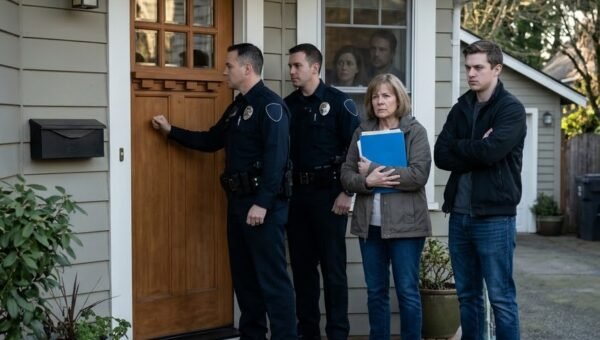
Rachel drafted the notice. She made sure the dates were right and told me not to threaten things I couldn’t legally do. I had to accept that this wasn’t a magic button. Evan could fight it. Lauren could refuse to sign anything. I might have to go through a formal court process.
I signed the notice anyway.
The next morning I mailed it certified to the house. Rachel also sent Evan a copy at work. I didn’t send a demand for the old money. That number stayed on my notepad, where it belonged. It was what I’d chosen to give, and I couldn’t make it anything else just because I finally had a boundary.
Evan called when the delivery notice came through. He sounded less angry than scared.
“Are you really making us move?”
I told him I was ending the agreement. I said the notice gave them sixty days.
He said they had nowhere else lined up. I told him I knew that was hard. Then I told him I wasn’t changing my mind.
He asked if I was doing this because of Greg.
I said, “I’m doing it because you told me I wasn’t welcome.”
He said, “I didn’t say that.”
I had the text open in front of me. I didn’t read it back to him. He knew what he’d written.
The next few weeks were quiet. Too quiet, in the way a house gets when everyone is waiting for somebody else to speak first. I didn’t visit. I stopped sending money. I learned not to answer a message just because it came from Evan.
Lauren called once. She said she was sorry about Thanksgiving, then explained that Greg had been helping them with childcare plans and she didn’t want him upset. I asked if she’d wanted me there.
She said, “I did. I just didn’t want a scene.”
I said I understood, though I didn’t fully. She sounded tired. I didn’t blame her for wanting her father’s approval, but I also didn’t tell her that made what she’d done all right.
We ended the call politely. It was the kind of call that leaves both people with the sense they failed to say the real thing.
Evan came to my house ten days later. He stood on the porch holding the brass key I’d given him. I let him in, and we sat at the kitchen table. He said he wanted to talk about the notice.
He’d found a rental, but the rent was more than they’d been paying. He asked if I would give them another six months. He said the house had become home. He said he hadn’t meant to make me feel like I didn’t belong.
I listened. I didn’t interrupt. I was proud of myself for that, though maybe I shouldn’t be proud of doing the bare minimum.
Then he said Greg had told him I’d already given them the house. Evan had repeated that to people, including Lauren’s family. He said he’d been embarrassed to admit he didn’t own it yet.
I asked if that was why he’d kept calling it theirs.
He rubbed his thumb over the key. “I thought it was going to be.”
I said, “It might have been. We were supposed to talk about it.”
He looked down at the table. The old me wanted to save him from the feeling in his face. The old me would have offered six more months before he even finished asking.
I didn’t.
I told him the notice stood. I also told him I wasn’t asking for the $184,612. He looked up at that number.
“I never said you were,” he said.
“No,” I told him. “You didn’t.”
That was the closest I came to admitting how much I’d been keeping score. He didn’t need me to say it. He already knew I’d been using my help to stay close, even if I hadn’t meant to.
He left with the key. I didn’t ask him to give it back yet.
They signed a move-out agreement through Rachel’s office. It set the date, confirmed they wouldn’t claim ownership, and gave them time to get their things moved without turning it into a court fight. Evan asked if I’d help with the rental deposit. I said no.
He didn’t argue. That was new.
The moving day was wet and cold, the kind of Nashville morning when the cardboard boxes start to soften at the bottom. I went over once to check the house after they’d finished. I saw the bare patch in the yard where they’d hoped to put a table. Lauren had left a small bag of screws on the kitchen counter. I remembered buying the table they’d never got around to putting together.
Evan was there with the key in his hand. He said he was sorry.
I told him I heard him.
I didn’t say it was all right. It wasn’t, not yet. I also didn’t tell him I’d never help him again. I don’t know what I’ll do if he calls me in five years with a real emergency. I only know I can’t keep paying for his comfort while pretending mine doesn’t count.
Rachel listed the house after the move. It sold a few months later. The money went back into my account. I didn’t feel triumphant when I signed the sale papers. I felt tired, and a little ashamed that I’d needed a Thanksgiving text to understand how far things had gone.
Evan and Lauren found a smaller rental. They didn’t invite me for Thanksgiving that year. I spent it with my neighbor and brought the squash I’d bought that afternoon. It turned out fine with too much butter.
Evan called me the next week. We talked about ordinary things for twelve minutes. I didn’t ask for an apology, and he didn’t offer one. It wasn’t a repaired relationship, but it was a start.
The brass key came back in an envelope a few days later. The deed stayed in my name. I set the key beside the closing folder, where I could see both of them.