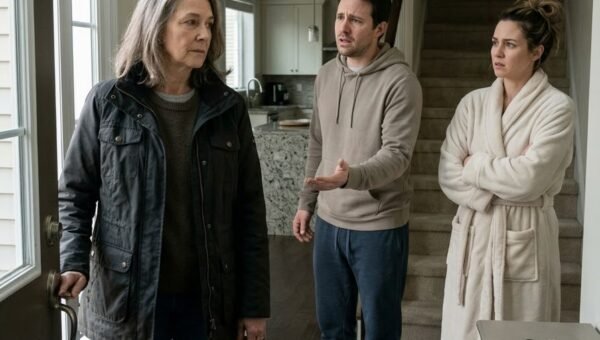
“Dependable isn’t the same as needed,” Preston said, and my father put his resignation on the boardroom table.
I was at the far end of that table with a folder of Brazos Hangar schedules in my hands. Dad’s boots had pale Texas dust on them. Preston’s cufflinks caught the ceiling light when he leaned back. I remember that because I was looking anywhere but at Dad.
I’m Nolan Vance. I’m thirty-one, and I work in project controls at Ironclad Civil Constructors. My father, Wesley, is fifty-nine. Most people call him Chief, even though he hasn’t worn a Navy uniform in years. I’d heard him tell stories about the Seabees since I was little, but that morning was the first time I watched him decide he was done being useful to people who kept taking his work.
I should say up front that I didn’t stand up for him. I had reasons, most of them selfish.
The meeting was supposed to be about the Brazos Hangar contract, an $18 million job Dad had spent eleven months getting ready. I was there to answer questions about schedule and cost reports. Gordon Mercer, our operations president, was there with his son Preston, who’d joined Ironclad fourteen months earlier with an MBA and a title that kept getting longer.
Harlan Boone, Ironclad’s founder and CEO, sat at the head of the table. Seven executives were in the room. I was the only one who still had dust on his clothes, though I wasn’t the only one who’d been on a jobsite that week.
Gordon said Preston should run Brazos because the project would move twice as fast under his direction. Dad, he said, had been thorough, but thorough wasn’t what the company needed now.
Gordon used a warm voice. That almost made it worse.
Preston gave me a quick look, then looked past me at Dad. He’d never run a major concrete pour. He’d never had to tell a crew at 4:30 in the morning that the delivery was late and the schedule was wrong. But he was Gordon’s son, and he’d started talking about the job as if he’d built it himself.
Harlan didn’t say anything.
That was the part I noticed most. I’d expected him to push back. Dad had worked for Ironclad fourteen years, and before that he’d spent twenty-six in the Navy Seabees. He’d led crews in places where a missed safety check meant more than a bad quarterly report. I figured Harlan would at least ask why Gordon was making the change.
He just sat there with his hands folded.
Dad stood. The chair legs scraped the floor, and my folder slipped against my thumb. He said Gordon could give Preston the job, but he wasn’t going to put his name on work he couldn’t stand behind. Then he set the envelope down.
Preston smiled. Gordon looked pleased.
I looked at Harlan. He studied the envelope, then said Preston would take operational lead that morning. He told Dad to bring the letter to his office in fifteen minutes.
Dad picked up his hard hat and walked out.
I stayed in that room. That’s the part I still have trouble saying without making an excuse. I stayed because my job was tied to the project. I stayed because my own mortgage was behind by two payments. I stayed because I thought if I kept my head down, I could keep the reports clean and maybe keep my place there.
I’d like to say I didn’t understand what was happening. I did.
Dad had been at Ironclad long enough that people used his judgment without always giving him credit for it. When a shipment of electrical equipment got stranded in Arkansas during the supply problems in 2022, he hooked a trailer to his own truck and drove to Little Rock. He loaded the crates himself and got them to the site before Monday.
That weekend saved the company $2.8 million in contract penalties. Harlan shook Dad’s hand in the equipment yard. Gordon later called it fortunate timing during a presentation.
I heard the phrase and laughed along with everybody else. Not out loud, maybe, but I didn’t say anything. It’s a small thing to remember, but there it is.
Dad never bragged about the drive. He’d mention it only if someone asked why he didn’t trust a delivery estimate. He kept a folded copy of the original trucking schedule in a kitchen drawer at home. I used to think it was just one of the papers he couldn’t bring himself to throw out.
When Preston first joined Ironclad, I was glad to have another person in project controls who could help with the new software. He was twenty-five, smart enough, and quick with a spreadsheet. He also knew how to talk in meetings without getting stuck on details.
The first time he met Dad, he shook his hand and called him dependable. Dad gave him a polite nod. I saw the corner of his mouth tighten, but I didn’t think much of it. Dad has always been careful about looking touchy.
Within a month, Preston was changing Dad’s technical notes. I saw one draft where he’d crossed out the required thirty-five-day curing period for a concrete section and replaced it with a line about meeting the schedule milestone. Dad sent it back with a note about soil conditions and load limits. Preston sent it back again, shortened.
I was the one who copied the change into the schedule system.
Dad called me from the site that afternoon. He asked if I’d seen the revised sheet. I said I had. He asked why the curing period had been shortened in the system. I told him Preston said the engineering team was reviewing it.
That wasn’t true. I knew it wasn’t true while I said it.
Dad didn’t yell. He just said, “Don’t enter anything you can’t point to later.”
I told him I understood. Then I went back to my desk and left the revised date where it was until the next morning.
That’s how I got pulled into it. Not with some big lie. Just one date, one excuse, one more day of hoping the problem would go away without making me choose a side.
A few weeks later, I was with Dad during a safety briefing for the ironworkers. He was explaining updated rigging procedures when Preston came over with an iced coffee and said he’d already covered the streamlined checks with the crew leads.
Nobody knew where to look. Mateo Delgado, Dad’s foreman, glanced at me. I could tell he was waiting for me to say something, because I’d been there when Preston’s note went out and I knew it didn’t replace the full safety check.
I didn’t say anything. Dad gave Mateo a small shake of the head and kept talking.
That afternoon, I asked Dad why he hadn’t called Preston out. He said he was trying not to make every mistake into a fight. He wanted the crew to keep working, and he didn’t want Gordon to turn a safety disagreement into a story about an older guy who couldn’t adapt.
I said maybe he was being too patient. He looked at me for a second and asked if I’d put that in writing. I said no.
He nodded, like he’d expected that answer. Then he put his hard hat back in his truck.
A few days after that, a crane operator told Dad that Preston had been calling the old management practices outdated. Preston had also tried to approve a load plan, then had to look up the calculation on his phone. I heard about it from Mateo, who was mad enough to bang a wrench against the tool trailer door.
I told Mateo not to repeat it around the office. I said it would only make things harder for Dad.
I meant it. I also didn’t want my name attached to a complaint.
Dad started keeping copies of everything. Technical drafts. Email chains. Approval notes. I knew because he asked me to print some of them. I didn’t ask why. He kept the pages in a plain folder, and I saw him tuck it beside his truck’s registration papers.
The jobsite had a smell I still connect to those weeks: hot dust and the sour coffee from the machine by the trailer. The coffee was always a little burnt, no matter who made it. I don’t know why I remember that. Maybe because every bad conversation seemed to happen near that machine.
Last month, Gordon sent out a quarterly report on Brazos. I saw the summary before Dad did. Eleven months of his work were listed as “field logistics consultation provided upon request.”
I read it twice, then closed the file.
I should’ve called him. I should’ve sent him a copy. Instead, I told myself he’d see it when the report went out to the project leads. It was an ugly little thought: maybe if I kept out of it, I wouldn’t get dragged into what came next.
Dad called me that night. He asked if I’d seen the report. I said yes. He asked whether I thought the wording was right. I said it wasn’t.
He was quiet for a second. Then he said, “I know what I did, Nolan. I’m asking what you saw.”
I didn’t have a good answer. I told him I’d seen the work get taken out of the report. I said I should have told him sooner.
He said okay. Not that it was fine. Just okay.
The night before the board meeting, Dad typed his resignation at his kitchen table. I was at my apartment, but he called me after he finished. He said it was one page and didn’t name anybody. He sounded tired, not angry.
I asked him if he was sure. He said he didn’t want to keep being asked to approve changes he didn’t believe were safe. He also said he couldn’t force Harlan to stand up for him.
I told him maybe Harlan had a reason for staying quiet. That was me trying to smooth it over again. Dad said maybe, but he couldn’t build a job on maybe.
The next morning, I brought the Brazos folder to the boardroom. Dad arrived in his dusty boots. Preston was already there. Gordon had a neat stack of papers in front of him, and Harlan didn’t look up when Dad walked in.
When Dad put the envelope on the table, I had one last chance to say that the schedule changes had gone through me. I could have told them I’d entered dates I couldn’t support. Instead I kept my mouth shut.
I watched Dad leave, then I went back to the reports.
For fifteen minutes, I sat in my car with the folder open on the passenger seat. I didn’t know whether Dad would come back with his resignation accepted or with another reason to stay. I could see him through the office window when he reached Harlan’s door, but not once he stepped inside.
When I finally went back to my desk, Mateo asked what happened. I said Harlan wanted to talk to Dad. Mateo asked if that was good. I told him I didn’t know.
That was the truth, and it was the only useful thing I’d said all morning.
Dad came out about half an hour later. He looked the same as before, but he had a cream-colored business card in his hand. He didn’t say who it was for. He just asked me to bring the Brazos folder to Harlan’s office.
I followed him in.
Harlan was standing by his desk. The envelope sat near his hand. He asked Dad why he’d written it the night before. Dad said he’d had enough of having his name tied to decisions he didn’t approve.
Harlan asked him to explain. Dad went through the changed curing period, the cut-down rigging checks, and the report that barely credited his work. He told Harlan about the problems with the schedule and the approvals he wouldn’t sign.
Harlan listened without interrupting. Then he asked Dad what Preston couldn’t handle at Brazos.
Dad explained the soil and the foundation work. He explained that shortening the cure time didn’t make the concrete ready sooner. It just made the schedule look better until somebody had to carry the load.
I was standing near the door with the folder. I had the old draft in there, with the original dates. Dad had asked me to bring it, but he hadn’t said he was going to use it. I wasn’t sure I wanted him to.
Harlan looked at the report and asked whether the progress numbers matched the supplier invoices. Dad said he hadn’t seen the invoices. I had. I knew two delivery figures were off, but I’d never put the difference in writing.
Harlan asked me directly. I could feel my hand pressing into the folder’s edge. I told him the numbers didn’t match. I said I’d noticed it two weeks earlier and hadn’t raised it.
Dad didn’t look at me. Harlan did.
I told him I’d entered the revised schedule dates because Preston asked me to, even though I didn’t have the engineering approval in front of me. I said I’d told Dad the engineering team was reviewing it when I knew they weren’t.
I don’t know what I expected. Maybe a lecture. Maybe I thought Dad would step in and soften it for me. He didn’t.
Harlan reached under his desk and opened a locked drawer. I heard the little click of the key. He took out the cream business card and set it between us.
I turned it over. The name was Ruth Bell. Under her name it said independent forensic accountant.
Harlan told us he’d hired her six weeks earlier to check the Brazos reports. He’d been watching numbers that looked too clean and updates that didn’t match the supplier records. He hadn’t told Gordon because he wanted her to follow the records without anyone changing them first.
Then he tapped the back of the card with one finger.
There was a handwritten line there. “Wesley Vance. First person to flag the curing change.”
Dad looked at the card, then at Harlan. He said he hadn’t flagged it to Ruth. Harlan said someone had sent it to her from the site, with a copy of the original approval.
I knew who it was. Mateo had used the shared safety mailbox. He’d told me he was tired of seeing things get changed and wanted a record somewhere outside Gordon’s office. I hadn’t known the message got to Ruth.
Dad leaned back against the chair. For once, he didn’t have an answer ready. I was glad someone had seen what he’d been trying to say. I was also ashamed that a stranger had done more to back him than I had.
Harlan told Dad the resignation wouldn’t be processed that day. He said he wasn’t asking him to approve the shortened schedule, and he wasn’t asking him to pretend the last year had been fine. He wanted Dad to stay long enough to help Ruth check the field records and keep the crews working safely.
Dad said he wouldn’t work under Preston. Harlan said he understood.
The next two weeks were rough. Ruth asked for every schedule version, invoice, approval, and email connected to Brazos. I handed over my files and wrote out what I’d entered and when. I didn’t try to leave out the parts that made me look bad.
Gordon was put on leave while the review was going on. Preston was removed from the project and sent back to headquarters. He didn’t come to the site to say goodbye. I wasn’t sorry about that, though I felt a little bad for him. He’d been handed a job he wasn’t ready for, and he’d let being handed it convince him he was ready.
The review found that Gordon’s office had reported material as delivered before it reached the site. A few costs were listed as paid when the invoices were still open. Preston’s schedule changes had pushed the concrete work ahead by eleven days without the required approvals.
Nobody went to jail. Nobody gave a speech. Gordon resigned before the board could vote on removing him. Preston stayed with the company in a desk role for a while, then left. Ironclad paid for the added site checks and moved the hangar schedule back to the dates Dad had recommended.
Harlan offered Dad the operations job. Dad said no. He’d come back as project lead for Brazos, with written authority over the field schedule and safety approvals. It wasn’t a big promotion. It was the job he’d been doing, with his name attached to it again.
I kept my job, but I didn’t get to pretend I’d done the right thing. I got a written warning for entering unapproved dates. Dad didn’t ask Harlan to go easy on me. He told me I’d earned it.
For a while, Dad and I talked mostly about work. I tried to make small talk once, and he asked if I’d put it in writing. I knew he was teasing, but I also knew he meant it.
The Brazos Hangar finished late, but it passed inspection. Dad took a picture of the crew by the entrance. I’m in it, near the edge, holding a set of marked-up plans. Dad is in the middle with his hard hat tucked under his arm.
At home, the folded trucking schedule from Little Rock is still in his kitchen drawer. I saw it last weekend when he was looking for a takeout menu. He put it back under the rubber bands and shut the drawer.
I still wish I’d stood up for him in that room. The card proved someone had been listening. It didn’t change the fact that I wasn’t.