I kept my hand on the doorknob for a second after I said it. Callum was looking at the suitcase, not at me. Tessa had gone quiet, but not in a way that felt like she was taking in what I’d said. She looked like she was waiting for me to change my mind.
I didn’t. I picked up my coat from the chair and checked the pocket for my keys. My own house key was there. The spare for their house was on the kitchen counter, where I’d left it.
I had my emergency credit card back in my wallet. That was all mine again.
Callum followed me to the front hall. He asked whether I could at least stay until the bakery opened. I told him I couldn’t. He said the opening was on Saturday. I said I knew. He said they had no one lined up for deliveries. I told him he and Tessa would have to decide what to do.
He kept asking in different ways, like maybe one of them would sound reasonable enough to change the answer. Could I do just Friday night? Could I help with the kids, then go Saturday afternoon?
Could I take the bakery deliveries but not the childcare? I said no each time. I wasn’t proud of how flat my voice sounded, but if I softened it, I knew I’d start bargaining against myself.
June came into the hall while I was pulling on my coat. She had a library book tucked against her chest. She looked from my suitcase to me and asked if I was going home.
“Yes, honey,” I said. “I’m going home today.”
“Are you coming back tomorrow?”
I wanted to give her the easy answer. I wanted to say of course, because she was nine and none of this was her fault.
But I didn’t know when I’d be back, and I didn’t want another promise made for me.
“Not tomorrow,” I said. “I’ll call you.”
She looked down at her book. “Okay.”
Micah was still upstairs. I didn’t go up to wake him. I didn’t trust myself to say goodbye without making it sound like I was asking permission to leave. I kissed June on the top of her head, picked up my suitcase, and walked out.
Callum stood behind me. He didn’t stop me. That mattered, even though I’m not sure I wanted it to.
The drive home took just over two hours. I stopped once for coffee and forgot to put the lid on properly, so I spilled some down the front of my coat.
I remember that because the cup smelled like burnt toast, and I was annoyed about the coat before I was sad about anything else.
My phone rang twice before I got home. I let it ring. When I finally parked in my own driveway, I sat there with the engine off and watched the little clock on the dashboard go blank. The quiet in my house was exactly how I’d left it. The refrigerator started up while I was still standing in the kitchen with my coat on.
I put my suitcase beside the bed. Then I unpacked it. Four sweaters, two pairs of jeans, the book I hadn’t finished. I set the book on the table by the hallway clock. I don’t know why I did that instead of putting it on the shelf. It just seemed like where it belonged.
Ruth called the next morning. She was the friend I’d canceled coffee with when the calendar got changed. I’d meant to call her after I got back, but I’d spent the evening putting things away and telling myself I was tired.
“I’m home,” I said when she answered.
“Are you staying home?” she asked.
“I think so.”
There was a pause. I could hear her moving a mug or a plate around on her kitchen counter.
“I can meet you Thursday,” she said. “If you still want to.”
“I do.”
It was a small thing. Coffee, probably an hour. Still, I had to look at my calendar before I answered. I had got used to checking whether someone else had already put my time down.
On Thursday, Ruth asked me how it had gone. I told her the short version. She didn’t tell me I should have left sooner or that my family was awful. She just listened. Then she asked if I was all right.
“I’m okay,” I said.
I wasn’t exactly. I missed the kids. I missed the sound of them coming down the stairs in the morning, and I missed June telling me about a book she’d half-read. I didn’t miss waiting around for deliveries or being told a pickup time like it was an appointment I’d agreed to.
The opening was on Saturday. I learned that from the bakery’s social media page, not from Callum or Tessa. The pictures showed trays of pastries, the new display cases, and a line of people outside. Tessa was standing behind the counter with Maris beside her. They both looked tired and happy.
The post thanked the staff, the vendors, and Maris for believing in the bakery. It didn’t mention me. I stared at the screen for a while, then closed it. I had thought I was owed a thank-you. I’m still not sure that’s what I wanted. Maybe I wanted them to say that what I did counted.
On Sunday, Callum called. He sounded worn out. He told me the bakery had gone well enough, but the first few days had been harder than they expected. He and Tessa had been figuring out school pickups while also dealing with the bakery. They’d hired a sitter for one afternoon and changed the delivery plan.
I asked how June and Micah were doing.
“They’re fine,” he said. Then he stopped and said, “They miss you.”
“I miss them, too.”
He said Tessa was mad at him. He said he’d known I might say no, which was why he hadn’t wanted to bring up the December plan until after the opening. He’d said that before, but this time he didn’t try to explain it away as bad timing.
“You knew it wasn’t what Mom agreed to,” I said.
“I did.”
“Then why did you go along with it?”
He said he’d been worried about money, and about Tessa’s business. He’d thought it would be easier to ask me after the children got used to me being there. He said it like he was ashamed of it. I believed he was ashamed. That didn’t make it less true.
“I thought you’d help because you loved us,” he said.
“I do love you.”
“I know.”
“But that doesn’t mean you get to plan my life for me.”
He didn’t argue. That was something, though not enough to fix it. I told him I didn’t want to discuss the whole thing on the phone while he was driving. We set a time for him to come by the following week, alone.
I wasn’t trying to punish Tessa by asking him to come alone. I just knew I couldn’t talk to both of them at once and keep the conversation on what had happened. Tessa was good at turning the discussion toward the bakery, the stress, the timing. All of those things were real. They also didn’t answer why my name was already in their budget.
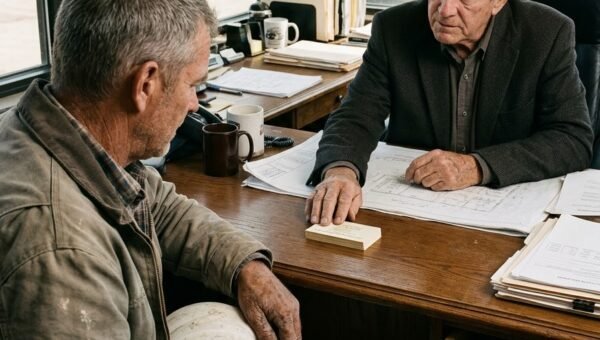
When Callum arrived, he had a folder under his arm. He put it on the table and didn’t open it right away. He looked around my kitchen, at the book by the clock, and then at me.
“It feels good to be home,” he said.
“It is.”
“I’m sorry I made that harder.”
I sat down. He stayed standing for a moment, then sat across from me.
He said he and Tessa had hired two different sitters after I left. One could do some school pickups, but not all of them. Tessa had taken time away from the bakery to cover the rest. For deliveries, they’d paid for help on the busiest days and rearranged the rest. Nobody had taken over the whole list I’d been doing. They’d split it between themselves and whoever they could afford.
He showed me some of the receipts in the folder. I didn’t ask to see every page. I did notice the dates. They were from the two weeks after I left.
“We didn’t expect it to add up that fast,” he said.
“How much?”
He told me the replacement childcare and delivery costs came to almost $1,850. He didn’t say it like he was handing me a bill. He said it like he’d finally seen the number attached to a thing he’d been calling free.
I looked down at the papers. One of the receipts had a coffee stain along the edge. Another was folded in half. None of them counted the dinners I’d made, the laundry, or all the time I’d spent waiting at the house for someone else’s appointment. They only counted the things they’d had to pay someone to do once I was gone.
“I’m not asking you to pay me back,” I said.
“I know.”
“I need you to understand I’m not coming back to do the same thing.”
“I do.”
“Do you?”
He rubbed the side of his thumb with his finger. He said he’d been avoiding the truth because he wanted the help and didn’t want to hear no. He said he had let Tessa handle the schedule because he was busy at work, but the schedule wasn’t the problem. He’d seen my name in the budget and had let it stay there.
I appreciated him saying that. I didn’t tell him I forgave him. I wasn’t ready, and I didn’t want to say something just because he’d finally said the right thing.
We talked about what could happen from now on. I said I was willing to visit. I was willing to take the kids for a planned afternoon if I had time and wanted to. I would not be listed on their regular pickup schedule. I would not be put on the family calendar without being asked. I wasn’t agreeing to another long stay.
He nodded and wrote it down on the back of one of the papers. I told him he didn’t have to write it down to prove he meant it. He said he wanted to remember the exact words.
“Ask me first,” I said. “That’s all I’m asking.”
“I can do that.”
I hoped he could. I didn’t know yet whether he would.
A few days later, Tessa called. I’d been sorting the mail when her name came up on my phone. I let it ring once before answering. I was surprised by how much I was bracing myself.
She said she wanted to talk about the kids. Then she said she was sorry she’d spoken to me the way she had in the kitchen. She didn’t say she was sorry for everything. She said the bakery had been taking over her life and she’d been angry about every problem she couldn’t control.
“That wasn’t your fault,” she said. “I shouldn’t have taken it out on you.”
I thanked her. I didn’t tell her that one apology made all the other days disappear. They hadn’t disappeared.
She said she’d assumed I liked staying with them because I seemed happy with the children. I told her I was happy with June and Micah. I also told her I’d wanted to be asked before my stay became something longer.
“I should have asked,” she said.
“Yes.”
The conversation didn’t turn warm and easy after that. She asked whether I could come by the next weekend for lunch. I said I could come Sunday from noon until three. I said I’d drive myself. She said that was fine.
I made sure the time was on my own calendar. It wasn’t a big act of courage. It was just one small thing I wanted to do differently.
When I went over, June ran to the door and hugged me around the waist. Micah showed me a drawing he’d done at school. I stayed for lunch, helped clear the table because I wanted to, and left at three. Tessa was in the kitchen when I picked up my coat. She thanked me for coming. I said I’d had a nice time.
That was true. It was also true that I was glad to drive home afterward.
I didn’t see the budget page again. I had left the copy on their coffee table, and I didn’t bring one home. But I kept thinking about the line that said childcare: $0. I think that was what I couldn’t get past. Not that they needed help. Families need help. It was that they had decided my time was worth nothing before they even asked me to give it.
A few weeks later, Callum brought the folder back up during a phone call. He said Tessa was still working out the bakery schedule. He said they’d figured out a better pickup plan for June and Micah. He didn’t ask me to fill in. I noticed that. I thanked him for telling me.
The nearly $1,850 wasn’t money I needed to see. It wasn’t proof that my family loved me, either. But it showed what happened when the person they’d counted as free stopped being there. It showed that what I’d been doing had taken time, planning, and work, even when nobody had put a price beside it.
I still miss the children when I’m not with them. I still feel that little pull to say yes before I’ve even heard the whole request. I’m not suddenly good at boundaries. I have to stop and think about it.
But the next time I visit, I’ll go because I chose the day. I’ll hug June, look at Micah’s drawings, and go home when I said I would.
The receipt in Callum’s folder said almost $1,850. The space beside my name in the old budget still said $0.