My sister sued me for $3,000 a month over Grandma’s house. I was still wearing my work boots when I read the papers, and I had to sit down on the edge of my bed.
I’d been driving freight out of Oregon for three weeks. I came home expecting a stack of mail and a load of laundry. Instead, I found a court notice saying Miranda claimed I’d emotionally harmed her for most of our lives. She wanted monthly payments from me, for life, because she believed I’d caused her anxiety and ruined her relationship with Grandma Grace. I read it twice. The second time, I noticed the word “permanent.”
I’m Nate Reynolds, thirty-six, and I drive a truck. Miranda is my older sister by four years. We grew up outside Portland with parents who weren’t bad people, exactly. They just knew how to make room for Miranda, and I got used to fitting around her.
She was the one with the violin recitals, the debate trophies, and the grades my dad liked to talk about at dinner. I drew on the backs of grocery lists and got a quick nod for it. Mom would put Miranda’s certificates on the fridge, right beside the grocery schedule. Mine went in a drawer. I know that sounds petty. At the time, I told myself it didn’t matter.
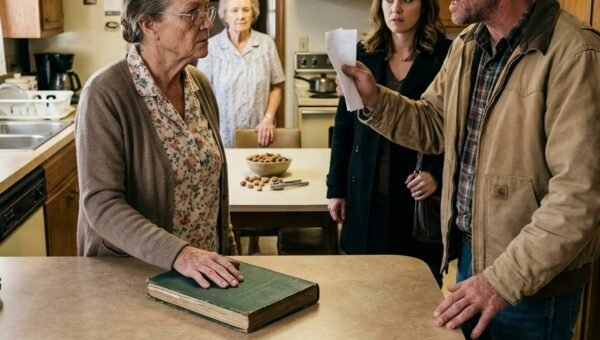
Grandma Grace lived in a little house on Maple Street. When I was a kid, I spent Saturdays there because she let me sit at her kitchen table and draw while she read. The table had a nick near one leg where I’d dropped a screwdriver once, trying to fix a loose chair. Grandma never let me forget it, but she kept that chair in the kitchen until she died.
The first time I left town for work, I thought I’d be gone a month. I came back early because Grandma had fallen in her garden. She said it was nothing, even while her hand was swelling up. I took her to urgent care. After that, I made a point of checking in whenever I was home between runs.
I wasn’t there every day. I don’t want to make myself sound better than I was. I had a job, and bills, and sometimes I’d go too long before calling. But I helped set up grocery delivery, called the pharmacy when her pills were wrong, and took her to appointments if my routes lined up. Grandma kept a small calendar beside the blue cup she used every morning. She wrote things down because she didn’t trust her memory.
Miranda lived in town, too. She had a good job in commercial real estate, and her schedule was full. I understood that. I did. But she could go months without stopping by, then show up with a gift bag and a story about how busy things had been. Grandma didn’t complain. She just added the visit to her calendar, even if it lasted twenty minutes.
One year, at Grandma’s birthday dinner, Miranda gave her an expensive picture frame. I’d made a photo album from old pictures I found in a box upstairs. Grandma looked through it slowly, with her finger on every face. She told me later she liked the album because she could remember who had taken each picture. I kept that in my head longer than I meant to.
When Grandma had a stroke, I was on a run to Boise. I turned around as soon as I got the call. I made it to the hospital just before visiting hours ended. Miranda had been there earlier, according to Mom. She left before I arrived, saying she had a meeting the next morning. I didn’t blame her then. I thought it was a one-off.
The stroke changed what Grandma could manage. She came home with a stack of instructions and a home-care aide for a few hours a day. I rearranged routes where I could and asked my dispatcher for more local work. When I was away, I called. When I was back, I did the grocery run, checked the pill box, and sat with her while she drank tea from that blue cup.
Mom and Dad helped, too, in their way. Mom handled some appointments. Dad paid a bill when the insurance paperwork got tangled. Miranda said she’d pitch in, but her visits stayed short. I never called her out. I figured I was the one who had more flexibility, even though that wasn’t really true. I just knew I could do the tasks, and it was easier than having a fight.
Then Grandma got worse. I came home from a run and found her trying to carry a basket of laundry down the hall. She’d made it halfway and was sitting on the floor, mad at herself. I helped her up. The next day, I called my parents and said we needed a real plan. Miranda said I was making it sound worse than it was. She said Grandma had always been stubborn.
I got sharp with her on the phone. I won’t pretend I didn’t. I said she should come over and see for herself. She did, two days later, and stayed long enough to look at the new shower rail. Then she left for a work dinner. I told myself she’d come around. I was tired, and I didn’t want another family argument.
Three months later, Grandma died in her sleep. She was eighty-five. I’d seen her the afternoon before, and she’d complained that the tea bags weren’t the same as the old ones. I bought the brand she liked on my way out. That detail stuck with me. It still does.
A week after the funeral, I met my parents and Miranda at Grandma’s lawyer’s office. I was expecting a box of books or her old dishes. Mr. Peterson read the will. Grandma left me the house and $250,000. Miranda got Grandma’s jewelry, including her wedding ring and pearls. It was a fair amount of money, and not nothing. But Miranda had expected the house.
Nobody said much at first. I stared at the scratch on my thumbnail. Miranda asked if the will was valid. Mr. Peterson said it had been signed and witnessed properly. Dad asked if Grandma had been confused near the end. Mom asked me if I’d talked with Grandma about changing it.
I answered honestly. I had not. I hadn’t even known she was changing anything.
On the drive home, I thought about the chair in Grandma’s kitchen and the calendar beside her cup. I’d helped her keep track of things, but I had never asked what she wrote down. The whole time, I’d assumed it was appointments and grocery notes. I didn’t look at it until later.
Miranda started telling people I’d turned Grandma against her. She said I’d made myself the only person Grandma could trust. My parents didn’t repeat that in those words, but they didn’t correct anyone, either. When they asked me about the will, I gave short answers. I didn’t want to yell. I also didn’t want to lose the only family I had left.
The lawyer sent copies of Grandma’s letter along with the will. She wrote that the inheritance wasn’t meant to punish anyone. She said Miranda had received a lot of support over the years, and she wanted me to have a stable place and a chance to use my art skills. I read the letter at the kitchen counter, then folded it back along the same creases.
I kept telling myself the letter should be enough. It wasn’t.
A month later, the lawsuit arrived. Miranda said I’d undermined her since childhood, damaged her confidence, and kept her from seeing Grandma in the last year of her life. She wanted $3,000 a month. She also said she deserved compensation because I’d been “favored” by Grandma. That part made me read the page again, slow.
My first thought was that the whole thing would get thrown out. My second thought was that my parents might testify against me. They had already asked whether I’d suggested changing the will. I could picture Dad sitting in court, trying to sound fair while saying things that weren’t true. I wasn’t mad at him yet. I was scared he’d say them.
I hired a lawyer named Ellen after I got home from my next run. I paid her from the money Grandma left me. I hated that. It felt like using the inheritance to fight the person who believed she should have had it. Ellen told me to bring every paper I had, even the ones I thought were unimportant.
So I brought my route logs, appointment slips, pharmacy notes, and the folder where I’d kept receipts for Grandma’s groceries. I also brought a photo I’d taken of the kitchen calendar after the funeral. I’d snapped it because I was worried the house would get cleared out before I could sort through it. I hadn’t looked closely at the writing.
Ellen did. She asked me to bring the calendar itself.
I didn’t want to. I’d promised myself I wouldn’t turn Grandma’s house into a pile of evidence. But Miranda had already made it evidence. So I went back to Maple Street, took the calendar off the hook, and carried it out under my arm. It was still beside the blue cup.
The calendar covered fourteen months. Grandma had written down her appointments and the days I was coming home. Some entries were just my name and the time I’d arrive. Others were notes about groceries or the aide. Miranda’s name appeared six times. Five entries said she’d called to cancel. One said she’d brought a gift.
I counted twice. The first time, I thought I’d missed a page. I hadn’t. I didn’t tell Ellen what I was thinking. I just handed her the calendar.
She asked me if I remembered all those cancellations. I said I remembered a few, not all. That was true. I’d been on the road for some of them. Grandma had never told me she was writing them down. Maybe she didn’t want me to be mad at Miranda. Maybe she was only trying to keep track. I can’t say.
Ellen found messages on my phone from Miranda, too. There weren’t many. She’d written that she couldn’t make it that week, that work had blown up, that she’d try again next weekend. I hadn’t saved them on purpose. They were just still there because I’d never cleared the conversation.
The case dragged out longer than I expected. Miranda’s lawyer said she had suffered for years. He said I’d used my closeness with Grandma to make sure I got the house. My lawyer asked for dates and proof. Their papers were full of big claims and short on details. Mine were mostly dull records, which is what records usually look like.
My parents were listed as witnesses. Dad called me once before the hearing. He asked if I could make this easier on everyone by agreeing to settle. I asked what he meant by easier. He said Miranda was hurt, and the lawsuit might go away if I paid something.
I didn’t shout. I told him I wasn’t paying for a story I hadn’t lived. He went quiet, then said he was trying to keep the family together. I could’ve asked where he’d been when the family started breaking apart. I didn’t. I was still hoping he’d come around on his own.
Three weeks later, I walked into the courthouse with Ellen and the calendar in a folder. I wore the same dark jacket I’d bought for my driver’s license photo because it was the only one that fit without pulling at the shoulders. My hands were clean. My boots weren’t.
Miranda sat across the room in a gray dress. She looked put together, like she had before every family event where she expected to be seen. She didn’t look at me when I came in. I watched the back of her head while Ellen arranged the papers. I kept a paper copy of everything, even the things on my phone. That’s how I work. I like to know where the edges are.
The hearing started with Miranda’s account. She said I’d been cruel when we were kids. She said I’d embarrassed her, made her feel small, and told Grandma things that weren’t true. She said she’d tried to visit, but I made it hard. I listened. I remembered a few arguments from when we were teenagers. I wasn’t some perfect brother. I’d been jealous, sure. I’d made comments I shouldn’t have made. But I hadn’t kept her from seeing Grandma.
Her lawyer asked how the inheritance affected her. Miranda said the loss of the house brought all the old pain back. I looked at my hands. The courtroom smelled like wet coats and old paper. I was trying not to make a face. I didn’t want the judge to think I was laughing at her.
My parents gave their statements. Mom said I was around Grandma more often. Dad said Miranda had been under stress. Neither one said I’d blocked visits. Neither one said I hadn’t. I kept waiting for them to add one clear sentence, and they didn’t.
Ellen stood up when it was her turn. She asked Miranda to name the last date she’d visited Grandma in person. Miranda said she’d been there in February. Ellen asked her to look at the calendar and find that visit.
Miranda leaned toward her lawyer. She turned one page, then another. The judge waited. I could hear the paper catching under her fingernail.
The calendar showed no visit in February.
Ellen laid out the messages and the appointment notes. The dates matched. Miranda had canceled, or said she would come later, or asked me to pass something along. I could see her reading the notes from Grandma’s kitchen. I had to look down because I knew what was coming before the judge said it.
He asked Miranda how I’d stopped her from visiting if she had made the choice not to come. She started to answer, then changed her answer halfway through. She said I’d made Grandma dependent on me. The judge asked whether she’d told Grandma she couldn’t come because of anything I’d done. Miranda said she didn’t remember.
The judge asked for a date again. Not a range of years, not a feeling, one date. Miranda looked at the calendar and couldn’t give one. I didn’t feel like I’d won. I felt tired in a way that reminded me of driving straight through a bad stretch of road, looking for somewhere safe to pull over.
The judge dismissed the claim. He said the evidence didn’t support the amount or the story Miranda had brought to court. The will wasn’t part of that hearing, but nobody challenged it after that. The house stayed mine. The case was over.
My parents left before I got outside. Miranda waited near the courthouse steps with her lawyer. I could’ve left through another door. Ellen asked if I wanted her to walk with me. I said no. I’d been avoiding the last thing I needed to say for years, and I didn’t want to put it off again.
Miranda told me she hadn’t meant for it to get this far. I believed that part. I also knew she had filed the papers, sat in court, and said I’d kept her away from Grandma. Both things could be true.
I told her I wasn’t going to fight over the house again. I’d keep it. I’d pay the taxes and fix the loose kitchen chair. I said she could have the jewelry Grandma left her, and I wouldn’t ask her to return anything. She nodded, but neither of us moved.
I had spent so long trying to make the family feel even that I’d stopped saying when something hurt. I’d told myself silence was the same as patience. It wasn’t. I kept waiting for Miranda to act like my sister, and I kept pretending that waiting didn’t cost me anything.
I finally said the thing I’d swallowed since the will reading. “You didn’t lose Grandma’s house because of me. You lost the years you chose not to visit.”