At what point does a kidney stop being a gift and become one more thing I decided for my sister? I ordered donor testing before I told Tori I was her sister. I knew it was wrong. I did it anyway, and I can give you the reason, but I can’t make it sound better.
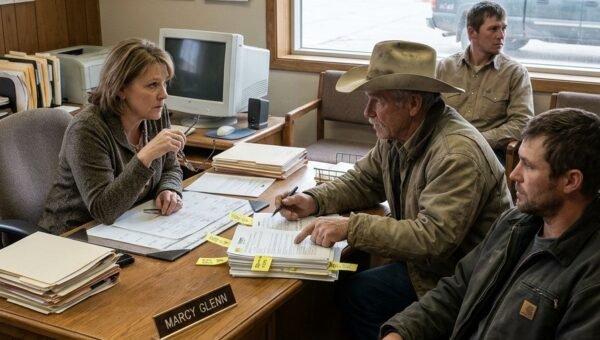
I was thirty-five, chief of transplant surgery at a hospital in Cleveland, when my mother came into my office without knocking. It was a Tuesday in October.
I remember because I’d brought a container of soup from home and the lid had popped open in my bag.
My mother, Gail, had a blue folder under her arm. Vince, the man she married after I was born, stood behind her, turning his car keys over and over. She didn’t look at my nameplate. She looked at the framed schedule on my wall, then at me.
“Are you the head kidney doctor here?” she asked.
“I am.”
“Our daughter needs a kidney. We’ve been waiting long enough.”
I asked for the patient’s name.
“Victoria Saunders. Thirty-three. Three years on dialysis.”
Tori.
I’d last seen her through the rear window of a red Ford Escort.
She was sitting in the back seat, tapping her small palm against the glass, smiling like I was playing a game with her.
I was five. I had a knitted hat pulled down over my eyebrows and a plastic grocery bag with my clothes in it. My mother left me at a group home in Cleveland. She said, “We can’t afford two. You’re extra.” Then she got in the car with Tori.
There was an apple in the bag. A whole one. I don’t know why I remember that. Maybe because my mother used to cut apples in half for me and Tori. That day, nobody was there to share it with me.
I was adopted two years later by Michael and Olivia Kingsley. Dad was a transplant surgeon. Mom worked in kidney care. I got a bedroom, a school backpack that wasn’t somebody else’s, and a family that set places for dinner without counting the cost first.
I became a doctor partly because I loved the work and partly because I needed to prove I wasn’t extra. I know that isn’t a noble reason. It was still true.
So when Gail sat in my office and told me she had another daughter who needed help, I kept my hands under the desk.
“Have you considered a living donor?” I asked.
“That’s why we’re here,” she said. “Neither of us qualifies. But there’s an older daughter.”
She said it as if she were asking me to find a file.
“Where is she?”
“We gave her up years ago. Things were difficult. We couldn’t afford two.”
The same words. Not one different word in thirty years.
Gail leaned closer. “Her adoption records are sealed. Surely someone in your position can find her.”
“That’s handled through the court.”
“I gave her life,” she said. “The least she can do is give her sister one kidney. She has two.”
Then she took a small black-and-white photograph from the folder and pushed it toward me. The corner was folded. A little girl in an oversized knitted hat stared out from it.
I recognized the hat first.
“That’s Annie Saunders,” Gail said. “The only picture we have left. Vince threw the others away when we moved.”
I almost said, “I’m Annie.”
I didn’t. Gail glanced at her watch and said the parking meter was running. She didn’t ask if I’d had a good life. She didn’t ask whether I remembered her. She asked how soon I could find her missing daughter.
I made an appointment for Tori and told Gail I couldn’t help with sealed adoption records. She left saying she would file a complaint.
That evening I went to see Dad. He put the kettle on, and I told him the whole thing while he rinsed two mugs. He didn’t interrupt. He’s always been good at waiting until I run out of words, which is inconvenient when I’m trying not to say something.
“You don’t owe Gail anything,” he said.
“I know.”
“But Tori’s a different person.”
“I know that too.”
He set my mug down. “Then take time to figure out what you want. Don’t let your mother decide it for you again.”
I wanted him to tell me there was an obvious answer. There wasn’t.
On Friday morning, I sent a blood sample to the lab. I used the proper donor testing route, but I kept my name off the conversation with Gail and Tori. I told myself it was only a test. Nobody was being asked to do anything yet.
That’s how I make bad choices sometimes. I give them a small name.
Tori came to my office the following Monday by herself. She wore a gray sweater with sleeves long enough to cover most of her fingers. She kept rubbing the edge of one cuff while I asked about her dialysis schedule.
“I’m sorry about my mom,” she said.
“You don’t need to apologize for her.”
“I know. I still am.”
She had stopped teaching piano because she was too tired after dialysis to work. She told me she missed her students, especially one boy who played every song too fast and insisted it sounded better that way. I liked her. I didn’t want to like her because it made everything harder, so of course I did.
Then she told me she’d found out last year that I hadn’t run away.
“All my life, they said Annie ran off,” she said. “Mom told me she was too wild to stay.”
She stopped rubbing her sleeve.
“I found out she was left at a group home.”
I kept my eyes on the chart. I could have told her then. I could have said my name. Instead, I asked if she had any questions about the transplant process.
She shook her head. “If you find her, tell her I’m not asking for a kidney. I just want to see her once. I want to say I’m sorry.”
I went to the window because I couldn’t look at her. Outside, a delivery truck was backing up. The beeping kept starting and stopping.
“You don’t have anything to apologize for,” I said.
“I was little too.”
I came back to my desk. I said I’d pass that along if I found Annie. Tori nodded and pulled her sleeves over her hands again.
That was the point where I could have stopped the testing. I should have told her. Instead, I let the lab finish.
A week later, my mother went on a local television show. I watched the clip on my phone in the hospital cafeteria, standing beside the vending machine because the chairs were full.
Gail wore the same lilac coat. She held a tissue and said she’d spent thirty years wondering where her “little Annie” was. She said the adoption had happened without her knowledge.
I watched it four times. The first time I was mad. The second time I started picking at a loose thread on my cuff. The third time, I realized she meant every word in the version she’d chosen to tell. The fourth time, I watched to see if she’d say my name.
She didn’t.
The lab called the next morning. My blood type was compatible. The preliminary crossmatch was negative.
I was a match.
I opened the bottom drawer of my desk and took out a manila folder I hadn’t touched since I was young. Inside were the group home intake papers and a copy of the voluntary surrender form. Gail’s signature was at the bottom.
I had kept the papers because I wanted proof. I also kept them because I was afraid that one day someone would tell me I’d made the whole thing up.
The next night, Tori had a medical emergency. I was at the hospital when she was brought in, but I called another surgeon to take over her care. I wasn’t going to pretend that being related to her made me the right person to make decisions.
I waited beside her bed while the team worked. I didn’t go in until they said she was stable.
Just before dawn, Tori opened her eyes.
“Nia?”
That had been her name for me when she was small. She couldn’t say Annie yet. I hadn’t heard it in thirty years.
“Did you come back?” she whispered.
I took her hand. “Go to sleep, Tory Bear. I’m right here.”
I hummed the little bear song she used to ask for when we shared a room. It wasn’t a good song. I made most of it up. She listened with her eyes closed.
By morning, she seemed to think she’d dreamed it. I let her think that.
I also kept the test result to myself for three more days. I’m saying that plainly because I don’t want to make myself sound brave. I was scared she’d say no. I was scared she’d say yes because she felt she had to. I was scared that if I told her who I was, she’d look at me and see the girl who left her.
I called Lorraine Miller, the caseworker who’d been there when I came to the group home. She was retired now. Her voice sounded the same on the phone, just slower.
“Annie,” she said, “I’ve kept something for you. I’ll bring it.”
I asked what it was.
“Something your mother forgot.”
On Thursday, the hospital set up a meeting with the ethics committee, the transplant coordinator, and our legal counsel. I transferred Tori’s care to another surgeon and withdrew from any decision about her treatment. I had no business being the doctor and the sister at the same time.
Gail and Vince came in looking pleased. Tori was in a wheelchair near the window. She had a blanket over her knees and the same gray sweater on. She didn’t look at me when I entered.
I sat across the table from Gail. The old photograph was in her folder. I could see the folded corner sticking out.
“A compatible donor has been identified,” I said.
Gail clapped her hands once. “I knew she’d agree.”
“The donor has given voluntary consent to be evaluated.”
“Good. Where is she? Bring her in.”
Tori looked down.
Gail turned to me. “I want to see what became of her.”
“Mrs. Saunders,” I said, “the donor is already in this room.”
Gail looked at the people seated around the table, then back at me.
“Who?”
I slid the first paper toward her. Then the next. I could hear the paper drag against the table. My hands were steady. I’m not sure what that means.
“My name is Annie Saunders,” I said. “I was the child you left at St. Jude’s.”
Gail stared at me. Vince stopped turning his keys.
“You’re the surgeon?”
“I am.”
She looked at the papers, then at my face. “You knew?”
“I knew who you were when you walked in.”
“And you didn’t say anything?”
“No.”
Tori lifted her head. “You’re Annie?”
I nodded. She put both hands over her mouth. I wanted to reach for her, but I didn’t want to make another choice for her without asking.
Gail pulled the first page closer. “I’ve been trying to find you.”
I placed the surrender form beside the television still printed from her interview. I’d brought both. The signature on the form matched the name she’d given me that day.
Outside the room, Lorraine was waiting with the hat. She came in after the committee members nodded that it was okay. The gray-and-red yarn had gone thin at the edges. I remembered it being too big for my head.
Gail looked at it and said nothing.
Lorraine set it beside the papers. “This was in the bag you left with Annie,” she said.
Gail rubbed the folded corner of the photograph with her thumb. “I thought I lost that.”
“You left it,” I said.
“I was young,” she said. “We had no money. Vince had just lost his job. I thought you’d have a better chance somewhere else.”
There it was. The reason I’d promised myself I’d listen to. It wasn’t nothing. It also didn’t change what she did.
“You told Tori I ran away.”
Gail glanced at Tori. “I didn’t know how to explain it.”
Tori’s voice was small. “You could’ve told me the truth.”
Vince said, “We did what we thought we had to.”
I looked at the old form. “You signed this.”
Gail shook her head once, not quite disagreeing. “I didn’t have a choice.”
“There’s always a choice,” I said. I heard how sharp it came out. I wasn’t proud of it, but I wasn’t going to soften it either.
The medical team had already explained the donor process. I would have a separate donor advocate. I could stop at any time. My medical care would be handled by another team, and Tori could refuse without losing her place on the transplant list.
I told her all of that again, slowly. Then I told her the part I should have said days earlier.
“I tested before you knew I was your sister. I shouldn’t have done that without telling you.”
Tori watched me. “Were you trying to find out if I was worth helping?”
“No,” I said too quickly.
She waited.
“I don’t know,” I said. “Maybe I was trying to find out if you’d want me before I risked hearing no. That wasn’t fair to you.”
Gail leaned forward. “She can’t refuse. She’s your sister.”
Tori turned toward her. “Stop saying that.”
Gail sat back.
Tori looked at me. “I meant what I said. I wanted to meet you. I didn’t want you to feel like you had to give me anything.”
“I know.”
“Do you?”
I didn’t answer. Not right away.
The transplant coordinator explained that Tori would have time to think. She could say no. I could say no. Nobody was signing anything that day.
Gail kept her eyes on the donor papers. “You already have two kidneys.”
I could have ended the meeting there. Instead, I asked Tori what she wanted, without looking at our mother.
She said she wanted to talk to me alone first.
So the others stepped out. Gail took her folder and the photograph with her. I didn’t stop her.
Tori turned her chair toward me. “You were the one singing?”
“Yes.”
“I thought it was a dream.”
“It wasn’t.”
She started crying quietly. I didn’t touch her until she reached for my hand. Her fingers were cold. I remember the faint smell of hand lotion, the kind hospitals give out in small bottles.
“I don’t know what to do,” she said.
“You don’t have to decide today.”
“I want to live.”
“I know.”
“But I don’t want you to feel you have to make this up to me.”
I sat there with her hand in mine. “I can’t make up for leaving. I didn’t leave you, but I was gone. I know that’s not the same thing.”
She nodded, then asked whether I’d still come see her if she said no to the kidney.
“Yes,” I said. “If you want me to.”
That was the first answer I gave her that didn’t come with a form.
We met with the donor advocate the next morning. Tori spoke to her alone. I did too. The testing process took weeks. I recused myself from every meeting about Tori’s care, and another surgeon handled the transplant. I didn’t get to know the final decision until the day Tori told me herself.
She agreed to the transplant.
Not because Gail said she owed me. Not because she thought I was trying to buy my way into her life. She said she wanted to live, and she understood she could change her mind right up until surgery.
I gave her one of my kidneys. The transplant went well. I’m not going to say it fixed anything. Tori still had years of treatment and recovery ahead of her, and we were two adults who had missed each other’s whole lives.
Gail came to see us afterward. She brought grocery-store flowers and left them with the nurse. She didn’t come into my room.
A few weeks later, Tori and I sat together during a quiet afternoon. She asked if I still had the old form.
“I do.”
“Do you hate Mom?”
I thought about the lilac coat, the photograph, the apple. I thought about how I’d kept the truth from Tori while I waited for a lab to tell me whether my body could help her.
“I don’t know,” I said.
Tori nodded. She didn’t ask me to decide.
I kept the knitted hat. It sits in the drawer with the form. Gail’s signature is still at the bottom of the page, clear as ever. The form says she gave me up. It doesn’t say whether she was scared, selfish, or both.
I used to think the paper was proof that I had been unwanted. Now I know it’s also proof that my mother knew exactly where I was when she signed my name away.