The paper edge had left a little cut on my thumb by the time my mother finished telling me she’d canceled my wedding. I kept pressing the spot with my other hand while she sat across from me in her living room. Five weeks before the ceremony, every vendor was gone, and Mom was acting like she’d done me a favor.
I said, “You signed my name.”
She looked down at the form. “I did what I had to do.”
My brother Fletcher laughed from the sofa. My dad, Thaddius, kept reading his newspaper. I remember the dry rustle of that page more than I remember what I said next.
I didn’t say much. I shut the wedding binder and left. My mother thought that was the end of it. She didn’t know what I’d already found out about the account she used to pay for the wedding.
I’m Grady Sterling. I was twenty-eight, living in Savannah, working as a landscape architect, and trying very hard to believe my family could be normal for one evening. My fiancée, Willa, was a pediatric nurse. She had a way of remembering which kids hated the grape-flavored medicine and which ones needed a minute before she touched their bandage. She was better at noticing people than I was.
That was what I loved about her. It was also what made me feel ashamed when my family started picking at her.
Mom, Opel, didn’t like Willa’s job because it didn’t come with a title she could show off at the country club. Fletcher said Willa was “nice,” which was his way of ending the conversation. Dad never joined in, but he didn’t stop them either. I told myself I could handle it. I didn’t want a fight before every holiday, so I let too much slide.
I can admit that now. Back then I called it keeping the peace.
Then we got engaged. Willa and I planned a small wedding we could afford. A few friends, family, a venue outside town, nothing fancy. We were looking at costs down to the last chair when Mom invited us to dinner at the estate.
She reached across the table and took Willa’s hand. “Let me handle the money side. You two just worry about each other.”
I should’ve asked why. Instead, I felt relieved. I’d spent years trying to get my mother to say something that sounded like approval, and there she was offering to pay for the wedding. I let myself believe she’d changed.
That decision sat between us like a level on a workbench. I trusted that everything was straight because she said it was.
The wedding planning felt good for a while. Mom booked Magnolia Estate, a place I’d never have chosen on my own. She forwarded receipts and said the deposits were done. Willa and I picked rings. We addressed invitations at my kitchen table, and she kept getting ink on the side of her hand. I’d wipe it off with a wet paper towel. I remember that little thing because it was the last time wedding planning felt like ours.
Then, on a Tuesday, the venue coordinator called to confirm the cancellation.
I asked her to repeat herself. She said they’d received a signed form that morning, released our date, and started the refund process. My name was at the bottom. It looked like my signature. It wasn’t.
I asked her to email it to me. My hands were steady enough to type, which surprised me. By the time I opened the file, I’d already guessed who had signed it.
The florist called next. Then the caterer. The photographer had received the same form. Every vendor was canceled using my name, and every cancellation request asked for a refund.
I called Willa. She was at work, between shifts, and I could hear a cart squeak somewhere behind her.
“They canceled it,” I said.
“What do you mean, canceled it?”
“My mom. She signed my name.”
Willa got quiet. Then she said, “I want to report it.”
I said we should wait until I spoke to Mom. I don’t know why I did that. Maybe I was still hoping for an explanation that let me go back to the version of my family I’d been carrying around. Willa didn’t push, but I could hear her take a slow breath.
I drove to my parents’ house with the cancellation form on the passenger seat. The paper kept sliding every time I braked. It was such a small, stupid detail. I was thinking about paper while my wedding was being taken apart.
Mom didn’t deny it when I showed her. She sat in her velvet chair and said Willa was “a social disaster.” Then she told me she was saving me from making a mistake I’d regret.
Fletcher grinned. Dad turned a page.
I closed the binder. I said, “Understood.”
I know that sounds calm. It wasn’t some big show of strength. I was scared I’d say something I couldn’t take back, and part of me still wanted Dad to put down the newspaper. He never did.
At home, Willa was waiting in her scrubs. She’d gotten off work early and had one of those red marks on her cheek from her mask. I told her what Mom said. She didn’t yell. She asked me what I wanted to do.
I told her I didn’t know yet. That wasn’t the answer she wanted, and I understood why. She’d spent months making a place for my family at our wedding. I’d watched her do it, and I’d let her.
We sat at the kitchen table with the receipts Mom had sent me. I’d saved them in an email folder because I was supposed to keep track of the budget. I’d never checked the account numbers. I’d assumed the money came from my parents.
Willa read through the pages with me. The routing number didn’t match the account I knew my parents used. The account name did match mine.
I called the bank. They wouldn’t tell me much over the phone until I answered a string of questions, but eventually the employee confirmed the account was a custodial account tied to my name. My mother was the custodian listed on the old paperwork. There was also a trust account linked to it.
I didn’t understand that part. I’d never opened either account. I’d paid for college with loans and my own savings. I’d worked through school, rented a small apartment, and learned to stretch a grocery bag of food across the week. There’d never been a time when I thought I had money waiting for me.
The bank employee wouldn’t give legal advice. She did tell me the balance on the statement I had was not current. She said I needed an attorney and should ask for a full account history. Then she gave me a number to call for the trust department.
I barely slept that night. I kept thinking of one word: custodial. It sounded like someone had been looking after something for me. It also sounded like someone had decided I wasn’t old enough to know.
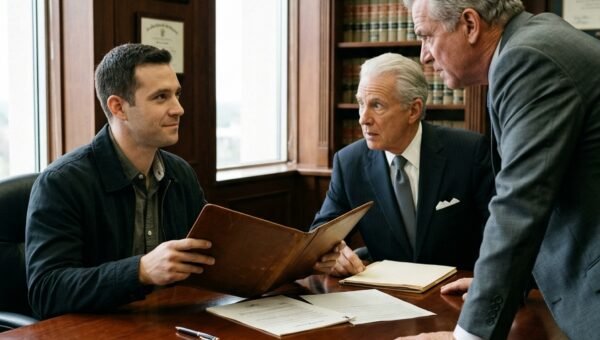
The next morning, I called Greta Harrington, the attorney who’d handled my grandfather’s estate. I’d met her a few times growing up, but I remembered her because she never rushed when my mother was in the room. She asked me to come by with every receipt and document I had.
Her office smelled like old paper and burnt coffee. There was a little stack of rubber bands beside her desk, all stretched out. I put down the vendor receipts and the cancellation forms. I tried to explain it in order, but I kept circling back to the signature.
Greta studied it for a while. “You didn’t sign this.”
“No.”
“Did your mother have access to your old paperwork?”
“Since I was a kid.”
Greta asked for the bank account number. When I read it out, she stopped writing. She looked at me, then went to a cabinet and pulled out a thick folder with a faded label.
I’d expected her to tell me my mother had crossed a line. I hadn’t expected her to look worried.
“Your grandfather set up a trust for you,” she said. “Your mother was the trustee.”
I thought I’d misunderstood. “I don’t have a trust.”
“You do.”
She opened the folder and found a document with my grandfather’s name at the top. I recognized his signature from birthday cards. Greta slid the paper toward me, but kept one finger on the page.
Before she explained the part about my wedding, she explained the money. My grandfather had left me an inheritance, and the trust had been set up to protect it until I was old enough to manage it. My mother could use money for my benefit and had to keep records. She couldn’t use it to cover Fletcher’s business costs or make gifts to herself.
The custodial account had been used to hold some of the trust funds while I was a child. After I turned twenty-one, it should have been moved under the trust’s rules. It hadn’t been. The account statements I’d found were old enough to look ordinary, and Mom had forwarded the wedding receipts as if the money was hers to spend.
Greta said the trust had its own terms. My grandfather had chosen a new, independent trustee to take over when I got married or turned thirty, whichever came first. At that point, the remaining principal would transfer to me.
I sat there with both hands on the arms of the chair. The legal words on the page went soft for a second, then sharp again.
I was twenty-eight. The wedding was five weeks away. My mother had known exactly what it would do.
Greta turned the page. The amount listed in the last full account statement was $187,642. The amount in the current account was less than that. She couldn’t yet tell me how much was missing, but she could see regular transfers to Fletcher’s business and payments that didn’t line up with anything I’d been told.
Willa was waiting in the car. When I got outside, she was holding a paper cup of coffee with the cardboard sleeve folded under her thumb. She saw my face and put the cup down.
“What was it?”
“A trust from my grandfather. Mom had control of it.”
“Had?”
Greta had already started the process of notifying the bank and asking for an accounting. If the trust had been handled properly, the independent trustee would step in when I married or turned thirty. My mother’s cancellation didn’t stop that forever. It only bought her time.
I told Willa about the $187,642. She didn’t ask what we could do with it. She asked whether I wanted to keep the money and whether I was sure I wanted to marry her while this was hanging over us.
I said yes to both. Then I said I didn’t know what that meant for the wedding.
She leaned her head against the seat. “I’m not marrying your trust, Grady.”
I deserved that. I’d been thinking about the money and the timing and what Mom was trying to protect. Willa was reminding me she was a person who’d been hurt, not a solution to a legal problem.
Over the next few weeks, everything got quieter and worse. The bank froze my mother’s access while it reviewed the accounts. Greta requested records. My parents got a letter saying the trust was under review. Fletcher called me once, but I let it go to voicemail.
Then he left a message saying he needed to talk because his shop was in trouble. He didn’t mention the wedding. He didn’t ask if Willa was okay. He said the business had bills due and Mom had told him I was “making this personal.”
I listened to it twice. I didn’t call him back.
The bank’s first accounting showed $96,400 in transfers to Fletcher’s grooming shop over four years. Some were called loans. There were no signed loan agreements. Other payments had gone to property taxes, family travel, and a renovation at my parents’ house. Mom had kept receipts for some of it, but not all. Dad had signed off on two transfers.
That part bothered me more than I expected. I’d always told myself Dad was weak, not involved. It was easier to be mad at Mom. But there was his name on the paperwork.
Greta filed a petition asking the court to remove Mom as trustee and require a full accounting. She also asked the bank to keep the funds frozen while the review continued. The court appointed a temporary independent trustee. That didn’t return the money overnight, but it meant Mom couldn’t keep moving it around.
A week after the papers were filed, my parents called eleven times in one afternoon. Fletcher called four more. I was at work, trying to finish a planting plan for a client who wanted shade trees moved by twelve feet. I kept looking at my phone between measurements.
That evening, Mom sent a text asking me to come home. I nearly went. I still had a bad habit of answering her when she sounded upset. Willa read the message over my shoulder and asked if I wanted her to come with me.
I said no. I told her I needed to do this myself. That wasn’t because I was brave. I didn’t want her to see me get pulled into the same old argument.
I went to the estate the next day with Greta’s letter in my folder. Dad opened the door. He looked smaller than I remembered, though he was standing in the same place he’d always stood.
Mom was at the dining table with a glass of water. Fletcher was there too. He had his phone face down beside his hand. Nobody offered me coffee.
Mom said the trust was a family matter. I told her it was my name on the account, and the court was handling it now. She said she’d only used the money to keep Fletcher’s shop alive, and that the shop was part of the family’s future.
Fletcher said, “I didn’t know it was Grady’s.”
I looked at him. “You didn’t ask.”
He rubbed his forehead. “Mom said Grandpa wanted us all taken care of.”
That could have been true. Maybe he believed it. He’d still taken the money without asking where it came from, and I’d done the same thing with the wedding offer. I’d wanted to believe the version that suited me.
Mom stood up and reached for the folder in my hand. I pulled it back. She stopped, and for once she didn’t have a quick answer ready.
“I was trying to protect you,” she said.
“From what?”
She looked at Dad. He looked down at the table.
Mom finally said the part I’d been waiting to hear. “I thought you’d wait until thirty.”
That was it. Not an apology. Not even a denial. She knew the wedding would put the trust out of her hands, and she had canceled it because she wanted more time.
I asked whether she knew the cancellation form used my signature. She said she did. Then she added that she thought she could fix it before anyone noticed.
I had the chance to say something cruel. I wanted to. I wanted to tell her she’d spent my whole life treating me like a mistake and had finally found a way to put it in writing. I didn’t say that. I handed her the court notice instead.
The next months were paperwork, calls, and a lot of waiting. The independent trustee found more missing funds and sent a full report to the court. Mom agreed to repay part of it from an investment account and the sale of a second property. Fletcher sold the shop and paid back a portion of the transfers. The court approved a repayment plan for the rest.
They didn’t lose every dollar they had. They did lose control of my trust, and the business Fletcher had been trying to save closed in the spring. Dad came to Greta’s office once and signed the papers. He didn’t look at me for long.
The forged cancellation forms were handled separately. After talking with Greta and Willa, I made a report. I didn’t want my mother arrested. I also didn’t want another person finding my signature on something I hadn’t approved. The vendors sent their records, and the venue returned what it could under the contract. We lost money. We lost the date. We didn’t lose the ability to choose what happened next.
Willa and I got married at the courthouse with twelve people there. I paid for lunch afterward. It wasn’t the wedding I’d pictured, and I still felt embarrassed when I thought about what my mother had done. Willa wore the same shoes she’d planned to wear at Magnolia Estate. She said they were comfortable, and she didn’t want them sitting in a closet.
The trust was transferred to me after the court approved the accounting. I set up an account with the new trustee, and I hired someone to review every page before I signed it. I know that sounds cautious. I didn’t used to be cautious with family.
Mom called after the transfer went through. I watched her name ring on my phone until it stopped. Then came a text. She said she’d hoped I could understand why she did it.
I didn’t answer. I still don’t know what I’m supposed to do with the fact that she thought love meant keeping the money, the decision, and my future in her hands.
On the last page of Grandpa’s trust, under the section about when control would transfer, was one plain line: “Upon Grady’s marriage, the trustee shall deliver the remaining funds to Grady Sterling.”