“Take the coffee with you,” Clara said. “It’s going to get cold.”
I was already reaching for my pager when she said it. The pager went off at 3:07 a.m. Level one trauma. Male, mid-thirties. High-speed crash. I left the coffee on the counter and drove to the hospital through freezing rain, thinking about blood loss and internal injuries, not my brother.
The name came up on the intake screen when I got there.
Julian Vance.
I knew it was him before I read the age. My older brother.
The same Julian who’d told my parents I quit medical school, and watched them stop answering my calls. I had five years of reasons to hate him. I had a patient on the table who might die before I could sort out what I felt.
I called the charge nurse over. “Get the trauma team ready.”
She looked at the screen, then at me. “Do you know him?”
“I do.”
“Should we get another attending?”
I looked toward the ambulance doors. “No. I’m taking the case.”
That’s the part people ask me about. Whether I had to think about it.
I did, but not for long. I’d spent enough years making decisions while other people were scared. The fact that Julian was my brother didn’t change what he needed from me. It did make the next few hours harder.
I’m Arthur. I was thirty-eight when this happened, and I’d been a trauma surgeon for years. My parents didn’t know that. They thought I’d dropped out of school, embarrassed them, and then disappeared because I didn’t want to face what I’d done.
That was Julian’s version.
I didn’t see the lie all at once. I saw clues. I ignored some. I read too much into others.
That’s probably how it goes when the person hurting you is someone you used to trust.
Julian and I grew up outside Hartford. We weren’t a family that talked through every feeling. My father, Peter, fixed things around the house and expected the rest of us to figure things out. My mother, Joan, remembered every birthday and kept a box of old cards in the hall closet. We went to church most Sundays. We ate dinner together unless somebody had a late shift or a game.
Julian was three years older. He was easy with people. He could talk to our parents about anything and make it sound like he’d already thought it through.
I was quieter. I got good grades, but I didn’t like talking about them. That made my parents proud, which I should’ve enjoyed more than I did.
I thought Julian was proud of me, too.
When I got into medical school, he took me out for a burger. He said, “You’re going to be the doctor in the family.”
I said, “You say that like it’s a good thing.”
“It is,” he said. “Mom’s going to tell everybody.”
He was right. She did. For a while, it was just a happy thing we shared.
Then Sarah got sick.
She’d been my closest friend since college. She had cancer, and by the time I took leave from school, she was too weak to manage on her own. She had no family nearby. I filled out the leave forms, got the school’s approval, and moved into her spare room. I was careful about the paperwork because I knew how hard it was to get into medical school. I wasn’t quitting. I was stepping away for a while.
My days became medication times and appointment times. I drove her to treatment, picked up food she could sometimes eat, and slept on the couch when she was having a rough night. There was a small whiteboard by her kitchen door with the next appointment written in blue marker. I remember that because the marker squeaked every time I wrote on it.
I didn’t tell my parents every detail. I told them Sarah was sick and that I’d taken a leave. I was tired, and I thought I’d explain properly when things settled down. That was my first bad choice. I left room for someone else to tell the story.
Julian called one evening while I was at Sarah’s place. I don’t know why I remember the sound of the refrigerator kicking on while we talked. He asked how things were going with school.
“I’m on leave,” I said. “I sent the paperwork in.”
He went quiet for a second. “You really think you can go back after this?”
“Yes.”
“Okay,” he said. “I was just asking.”
I was worn out and sharp with him. I said, “You always have to make everything sound like a test.”
He said he was trying to help. I told him I didn’t need help. We ended the call without saying much else.
Three days later, my father called me.
He didn’t ask how Sarah was doing. He didn’t ask if I was okay. He said Julian had told them I’d left medical school because I couldn’t handle it.
I said, “That’s not true.”
My father said, “He said you’ve been spiraling.”
“I took an approved leave. I have the forms.”
“You’re thirty-three years old,” he said. “You need to take responsibility.”
I had that sentence ready for him. I’m not proud of that. “I am taking responsibility. I’m caring for Sarah.”
My mother got on the phone. “You humiliated us.”
I asked her what she meant. She said she’d been telling people I was in medical school, and now she had to explain that I’d quit.
“I didn’t quit, Mom.”
“Don’t call me if you’re going to lie.”
I tried to keep my voice down. I was standing in Sarah’s kitchen, and she was asleep in the next room. “I can send you everything. The school approved the leave.”
My father said, “We don’t need more excuses.”
I said, “It’s not an excuse. It’s a fact.”
Then he told me not to call again until I was ready to apologize.
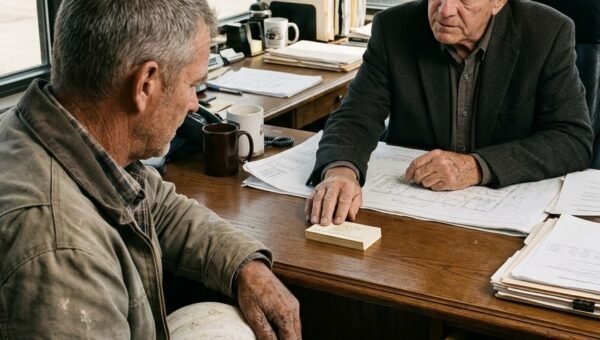
I mailed the forms anyway. I included a copy of my transcript, the school’s letter, and a note in my own handwriting. I sent it certified, because I wanted to know someone had taken it inside.
A week later, the envelope came back.
It had a yellow sticker on it and a line in black marker: RETURN TO SENDER. The tape was still sealed. I stood in my apartment holding it, and I can still remember the rough edge of the sticker under my thumb. I put it in a drawer. I didn’t throw it away. I didn’t send it again.
That was the first clue I understood.
The next was that my parents stopped asking about Sarah. Before the fight, my mother had called every few weeks to check in. After Julian’s call, she never asked once whether Sarah was getting better. She had decided what my leave meant, and there wasn’t much room left for the person I was trying to explain.
Sarah died that winter.
My parents didn’t come to the funeral. I called them the night before. My mother answered, but when she heard my voice she said, “I can’t do this right now.”
I said, “Sarah’s funeral is tomorrow.”
“I know.”
“I wanted you to hear it from me.”
“I’m sorry,” she said, though it sounded like she was sorry I’d called. Then she hung up.
I kept thinking she might call back. She didn’t.
After the funeral, I went back to school. I was behind, and it took me longer than I’d planned. I wasn’t the same person who’d left. I was tired in a way I didn’t know how to talk about, and I had to learn how to sit in a lecture without thinking about the next pill or the next appointment.
I sent my parents a short email when I went back. No answer.
When I graduated, I mailed them an announcement. No answer.
When I matched into residency, I called. The number rang and rang. I left a message. No answer.
I kept calling longer than I should have. I told myself I was being patient. Mostly I was scared that if I stopped, I’d have to admit they weren’t coming back. I’m not the calm person I sound like in a hospital. I can be stubborn in a way that looks a lot like begging if I’m not careful.
Clara met me during residency. She had a way of letting me talk without rushing to fill the gaps. She knew about my family before we got married. I didn’t tell the story in order. Some weeks, I’d mention my father’s words. Another week, I’d say my mother had missed graduation. Clara asked if I wanted to try calling them again.
“I’ve tried,” I said.
“Maybe they don’t know everything.”
“They know enough.”
That was true, but not the whole truth. I wanted them to call and ask. I wanted them to prove they cared enough to be wrong about Julian. I wanted to be able to say I’d told them so, which wasn’t a noble thing to want. Still, I wanted it.
Clara didn’t push me. When we got married, there were two empty seats in the front row. I told people my parents couldn’t make it. I didn’t tell them my mother had never answered the invitation.
At the reception, Julian’s name came up once. Someone asked if my brother had made it. I said we weren’t in touch. I went back to the table before anyone could ask more.
The clues kept coming, but I stopped looking for them. A cousin sent me a Christmas card addressed only to me, without my parents’ names. I wondered if she’d heard the story from them. My father’s birthday came and went. I didn’t call. I thought about it for three days, then told myself a call wouldn’t fix anything.
A few years after I finished residency, I was named chief of trauma surgery. I had to sign off on schedules, manage the call roster, and answer for decisions made by a whole department. I could do all of that. I still couldn’t make myself delete my parents’ old numbers.
I didn’t announce the job to them. I also didn’t tell them where I worked. At first, I told myself it was because they wouldn’t care. Later, I had to admit there was some punishment in it. I wanted them to miss it. I wanted them to find out through somebody else and feel what I’d felt.
That wasn’t forgiveness. It was just a quieter way to keep the argument going.
The night Julian came in, the ambulance team rolled him through the doors with rain dripping off their jackets. He had been in a high-speed crash. The paramedic called out the injuries and numbers while the nurses moved around the bed.
I recognized his face when they turned him.
His eyes were closed. His shirt was cut open. There was blood on the sheet near his side. I had to pull my attention away from the thought that I was looking at my brother and put it on the patient in front of me.
I asked, “What do we know?”
The paramedic gave me the details. I listened. A nurse repeated the blood pressure. I looked at the scans. Then I made the call to take him to surgery.
That was when my parents came in.
My mother’s hair was wet and stuck to her coat. My father’s collar was folded under on one side. I hadn’t seen either of them in five years, but I knew the way my father pushed through a crowd when he was scared. He went straight to a nurse.
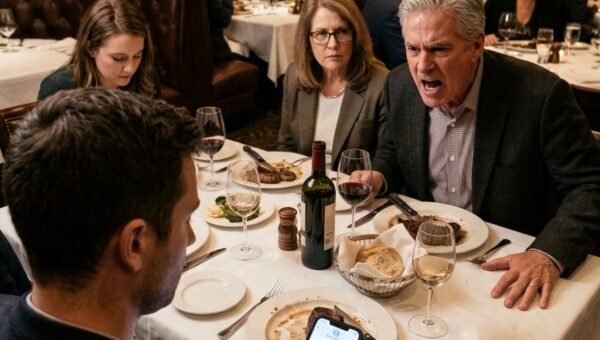
“Where’s the surgeon?” he demanded. “My son needs the best.”
The nurse pointed toward me.
My mother looked at my face first. Then she saw the badge on my scrubs. Her hand clamped around my father’s arm. I saw his sleeve twist under her fingers.
The badge said Dr. Arthur Vance, Chief of Trauma Surgery.
My father turned. He looked at the badge again, then at me.
I didn’t have time to speak to them. Julian’s condition was getting worse, and the team was waiting for my call.
I lifted one hand toward my father. “Not now.”
He started to say my name. I shook my head once.
Security guided my parents into the family waiting area. They didn’t fight it. My mother kept her grip on my father’s arm until the doors closed between us.
I went to the operating room.
I’m not going to pretend I felt nothing. I felt the old anger. I remembered the envelope with the tape still sealed. I remembered my mother saying I’d humiliated her. I remembered all those times I thought about calling and didn’t, partly because I was afraid and partly because I wanted them to hurt.
Then I looked at Julian’s chart. He was a patient who needed surgery. I could either do the work or step aside. I didn’t think he deserved special treatment. I didn’t think he deserved worse treatment. I did what I’d been trained to do.
The surgery took four hours. I can’t share all the details, and some of them are not things I want to carry into this post. He had serious internal injuries. We controlled the bleeding and repaired what we could. By the end, he was stable enough to go to the ICU.
A resident asked if I wanted someone else to update the family.
“No,” I said. “I’ll do it.”
My hands were sore when I took off my gloves. I washed up, changed out of the worst of the blood, and walked to the waiting room. The lights buzzed overhead. I remember the coffee table had a ring of dried brown coffee on it. I noticed that because I didn’t know where else to look.
My parents were on the vinyl sofa. My mother was holding a tissue in both hands. My father had his elbows on his knees and his face covered.
When he saw me, he stood too fast. The coffee table moved a little.
“Is he alive?” he asked.
I stopped a few steps away.
“Mr. and Mrs. Vance,” I said, “your son survived the operation.”
My mother’s mouth opened, but it took a moment for a sound to come out.
“Arthur.”
“He’s going to the ICU,” I said. “The next day is important.”
My father looked at my badge. “You’re a doctor.”
“No,” I said. “I’m the surgeon who just saved Julian’s life.”
That was the first time either of them had heard it from me. I didn’t say it to hurt them. I also didn’t soften it.
My mother sat down hard. “I thought you’d quit.”
“You thought that because Julian told you.”
My father looked at the floor. “We were told you’d left.”
“I sent you the school’s letter.”
“I know.”
The answer came out so quietly I almost missed it. I looked at him.
“You knew I sent it?”
He rubbed both hands over his face. “The envelope came back.”
“You sent it back?”
My mother looked at him. For a few seconds neither one spoke.
“I did,” he said. “I didn’t want another fight.”
I said, “You didn’t even open it.”
He didn’t answer.
That was the next clue. I had pictured them refusing to believe me after reading the proof. I hadn’t pictured my father making sure he never had to read it at all.
My mother pressed the tissue to her mouth. “Julian said you were angry and didn’t want to speak to us.”
“I called you.”
“I know you called.”
“Did you listen to the messages?”
She closed her eyes. “Not all of them.”
I didn’t know what to say to that. I wanted to ask how many. I wanted to know whether she’d heard the message I left after Sarah died. I wanted to know if she’d heard me say I missed them. But Julian was in the ICU, and those questions didn’t belong in that moment.
My father said, “We should have asked you.”
“Yes,” I said.
He looked up. “I’m sorry.”
I nodded once. I didn’t tell him it was fine. It wasn’t.
My mother said, “We were so proud of you.”
I almost laughed, but there wasn’t anything funny about it. “You missed my graduation.”
She flinched. “I know.”
“You missed my wedding.”
“I know.”
“You missed Sarah’s funeral.”
She folded the tissue in half, then in half again. “I’m sorry.”
I let the quiet sit there. I didn’t comfort her. I didn’t want to punish her, either. I just didn’t know what she expected me to do with an apology that arrived after the person it was meant for had already died.
A nurse came to tell us Julian was in the ICU. My parents stood. I gave them the basics about his care, because that was what I could give them right then. I told them what to watch for and who would call if anything changed. I used the same voice I used with every family.
My father thanked me.
I said, “I did my job.”
He nodded like he knew that wasn’t the same as being forgiven.
For the next two days, I kept my distance when another surgeon could check on Julian. I still reviewed his chart. I still made sure the team had what they needed. I didn’t want him to die, and I didn’t want him to wake up expecting us to be brothers again. I couldn’t give him that.
My parents stayed at the hospital. My mother brought a paper cup of coffee and didn’t drink it. My father spent a lot of time standing near the ICU desk, asking the nurses questions he could have asked me. I understood why. I didn’t make it easier for him.
On the second morning, Julian woke up.
I went in when the nurse said he was alert enough to talk. My parents were already at his bedside. My mother had one hand on the blanket. My father stood near the wall. Julian looked awful. He also looked like himself, which bothered me more than I expected.
He saw me and swallowed.
“Arthur.”
“Don’t talk much yet,” I said.
He tried to lift his hand and stopped because it hurt. “You did the surgery?”
“I did.”
He looked past me at our parents. My mother said, “We’re here.”
Julian closed his eyes. He didn’t ask how long they’d been there.
I told him he had serious injuries and that he’d need time. I answered what I could. Then I said, “We need to talk about what you told them.”
My mother started to say, “Arthur, not now.”
I looked at her. “It’s been five years.”
Julian’s eyes opened again. He stared at the ceiling.
“Tell them,” I said.
He breathed out through his nose. The monitor kept ticking in the background.
“I told them you quit,” he said.
My father took one step closer to the bed. “Why?”
Julian’s mouth tightened. “I was angry.”
“About what?” I asked.
He was quiet long enough that I thought he wouldn’t answer.
“Everybody was proud of you,” he said. “I felt like I was just the older brother who hadn’t done much.”
My father said, “You had a job. You had a life.”
“I know.”
“Then why?”
Julian looked at me. “Because you called me and told me you were taking time off. I thought you were giving up. Then you said I always make everything a test, and I was mad.”
“That’s all?”
“No.” He shut his eyes. “I knew it wasn’t true. I told them you’d quit because I wanted them to worry about me for once.”
I felt my jaw set. “You told them I was spiraling.”
“I know.”
“You let them think I’d thrown away school.”
“I know.”
“You told them I didn’t want to talk to them.”
“I know.”
He said it each time, quiet and tired. I didn’t take it as enough. I didn’t think he expected me to.
My mother asked, “Why didn’t you tell us the truth after?”
Julian turned his head a little. “You believed me.”
My father looked at him. “That isn’t an answer.”
“I was ashamed,” Julian said. “Then I was scared to fix it. I kept thinking I’d tell you later.”
I understood the feeling. I didn’t forgive the choice.
My mother looked at me. “I should have listened.”
“Yes.”
“I’m sorry I didn’t.”
I said, “I heard you.”
She started crying. I didn’t tell her not to. I didn’t reach for her hand. It wasn’t a moment where I knew what to do, and I didn’t want to pretend.
Julian said, “I’m sorry.”
I looked at him. “You knew I hadn’t quit.”
“Yes.”
“You knew I was caring for Sarah.”
“Yes.”
“And you kept doing it.”
He gave a small nod. “Yes.”
The answer landed harder than the excuse. He had known. He had known the school approved my leave. He had known why I was there. He had known I was calling home. He still let our parents believe the version that made him feel less small.
I said, “I don’t know what I’m supposed to do with that.”
“You don’t have to do anything,” he said.
For once, I believed he meant it.
The doctors expected Julian to recover, though it would take time. My parents began asking if I could come by after my shift. I told them I couldn’t promise that. They didn’t argue. I gave them my work number for medical updates, not my personal one.
I also didn’t ask them to come over. I didn’t invite them to meet Clara. I wasn’t ready to put five years of silence in a box and call it over because everyone had finally said the right thing in a hospital room.
A few weeks later, I found the returned envelope in the drawer where I’d left it. The tape was still unbroken. I took it to work, then carried it home again. I don’t know what I expected to do with it. It felt foolish to keep it and wrong to throw it out.
Julian sent me a short note from rehab. He wrote that he didn’t expect forgiveness, and that he was sorry he’d made a choice that cost me years with our parents. I read it once, set it on the counter, and left it there for a week.
My father called me the next Sunday. I answered. He asked if I was on my way to work.
“I am.”
“I’m glad you picked up.”
I didn’t say I was glad. I said I had to go, and he said he understood.
That was not a reunion. It was one phone call.
Julian is alive. My parents know I didn’t quit medical school. They know what happened, and they’ve said they’re sorry. That answers the question of who lied. It doesn’t put the missed years back.
The returned envelope is still in my desk drawer. The tape is still sealed.