I was folding Richard’s shirts when Stephanie called to tell me there wouldn’t be a seat for me in the front row at his funeral. I had one of his flannel shirts spread across my knees, still smelling faintly of the soap we’d used for years. She said the seating chart was already set. I kept folding. I said, “All right,” because I was tired, and because that was what I’d been saying for fourteen years.
I knew Richard’s children thought of me as an extra. I just hadn’t expected to hear it so plainly while his clothes were still warm from the dryer.
I was sixty-six then, living in the house Richard had owned before we married, and I had no idea how little time I’d have to figure out where I belonged next.
I met Richard at a church fundraiser when I was fifty-two. I’d been divorced for years and had gotten pretty comfortable on my own. I worked the front desk at a medical office in a river town in southern Illinois. I had a little garden behind my house and a stack of VHS tapes I kept meaning to replace. Richard was a widower, sixty years old, and he had a way of making a joke sound like he hadn’t meant to make one.
He asked if the seat beside me was taken. I said, “Only by my purse.” He moved my purse to the floor and sat down.
Fourteen months later, we got married. Richard had two grown children, Stephanie and Brian. They were both polite to me when they had to be, and distant when they didn’t. At Thanksgiving, Stephanie would say, “Dad, come get in the family picture,” then put the camera in my hands. At Christmas, the gifts were marked Dad, Stephanie, Brian, and the grandkids. Mine usually said Helen.
One year, a holiday card arrived addressed to “Dad and Guest.” Richard read it at the kitchen counter and said, “That’s enough.” I told him it was probably a mistake. He said it wasn’t. I changed the subject anyway.
That was my part in it. Richard wanted to push back, and I kept smoothing things over. I told him Stephanie and Brian had lost their mother and needed time. He’d say, “It’s been six years, Helen.” I’d say, “I know.” Then I’d make coffee or ask if he wanted to watch the news.
The thing is, I didn’t want him to have to choose between me and his kids. So I acted like the small hurts didn’t count. I let them add up.
Richard never made me feel like a guest. The brick house outside Richmond was his before we married, but he called it ours.
I picked the curtains. He put shelves in the kitchen after I complained about reaching for the top cabinets. We planted roses by the back steps, and he remembered which ones I liked even though I couldn’t tell you their names now.
He had ten acres farther north, off Route 609. He’d bought it years before I met him. There was a creek along one side, a collapsing shed, and a trailer that had been badly damaged in a fire. He said he liked going up there to fish. I went with him a handful of times. He never caught much, but he always took two enamel mugs in the truck.
I teased him about that once. “You only need one mug if you’re fishing alone.”
He said, “I know.” Then he put both mugs in anyway.
That was Richard. He could make a small habit feel like it had no meaning at all.
When his kidneys started failing, I drove him to dialysis three mornings a week. On the bad days, his fingers hurt too much to button his shirt, so I did it for him. I knew which pill bottle had to go in the front of the cabinet because he couldn’t see the labels without his glasses. I knew he liked his toast burned just a little, not a lot. There’s no grand story in that. It was our life, and I thought we had time.
Stephanie and Brian visited, but not often. Richard would ask if they were coming for Sunday dinner. Sometimes they did. Sometimes they didn’t call until after we’d eaten. I’d save a plate anyway, then put it in the fridge the next day.
When Richard got worse, he stopped driving to the land. I assumed he’d stopped caring about it. I also assumed I knew what was important to him. That part still bothers me. I could tell you how he took his coffee, but I didn’t think to ask what he was planning for that place.
Richard died on a February morning at seventy-four. I was holding his hand at the hospital. A nurse asked if I wanted a few more minutes. I said yes, then sat there until my legs started to hurt. I don’t know how long it was.
Stephanie took charge of the funeral. I let her. I barely knew what day it was, and there were papers to sign and calls to make. When I got to the church, I saw the seating cards on the pews. Stephanie and Brian were in the front row with their families. My card said, “Helen Hayes. Row Two.”
I stood in the aisle with my purse in my hand. A church volunteer came over and said, “I’m sorry. This is the chart the family gave us.”
“The family,” I repeated.
She looked uncomfortable. I didn’t want to make her feel worse, so I sat in the second row.
I could see Richard’s children crying from there. I watched Stephanie hold her husband’s hand. I watched Brian bend over with his face in his palms. I knew their grief was real. I also knew I was the one who had measured Richard’s medicine every night and helped him pull socks over his swollen feet.
At the reception, a cousin asked why I wasn’t sitting with the family. Stephanie heard her and said, “There just wasn’t enough room.”
There was an empty chair beside her. I saw it. The cousin saw it too, but she didn’t say anything.
I didn’t either.
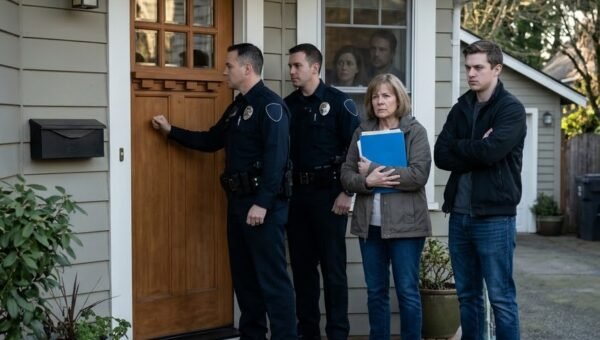
A week later, we went to Richard’s lawyer, Thomas Vance, to hear the will. Thomas had known Richard for almost thirty years. He wore thick glasses and kept paper files in old cabinets. I remember the click of his pen. I remember Stephanie sitting closest to his desk.
Richard left the house jointly to Stephanie and Brian. The boat went to Brian. Tools, furniture, and some collections went to the kids. Then Thomas read the part about the investment account. A little over $600,000, split evenly between them.
Stephanie squeezed Brian’s arm. I looked at my hands and told myself I wasn’t angry. The house had belonged to Richard before I came along. His kids had grown up there. The money had taken him years to save. I understood all of that.
But I had also been his wife for fourteen years. I had assumed he’d leave me something that would let me keep living somewhere. Not the whole house. Just enough to know he’d thought about what happened to me after he was gone.
Thomas read, “To my wife, Helen Hayes, I leave the parcel along Route 609, approximately ten acres, including all structures and rights belonging to the parcel.”
Stephanie blinked. Then she gave a short laugh.
“The trailer property?”
Brian turned toward her. “Seriously?”
I knew what they meant. I knew how it looked. Ten acres of weeds, a burned trailer, and a shed that had been leaning for years. Stephanie looked at me and said, “Dad always said you liked simple things.”
Thomas closed the will. “There’s another item for Mrs. Hayes. Richard instructed me to hold it until probate is accepted.”
Stephanie asked, “What is it?”
Thomas said, “It’s addressed to Helen.”
That was the end of that.
Outside, Brian stopped me beside the cars. “You don’t have to do anything with that land right away.”
Stephanie gave a little shrug. “What would she do with it?”
I said nothing. I got into my car and drove home.
The next weeks were full of things that had to be done. I called insurance. I sorted Richard’s papers. People brought food, then stopped coming. I woke up reaching toward his side of the bed. His glasses stayed on the end table. His jacket stayed on the hook by the back door.
The house wasn’t mine, not really. The will gave me sixty days to stay while the estate was handled. I started packing because it was easier than sitting still. I kept putting Richard’s shirts in boxes, then taking them back out. One Saturday, I gave a bag to the church thrift shop and spent the ride home feeling like I’d done something mean.
I didn’t have a new place lined up. I had some savings, but not enough to buy a house near the medical office where I still worked part-time. I could rent a small apartment, I guessed. I kept telling myself I’d work it out. I’ve always been good at making a plan after I’ve run out of choices.
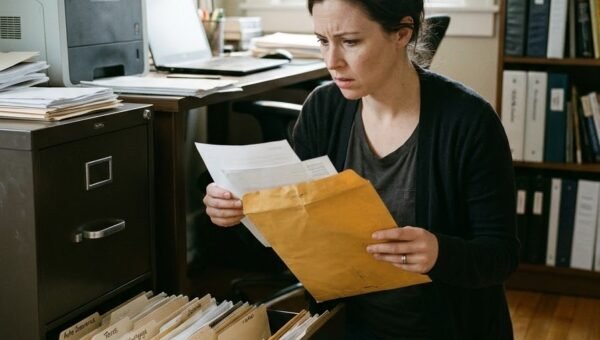
The probate filing was accepted seventeen days after the will reading. Thomas called and asked me to come in. When I got there, he handed me a sealed envelope with my name on it. The paper was soft at the corners, as if Richard had handled it more than once.
Thomas said, “He told me not to give it to you before the filing.”
I asked, “Did he say why?”
“He said you’d understand when you saw it.”
I took the envelope home and set it on the kitchen table. I didn’t open it right away. I washed a mug. I wiped the counter. Then I sat down and opened it with a butter knife because I couldn’t find the scissors.
There was a short letter in Richard’s handwriting.
He wrote that he knew I’d think he had left me the property because it was the only thing nobody else wanted. He wrote that the kids had the house because it had been their home growing up, and that he should have talked to me about the will before he got sick. He said he was sorry he hadn’t.
Then he wrote, “Go to the trailer before you decide what it is.”
I read that line twice.
The next morning, I drove out there. It was a little over forty minutes. I hadn’t been there in years. The weeds came up past my knees by the old shed, and the trailer looked every bit as bad as I remembered. I parked and sat in the car for a while. I nearly turned around. I had no idea what I expected to find, and I was mad at Richard for making me come out there after he was gone.
The front door stuck when I opened it. I leaned my shoulder into it and it gave with a scrape. The place smelled like dust and old wood. I expected to see the fire damage, but the worst of it had been cleared out. The ceiling had been patched. The floor didn’t dip under my feet. There was a small new sink and a working water line. It wasn’t fancy. It wasn’t even finished. But it wasn’t abandoned.
I walked from room to room, touching the walls as if that would tell me how long the work had been there. A folded tarp sat by the back door. There were new screws in the cabinet hinges. Someone had put a shelf by the window, at the height I liked, not the height Richard would have chosen for himself.
Then I saw the two enamel mugs on the little counter.
One was his. The other was mine.
I picked mine up. The blue edge was chipped where I’d dropped it on our first trip there. I’d forgotten I’d brought it. Richard hadn’t.
There was a note tucked inside it. It was in his handwriting, and only two lines long.
“I wanted you to have one place where you never had to ask if you belonged.”
I sat down on the floor. I didn’t cry right away. I just held that mug and read the note until the words started to blur. Then I cried so hard I had to set it down before I dropped it.
I had spent years telling Richard not to make a fuss. I had made his children’s comfort more important than my own, and I’d called that kindness. I was part of why he thought he had to do this quietly. I know that. I can’t put all the blame on Stephanie and Brian and pretend I never helped make myself small.
Thomas later told me Richard had paid a local contractor to repair the trailer after the fire, then asked him to keep coming back when Richard had enough money. He’d put in a working sink and fixed the floor. He’d planned to do more. The work stopped when his health got worse.
The contractor said Richard had told him, “She’ll want a place to grow tomatoes.”
I sat in the truck for a long time after I heard that. I remembered Richard standing by my garden years ago, holding a paper cup of coffee while I complained that the tomatoes weren’t doing well. I’d said I wanted a little more sun. He’d nodded like he was just listening.
I called Stephanie and Brian the next day. I told them I was keeping the property. Stephanie said, “You’re really going to live in that trailer?”
“I might,” I said.
Brian asked if the place needed more work. I said yes.
He was quiet, then said, “I can get you the number of the contractor.”
I said, “Thank you.”
Stephanie didn’t apologize. Neither did I ask her to. I was done waiting for those words to decide whether I could use the land Richard had left me.
I didn’t move in right away. I rented a small apartment for a few months while the contractor finished the bathroom and fixed the back steps. It took more money than I wanted to spend. I had to learn where the breaker box was and how to keep the creek from flooding the low part of the yard. I planted tomatoes by the window the first spring, even though I knew the soil might not be right.
I still miss Richard in the house. I miss him in plain, stupid ways. I miss hearing him ask where his glasses are while they’re on his head. I miss his shirts on the laundry pile. I don’t feel grateful every day. Some days I’m still mad he left me to find the point of it after he was gone.
But I have a key in my pocket now, and I don’t have to hand it to anyone else. The two mugs stay on the shelf by the window. I use mine every morning. Richard’s is beside it, the chipped blue edge turned toward me.