My son cut off my allowance beside his mother’s grave, and I let him believe I had nothing to say.
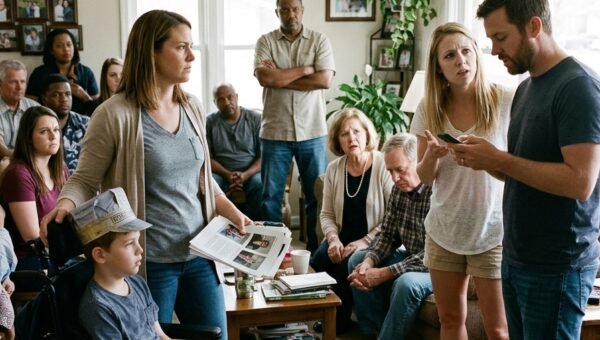
Trevor had waited until the last people were leaving the cemetery. He came over with Vanessa beside him, still in her black coat, and told me they were stopping the $2,000 they sent me every month. Clara had been buried less than an hour earlier. I remember the little paper cup of coffee in my hand. It had gone cold, and I kept turning it so the seam faced away from me.
“Dad, we can’t keep supporting you,” Trevor said.
Vanessa didn’t add anything. She just watched me, one hand at her neck where she wore a pearl necklace I’d seen her wear to Christmas and school events. I looked at my son and nodded. I didn’t say what I was thinking. I didn’t even ask if he understood what day it was. I was tired enough to let him think his words had landed clean.
I’m seventy-one. Clara and I were married for forty-six years. We raised Trevor outside Minneapolis, then watched him and Vanessa raise their children in Wayzata, in a six-bedroom house with a big kitchen and a long drive. Clara used to say that a family can grow used to a good thing the way grass grows around a fence post. You don’t notice how much it’s leaning until you try to move it.
I spent most of my working life managing a feed mill. I’m not a man who enjoys being the center of things. I’d rather fix a gate than give a speech about the gate. Clara understood that, which is why she’d always been the one to remind me when I was giving too much and calling it peace.
At the cemetery, Trevor’s shoulder pat felt like the end of a meeting. He said he knew I’d understand. I told him he was right, that adults should cover their own expenses. He relaxed when I said it. That was the part I noticed. Not the words. His shoulders came down, and his face looked relieved.
I walked back to the small guest apartment behind his house. Clara and I had stayed there when she got too sick to manage our old place alone. Her reading glasses were on the side table. The chair she liked was angled toward the window, as if she might come back in and sit down. I was looking for a clean shirt when I saw a white envelope with my name on it.
Clara’s handwriting. I’d seen it on grocery lists, birthday cards, and the small notes she used to leave beside my lunch. I sat on the bed and opened it. There were six words: “Arthur, please start living for yourself.”
I read it twice, then folded it and put it in my shirt pocket. I didn’t call Trevor back. I called Diane Foster, the attorney who’d handled our family business and estate papers for years. She answered on the third ring.
“I’ve made a decision,” I told her.
Diane didn’t rush to fill the space. She asked what I wanted changed, and I said I wanted to stop paying for things I’d been pretending not to pay for.
The $2,000 Trevor sent me each month had started three years earlier. He’d brought it up after Clara had a bad stretch in the hospital. He said he wanted to help, and Clara told me not to turn it into an argument. Trevor had two kids and a mortgage, she said. Let him feel like he was doing something useful.
I didn’t need the money. I took each deposit and added $4,000 of my own to the children’s college accounts. I never told Trevor. I thought I was being kind. I also liked that he thought of himself as a son who took care of his father. If I’m being honest, I liked being the person who could quietly fix things without anyone knowing they needed fixing.
That had become a habit long before the monthly transfer. Fourteen years earlier, I bought the Wayzata house through a family holding company. Trevor and Vanessa were having their first child, their old place was too small, and I could afford to help them. I let them rent it for far less than the going rate. The county taxes came to me. So did the insurance and the bills for the roof, furnace, and other big repairs.
Trevor knew the house wasn’t cheap. He believed it was his. I never corrected him. When people asked, I’d say they’d found a nice place, and Trevor would smile like he’d pulled it off himself. Clara thought there was a reason to let him have that feeling. She didn’t want our help turning into a thing he had to pay back with gratitude every time we came for dinner.
The trouble was, he’d started treating our help like it was just part of the house. The loose railing got fixed. The property taxes got paid. The roof got replaced after hail. We were close to eighty thousand dollars a year into their household, depending on the repairs. Trevor could say he was taking care of me because of one transfer, and I let him.
I can see my part in it. I didn’t want a hard talk with my son, so I used money to keep the room comfortable. That’s not the same as being generous. It’s a way of avoiding the truth while telling yourself you’re doing good.
Three weeks before Clara died, she asked me why I still paid for the house.
I told her it made life easier for the kids.
She said, “A fence line doesn’t stay straight just because you don’t look at it.”
I told her I’d think about it. I didn’t. I’d heard versions of that from her for years, and I’d always found some reason to wait. Trevor was busy. Vanessa had work. The children were getting older. There was always another season to get through.
At her funeral, I understood that waiting had become its own choice. I was still grieving, and I was angry at myself for thinking about property and accounts so soon. But the facts were there whether I looked at them or not. Clara was gone, and I was standing beside her grave while my son explained why my small allowance was too much trouble.
The next morning, I met Diane at her office. I brought the envelope from Clara and the folder where I kept copies of the house documents. I’d carried that folder for years without much thought. The edges had gone soft from being handled.
Diane read the note and set it aside. Then she asked whether I wanted to sell the house or end the arrangement. I said I didn’t know yet. I wanted to stop covering the bills, and I wanted Trevor to know who owned the property. I didn’t want to punish the children. I also didn’t want to keep pretending their parents had built something they had not.
Diane went through the paperwork with me. The holding company held the title. I was its only manager. The family had a written rental agreement, though the rent was so low it barely covered anything. Diane said we could follow the agreement and give them notice. She also said we should not make a move while I was too upset to think clearly.
I asked if she thought I was too upset.
She said, “You’re grieving. That doesn’t mean you’re confused.”
That was the first thing anyone had said to me all week that didn’t make me feel like a problem to be managed.
I went back to the guest apartment and packed one suitcase. I folded Clara’s note into the inside pocket. I took my medication, a pair of work boots, and the old photograph of Clara and me by the feed mill. I left the rest. I told myself I was going to give the family a little room. Really, I couldn’t sleep under the same roof as Trevor and Vanessa after that conversation.
I had a small apartment near the old mill, above a hardware store. I’d kept it for years because Clara liked having somewhere quiet to stay when we went into town. I drove there Saturday morning. By midnight, my phone showed 140 missed calls.
Some were from Trevor. Some were from Vanessa. One was from the housekeeper, who said she had tried to reach me because a bill had come due. A few were from numbers I didn’t recognize. I didn’t call anyone back that night. I turned the phone face down and made toast, but I couldn’t eat more than half.
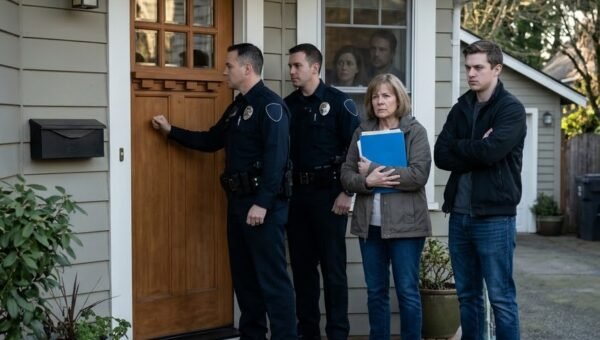
On Monday, I called Diane. I told her I was ready to follow through. She sent the notice to Trevor and Vanessa by certified mail and email. She also sent them the ownership records. The notice gave them sixty days to leave or come to a new rental agreement at a fair rate. I didn’t ask for immediate removal. I didn’t change the locks. I wasn’t going to make the children come home from school to find their things on the lawn.
Trevor called me after he received it. I let it ring twice, then answered.
“Dad, what is this?”
I told him it was the paperwork showing who owned the house and the notice that ended the old arrangement. He said he thought I’d given it to him. I told him I had never said that. He reminded me I’d let them live there for fourteen years. I said that was true. He said I could have told him. I said that was also true.
He was quiet for a while. Then he said the timing was cruel.
I told him he had chosen the timing of the conversation about my allowance. I didn’t say it sharply. I didn’t need to. We both knew what had happened.
Vanessa called later that day. She asked if I had really been paying the taxes and insurance all those years. I told her yes. She asked why I hadn’t said anything. I said Clara and I thought it was better for the children if they felt settled, and I thought Trevor would grow into understanding the help. I couldn’t tell her why I’d kept it from them after that stopped being true. I had no good answer.
The next two weeks were a stack of practical matters. Diane’s office sent the account statements. I stopped the monthly payments for the house and canceled the automatic transfers for repairs. I told the college plan custodian to keep the kids’ accounts as they were. That money was theirs. I wasn’t going to use their future as a tool in a fight with their parents.
Trevor came to my apartment on a Wednesday evening. He looked tired, and there was a dark mark on his shirt cuff from something he’d spilled. I remember that because it was such an ordinary detail, and I was still thinking of him as a boy who used to come in with grass stains on his knees.
He sat at my small table and put the house papers between us. He asked if I’d planned to take the house away all along. I said no. I’d bought it to help them, and I’d expected we would talk about what came next someday. I had not planned to have that talk at his mother’s funeral.
He said the $2,000 had been meant as help. I agreed. I told him I’d used it for the grandchildren’s college accounts and added more every month. He looked down at the paper. I could tell he was trying to fit that into what he thought he knew about our family.
I didn’t tell him the whole thing was his fault. It wasn’t. I’d kept quiet too long. I’d made it easy for him to think the support was his, and the house was his, and my silence meant I didn’t need anything. I had helped build the fence that kept us from saying what was true.
He asked if I wanted them to move out. I said I wanted them to choose whether they could pay a fair rent or find another place. That was not the same as wanting them gone. He said Vanessa was scared about the kids changing schools. I said I understood. I meant it. I also told him the old arrangement was over.
He went home without an answer. I did not follow him out.
A week later, Diane offered them a new lease at a rent they could manage for six months, with the understanding that it would rise to market rate after that. Trevor and Vanessa declined. They had started looking for a smaller house, and they said they’d be out by the end of the sixty days. I was sorry the children had to move. I didn’t call the decision off.
The last weekend, I went over to collect the folder I’d left in a desk drawer. Trevor was outside with boxes by the garage. Vanessa was wrapping plates in newspaper. Neither of them said much. I helped carry two boxes to the car. One held the children’s school things. I didn’t ask what was in the others.
Trevor came over while I was by the back steps. He said he should have handled the funeral differently. He said he was sorry. I told him I knew. I didn’t say it was fine, because it wasn’t. I didn’t tell him I’d already forgiven him, because I hadn’t figured that out.
He asked whether I’d be at the kids’ birthday dinner the next week. I said I would come if they still wanted me there. He said they did. Then he picked up a box and carried it inside.
I drove back to my apartment with Clara’s note in my pocket. The house was still there, the six bedrooms still full of boxes, but the arrangement we’d all been living inside was finished. I had stopped paying for the taxes, the insurance, and the repairs. Trevor and Vanessa had a new place lined up. The college money was still set aside for the children.
That should have been enough to make the matter clear. It wasn’t. I kept expecting some easier feeling to show up after the paperwork was signed. Instead, I kept remembering how relieved Trevor looked when I told him I understood.
I still have the old house key. I haven’t decided whether to return it or keep it. The deed Diane gave me has one line I can’t stop looking at: OWNER: Vance Family Holdings LLC.