The envelope was still on the kitchen counter when the front door opened downstairs. I was in the bedroom with a cleaning cloth in my hand, and for a second I thought the owner had come home early.
Then I heard her keys hit the little bowl by the door.
I kept wiping the dresser. I knew the sound of those keys by then. One sharp clink, a pause, then the soft scrape of her shoes coming off. I had cleaned her house every Tuesday for a year without her seeing my face.
She left before I arrived, or came home after I left. That was how it worked.
Until it didn’t.
I’d already taken the lease to the lawyer in Evansville. I hadn’t touched it since I found it in the kitchen drawer. I hadn’t told my husband, whose name was on it beside hers. The lawyer had told me to go back and act like nothing had changed.
So I kept wiping.
Her steps stopped outside the bedroom.
She stood in the doorway. I turned around with the cloth still in my hand. She looked at me, then at the vacuum, then back at me. I didn’t know what to say first, so I said nothing.
“You’re the cleaner,” she said.
“Yes.”
She looked at my face longer this time. “You’re his wife.”
I put the cloth down on the dresser. My hands were steady, which surprised me.
“Yes,” I said. “I am.”
Her name was Paula. I’d learned it from the little notes she left with my pay. I’d seen her handwriting every Tuesday, always cheerful, usually two exclamation marks. I’d never seen her standing in her own bedroom with her purse still on her shoulder.
She looked like she wanted me to explain how I knew. I didn’t. The blue work shirts in her closet were enough.
“I didn’t know you were the one who cleaned here,” she said.
“I know.”
She looked down at the floor. “Did you tell Calvin?”
“No.”
I didn’t add that I’d hired a lawyer. I didn’t tell her about the lease or the moving receipt or the date on the refinance papers. The lawyer had been plain about it. Keep your mouth shut until she had looked at the paperwork.
Paula rubbed her thumb along the strap of her purse. “I thought you knew about us.”
That landed harder than I let on. Not because it was surprising.
Because I had been standing there in her house with my husband’s shirts in the closet, and she had somehow believed I knew.
“I didn’t,” I said.
She looked at me again. “He said you two were separated.”
“We weren’t.”
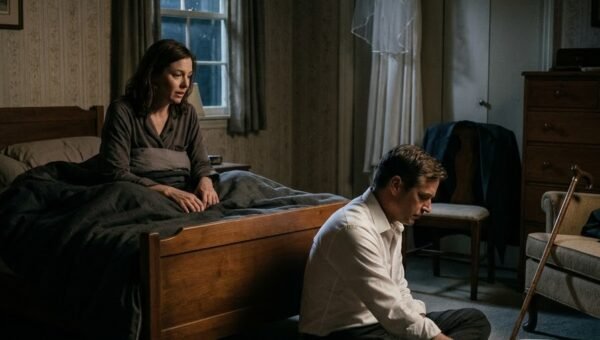
She sat down on the edge of the bed. I stood by the dresser. I wanted to ask her if she’d known about the house, if she knew what he’d asked me to sign, if she’d ever heard him call me baby while telling me he was afraid of losing our home. I didn’t ask. I could hear the lawyer telling me not to turn a fact into an argument.
Paula said Calvin had told her the marriage was over, though he hadn’t filed anything. She said he stayed at the house sometimes because he still had things there. She seemed to think the refinance was part of his debt trouble. She didn’t say she knew he’d asked me to put the house in my name.
I couldn’t tell if she was lying. I didn’t have to decide right then.
“He asked me to keep the arrangement quiet,” she said. “I thought that meant from people in town.”
I nearly said, “You mean from me.” I swallowed it. My job was to finish the room and leave with the envelope. Not fix her story for her.
I told her I was going to finish the cleaning. She said she understood, then stayed sitting on the bed while I changed the sheets. It was the strangest Tuesday I’d ever worked. I made the corners tight. I smoothed the quilt. I put the pillows back where she liked them.
When I reached the closet, I saw the burned cuff on Calvin’s blue shirt. I looked at it for half a second. Paula followed my eyes.
“He said it happened at work,” she said.
“It did,” I told her. “In 2021. I was there when he burned it.”
She didn’t answer. I put the vacuum away and closed the closet door.
She had left my envelope on the kitchen counter, as usual. I took it, said goodbye, and drove to Dee’s.
My sister was waiting in the driveway. I told her what happened before I’d even taken off my coat.
“She knows who you are now,” Dee said.
“She does.”
“Did you give anything away?”
“No.”
“Good.”
I was irritated by how much I needed her to say that. I had spent eleven years cleaning other people’s houses and telling myself that keeping quiet was the same thing as being practical. Sometimes it was. Sometimes quiet just made it easier for someone else to keep doing what they wanted.
Dee called the lawyer. I sat at her kitchen table and watched her make the call. The kitchen smelled like the lemon dish soap she always bought, the kind that left a faint waxy taste on my fingers if I ate right after washing up.
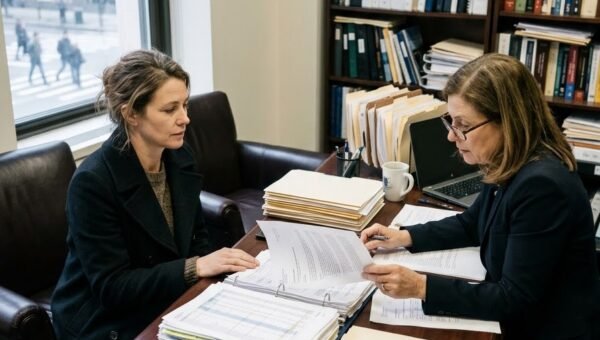
The lawyer told me not to contact Paula about the lease. She told me not to change locks, move money, or make claims about what the house meant legally. The deed was in my name alone, but that didn’t settle every question about the marriage or the mortgage. She would need the full refinance papers and the dates. She also wanted my ledger.
The ledger was still in Dee’s car. I had brought it to the meeting the week before in a grocery sack, like I was carrying potatoes. I’d written down every cleaning job for eleven years: the date, the hours, the amount paid, and the address. It wasn’t a diary. It was a work record. That was why I trusted it.
The lawyer asked if Paula had said anything about Calvin’s plans.
“Only that he told her we were separated.”
“And were you?”
“No.”
“Did you tell her that?”
“Yes.”
The lawyer was quiet for a moment. Then she said not to call Calvin yet. She wanted copies of the lease details and the refinance documents before anyone made a move. She reminded me that title in my name didn’t mean I should make decisions without advice.
I said I understood. I meant it.
The hard part was going home.
Calvin was there when I got back. He had the television on and his boots by the front door. He asked if I’d had a long day. I said I had. He asked if I’d eaten. I told him I’d pick something up.
I did not tell him Paula had seen me.
He reached for my hand when I walked past the couch. I let him touch it. That was my bad call. I don’t know why I let him. Maybe I was checking whether I could still stand the feel of his fingers. Maybe I wanted him to be the one who noticed something was different.
He didn’t.
That night he asked if I could make his thermos for the morning. I said yes. I did it the way I always had, coffee filled to the line, lid turned until it caught. I set it by the door with his keys.
I didn’t sleep much. I kept thinking about Paula saying she thought I knew. I was angry with her, then ashamed of being angry with her, then angry again. I had spent a year walking into her house and leaving everything as I found it. She’d been living with a story about my marriage that she said Calvin gave her.
Maybe she believed it. Maybe she didn’t. Either way, she wasn’t the person who’d asked me to sign the papers.
On Wednesday, I went to the lawyer’s office with my ledger, the copies from my folder at home, and the original refinance packet. I had saved the packet because the bank had made me sign so many pages. I’d kept it in the bottom desk drawer with tax papers and old warranty booklets.
The lawyer asked why I had signed.
“Calvin told me the house would be safer in my name.”
“Did he say why?”
“He said his creditors couldn’t touch it.”
She wrote that down. Then she asked whether I’d known about Paula in March.
“No.”
“Had you agreed to separate?”
“No.”
“Had Calvin moved his things out?”
“Not from the house. Some clothes were missing. I thought he’d taken them to work.”
I hated saying that out loud. I had washed those shirts for years. I knew which ones were missing. I had noticed the closet looked thinner, and I’d found a reason not to ask.
The lawyer said the January lease and the March refinance mattered, but she wasn’t going to promise me what a court would decide. She wanted the house records, the loan statements, and any messages about the refinance. She also told me to stop accepting cash from Paula until I had a clear plan. I couldn’t keep acting like this was just a cleaning job once she knew who I was.
That was when I felt the first change in myself. Not courage. I don’t want to call it that. More like I could finally see the next step in front of me.
I went back to Paula’s house one last time the following Tuesday. I called her first and told her I was coming to pick up my cleaning supplies. She said she’d leave them by the door. I asked if she’d be there. She said yes.
I didn’t want another scene. I also didn’t want to leave my mop and vacuum there like I was ashamed of them. I had bought them. I had carried them into that house every week.
Paula opened the door before I knocked. She had my envelope in her hand.
“I’m sorry,” she said.
I took the envelope. “I’m not here for the money.”
“I know.”
She looked like she wanted to say more. I didn’t give her a way in.
“I won’t clean here again,” I said. “Please don’t call me about Calvin.”
“I won’t.”
I believed she meant it at that moment. That was all I could give her.
I collected my supplies. I didn’t look in the closet. I didn’t need to. I left her with her house, her rent, and the story Calvin had told her. I had enough to carry.
At home, I put the vacuum in the garage and washed my hands. Then I called the lawyer and told her the Tuesday job was over. She said she’d start preparing the next steps and would call when she had the documents ready.
The next two days were ordinary in a way I couldn’t manage. I made dinner. I paid the electric bill. I answered Calvin when he asked what was wrong. I told him I was tired. I wasn’t proud of the lie, but I wasn’t ready to hand him the truth before I knew what I was doing with it.
I kept the ledger in my purse. That sounds silly, but I wanted it close. When I went to the grocery store, it was there. When I took my car in for an oil change, it was there. I had written down eleven years of work with dates and small sums, and I had never once thought it might help me protect myself.
On Friday, the lawyer called. She had reviewed the deed, the refinance, and the loan paperwork. She said the house could not be treated as a simple thing I owned outright just because my name was on the deed. There was still a mortgage. There were still legal questions. But she also said I had done the right thing by not confronting Calvin before we had the records together.
She asked if I wanted her to contact him.
I said yes.
I wanted to do it myself. I wanted to walk into the kitchen and lay the lease date beside the refinance date and ask him to explain it. But I knew I’d spend the whole talk listening for the version of him I’d been married to since 1998. That version would have another reason. A bad winter. A creditor. A misunderstanding. I knew how he sounded when he wanted me to sign something.
So I let the lawyer handle the first call.
She told him she represented me and that she needed financial records related to the house and the refinance. She didn’t accuse him of anything. She didn’t have to. She asked for documents and told him not to transfer or dispose of property while the matter was being reviewed.
Calvin called me that evening. I watched his name light up my phone. I let it ring twice before answering.
“What’s going on?” he asked.
“The lawyer will talk to you.”
“Why do you have a lawyer?”
“Because I signed papers I didn’t understand well enough.”
“You knew what you signed.”
“I knew what you told me.”
He said I was making this bigger than it was. I heard the old habit in his voice, that patient tone he used when he wanted me to feel silly for asking a second question.
I almost apologized. I nearly said I was sure we could talk it out.
Then I thought about January 6. The lease. The moving company receipt from January 4. March 11, when I signed the refinance papers. I kept the dates in my head like the marks on a work order.
“I’m not talking about this without the lawyer,” I said.
He went quiet, then said, “You’re my wife.”
“I was your wife when you signed that lease.”
He ended the call.
That night I slept in the spare room. I didn’t throw his clothes into the yard or change the locks. I didn’t do anything that would make a good story to tell at church. I moved my toothbrush and a lamp. I told him I needed space until the lawyers had sorted out what the papers meant.
He said I was being cold. I said maybe I was.
He kept sleeping in our room for a few more nights. We spoke about bills and groceries. He asked if I’d made coffee. I said there was some in the pot. We had spent so long talking around each other that the new silence didn’t sound new at first.
Then he asked if I was going to keep the house.
I told him I wasn’t deciding anything without legal advice. That was the first answer I gave him that he couldn’t turn into a promise.
The lawyer sent him a written request for the records. I kept every copy. I sent her the bank statements I could find and the messages where Calvin had talked about creditors and the house. I didn’t have a text saying, “Put the house in your name so I can leave.” He wasn’t that careless. I had the dates, the papers, and the fact that I had not known about the lease when I signed.
I did not pretend that meant I had already won. The lawyer didn’t either. She told me the next part would take time, and she would not make promises just to calm me down.
That was all right. I had spent years treating a man’s calm voice as proof that he knew what he was doing. I was done doing that.
A week later, Calvin came home with a small bag. He said he was staying somewhere else for a while. He didn’t say Paula’s name. I didn’t ask. I didn’t have to.
He stood by the front door while I held the paper the lawyer had sent over. His eyes went to the signature line, then to me.
“You’re making me out to be a bad man,” he said.
“I’m keeping the papers where they belong.”
He looked tired. Not sorry, exactly. Just tired of having to answer for something he had hoped would stay hidden.
“I didn’t think you’d find out like this,” he said.
That was the closest he came to explaining himself. He didn’t say he’d planned to leave in January. He didn’t deny the dates. He didn’t ask me to forgive him.
I could have pushed. I could have demanded the whole story while he was standing there. But the papers were already with the lawyer, and I knew his answer would not change what I had seen.
I told him to take what he needed for now and to arrange any other pickup through the lawyer. He looked at the kitchen counter, where I had set the house keys.
“You want me out?”
“I want you to stop deciding things for me.”
He nodded once. Then he took his bag and left.
The house was still mine on the deed. The mortgage was still there. The legal questions were still being worked out. I didn’t confuse one fact with another anymore. I had a lawyer, the records, and a plan to protect what I could without making a move I’d regret.
I also had my job. Four houses a week, sometimes five. I still knew who was sad and who was pretending not to be broke. I still knew which people left a note by the sink. But I stopped calling my own silence patience.
The first Tuesday after Calvin left, I washed a shirt from the hamper that still had the burn on the cuff. I had kept it for years because he said it was still good. I held it under the tap, then stopped.
I put it in a bag for him to collect.
The mark on the cuff was small. The date was not.