The cinnamon creamer smelled so strong through the grocery bag that I could taste it before I got to my parents’ porch.
I was standing there with two bags cutting into my fingers when I heard my sister say I still couldn’t support myself. Three days earlier, I’d sold my farm for $39 million. I hadn’t told my family. I hadn’t even bought a new truck. And I was about to learn they’d been talking about money they thought they’d given me.
I didn’t knock.
For fifteen years, my family had one picture of me. I was thirty-seven, in old flannel and work boots, driving a pickup with more than 200,000 miles on it. The farm was always “barely getting by,” according to my sister, Ranata. My parents seemed to believe her because I didn’t correct them.
I could’ve. I didn’t.
When Dad saw the truck, he’d ask, “Still driving that thing?” I’d say it ran. Ranata would smile and say I’d always been stubborn. I let the conversation end there. It was easier than explaining that a farm doesn’t need a shiny truck, and that I’d rather spend money on a fence that stayed up.
My parents’ place was in a suburb of Dayton, Ohio, about forty minutes from my farm. Mom liked cinnamon creamer in her coffee, so I remembered to grab it whenever she asked for groceries. This time, the bag also held milk, bread, and a carton of eggs. Ordinary stuff. It’s funny how ordinary things keep showing up in my memory when the rest is hard to sort out.
I’d bought eighty acres fifteen years earlier and put most of what I earned back into it. I fixed fences, patched equipment, and learned how to stretch one more season out of things other people would’ve replaced.
I didn’t think of myself as a success. I thought I had a place to work and bills to pay.
Then a survey crew showed up two years ago.
A company planning an expansion nearby needed land in the area. One conversation turned into appraisers, lawyers, and offers that kept changing. I didn’t tell my family because I didn’t know what would come of it, and, honestly, I didn’t want advice from people who already thought I was doing everything wrong.
When the sale finally closed, the number in my bank account looked like a mistake. $39 million. I sat in my truck looking at the confirmation on my phone, then put the closing papers in a plain brown folder. I went home and made dinner.
I didn’t tell anyone. I wanted a little time to see what it felt like to have something big happen without my family narrating it for me.
Three days later, Mom texted to ask if I’d bring groceries. I said yes. I drove over after four and saw Ranata’s SUV parked beside Dad’s sedan. The blinds were closed, which was odd. Mom usually left them open during the day.
I had just reached for the doorbell when I heard Ranata say my name.
“Fay’s too proud.”
I stopped with the grocery bags in my hands. Mom answered, but I couldn’t make out the words. Ranata spoke again, clearer this time.
“I’ve been taking care of it.”
Dad asked, “How much this time?”
I remember looking down at my boots. I’d been standing on their porch so often over the years that I knew which board dipped under my left heel. That afternoon, I couldn’t make myself shift my weight.
Mom asked whether Ranata was sure I needed more. Ranata said she wouldn’t bring it up otherwise. Then Dad asked how much I’d paid back.
There was a pause.
“She hasn’t been able to,” Ranata said.
That was the part that made the grocery bags feel heavy. Not because of the money. I had never borrowed from them. I’d never asked Ranata to pay a farm bill. Not once.
My phone buzzed in my coat pocket. My accountant had sent a note about the final sale papers. I looked at the screen, then at the closed blinds. Inside, my family was discussing how much I supposedly owed them. Outside, I had just sold the land they thought I couldn’t afford to keep.
I didn’t ring the bell. I walked back to the truck, set the bags on the passenger seat, and drove home.
I was mad at myself for leaving without saying anything. I was also glad I hadn’t gone in and said whatever was sitting on the tip of my tongue. I’ve never been good at keeping my voice level once I know someone has lied to me.
At home, I opened the bottom drawer of my desk and pulled out the brown folder. The closing statement was on top. My name was printed beneath the final amount. I put it aside and opened my farm accounts on the laptop.
Seed. Repairs. Insurance. Property tax. Fuel. All mine.
I went back through the records year by year. There were payments from vendors, the bank, the county. There wasn’t a transfer from Ranata. There wasn’t a deposit from my parents. There wasn’t a check I’d forgotten about or a family loan tucked away in some old year.
I thought about the way Ranata talked at family dinners. She’d mention how rough things had been for me, then say she’d helped me out. I’d assumed she meant advice or a phone call. I’d never asked what she meant. I didn’t like being treated as the family project, so I’d kept quiet. Maybe that helped her story keep going.
At 7:12, Mom called.
“Fay, can you come over?”
I asked if Ranata was there. Mom said yes. There was a pause before she added, “We found some records.”
I took the brown folder with me. I drove back through the same streets and parked where I had earlier. Every light in the house was on. The grocery bags were still in my truck. I left them there.
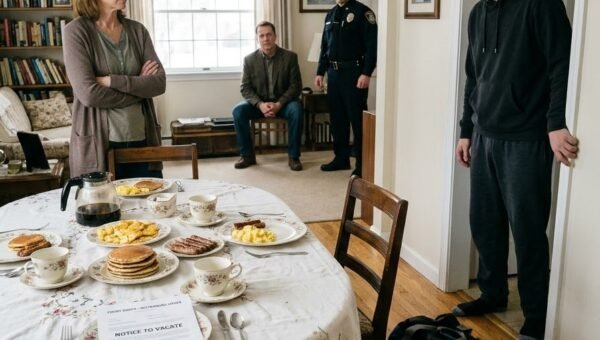
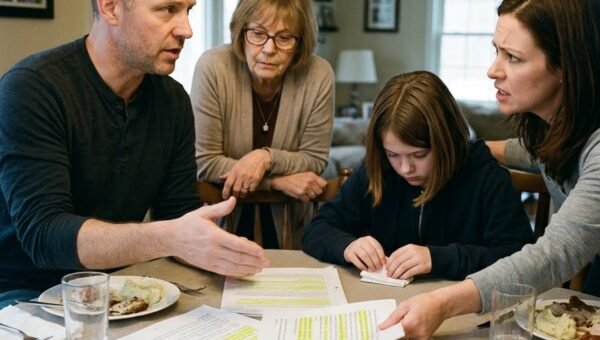
Dad sat at the kitchen table with papers spread in front of him. Mom had a coffee mug between her hands and wasn’t drinking from it. Ranata sat opposite Dad, looking down at the counter. Her husband, Desmond, stood near the sink.
Nobody said hello.
Dad tapped the top page. “Did Ranata ever give you money from us?”
“No.”
Ranata looked up at me. For once, she didn’t smile.
The records showed transfers from my parents to Ranata. Each one had a note beside it: farm repairs, utility help, equipment, temporary support for Fay. The oldest was from six years earlier. The newest was less than a month ago.
At the bottom of the last page, Dad had written the total in pen.
$86,420.
I read it twice. I don’t know why. It was the same number both times.
Mom’s hands tightened around the mug. She said she and Dad had trusted Ranata to pass the money along. They hadn’t sent it to me directly because Ranata told them I was embarrassed and wouldn’t accept help from them. That sounded enough like me that they hadn’t questioned it.
Dad said, “We thought we were helping you.”
I told him I understood what they thought. Then I asked where the money went.
Ranata stared at the table. Desmond looked at her, not me.
She said their finances had gotten bad after Desmond’s hours were cut. They’d fallen behind on their mortgage and had credit card bills they couldn’t get ahead of. She’d asked our parents for help, but she hadn’t told them the truth. She’d said the money was for my farm because she knew they’d give it.
The first time, she told herself she’d pay it back. Then there was another late payment. Another bill. She kept saying she’d straighten it out before anyone noticed.
“I didn’t know how to stop,” she said.
I believed that she’d been scared. I also knew she’d had six years to tell the truth.
I told her I’d looked through my accounts. I had no payments from her, none from Mom and Dad. She said she knew. The words came out so quietly I almost asked her to repeat them.
That was when Desmond finally spoke. He said he’d found some of the old bank statements while sorting paperwork that week. He’d seen the notes about my farm and asked Ranata when I’d paid them back. That was why Dad had started checking their records. They had only been looking at a few transfers at first. Then the total kept getting bigger.
I looked at Desmond. “You knew she’d told them it was for me?”
He said he’d known about the money, not the lie. He’d thought Ranata was borrowing from her parents to keep their house. When he saw the notes, he thought they were just a way to keep the transfers organized.
That answer didn’t make him look great. He didn’t try to make it sound better.
Dad slid the pages toward me. “We should’ve asked you.”
“Yes,” I said.
That was all I could manage right then. I was angry with Ranata. I was angry with my parents for building a picture of me from her stories. I was also embarrassed to be sitting there with a folder full of proof that I didn’t need their money. None of that made the money theirs to give or hers to keep.
I pulled out the chair beside me and put the brown folder on the table.
Dad glanced at it. “What’s that?”
“The farm sale.”
I opened it to the closing statement and turned it toward them. Mom read the number first. Then Dad. Ranata looked at the page and covered her mouth with her hand.
I told them the farm had sold three days ago for $39 million. There was a buyer, a closing date, and my signature. It wasn’t a rumor or a plan. It was done.
Dad took his glasses off. Mom set her mug down. Ranata started to speak, stopped, and tried again.
“I’m sorry,” she said.
I didn’t tell her it was fine. It wasn’t.
She said she’d used the money to keep their house and pay debts. She said the first lie had been easier than telling our parents she and Desmond were in trouble. After that, she’d been afraid they’d ask how much she’d taken. She had also been afraid I’d find out and look down on her.
I told her I might have judged her. I told her I’d spent years judging her right back, mostly in my head, while pretending I didn’t care what she thought of me. That wasn’t the same as stealing. But it was still something I had to own.
The sale didn’t make the missing money harmless. I said I wanted a full record of where it went and a repayment plan that didn’t depend on promises made at a kitchen table. I wasn’t asking for all of it back in one week. I also wasn’t going to pretend the amount didn’t matter because my bank account had changed.
Ranata nodded. She looked worn out, not like someone who’d been caught in a clever scheme. She looked like a person who had let one bad decision grow into a life she had to hide.
Dad said he and Mom would stop sending money through her, starting that night. He apologized for not asking me directly. I told him I’d made it easy to keep assuming I was fine because I never told them anything unless I had to. He said that didn’t excuse it. I said I knew.
We spent a long time with the records. Desmond went through the transfers with Dad. Ranata wrote down what she could remember and marked the ones she needed to check against their bank statements. I watched her do it. Her hand shook once when she reached the largest transfer, then she kept writing.
There wasn’t a clean fix. Ranata couldn’t pay the full amount back. She and Desmond were going to sell some things and talk to their bank about a monthly payment they could keep up with. I said I’d look at the plan when they finished it. I didn’t promise to erase the debt or take over their bills.
Mom asked if I’d still come by for dinner the next Sunday.
I said yes, but not if we spent the whole meal talking about how I was doing financially. She gave a small nod. Dad said he could do that. It wasn’t a big moment. It was a boundary, and they heard it.
The next week, Ranata sent me a spreadsheet with every transfer she could find, dates and amounts included. She didn’t round anything off. She called the file “Money I Said Was for Fay.” That title made me sit with it for a while before I opened it.
The total still came to $86,420.
We met at my parents’ place a few days later to agree on a repayment plan. It wasn’t friendly exactly. It wasn’t a fight either. Ranata brought a typed page with monthly payments and the sale of a few things she and Desmond didn’t need. I asked what would happen if they missed a payment. We wrote that down too.
Dad wanted to cover the first payment himself. I told him no. It was Ranata’s debt to repay, and I didn’t want the same money passed around the family under a nicer name.
Ranata didn’t argue. She signed the plan. I did too, though my name felt strange on it. Then we each kept a copy. No speeches.
My parents did apologize again. I didn’t make them keep apologizing until they hated hearing my name. I also didn’t say everything was back to normal. We had spent years talking around one another, and a signed page wasn’t going to fix that in an evening.
At dinner the following Sunday, Mom set out coffee and the cinnamon creamer. Ranata arrived with a pie. Nobody mentioned the farm sale until Dad asked whether the closing had gone smoothly. I answered him. He listened without turning it into a story about how I should spend the money.
Before I left, Ranata handed me an envelope. Inside was a check for $312.40, the first payment she could make without borrowing again. She said, “It’s not much.”
I said, “It’s the first one.”
She nodded. I put the check in my coat pocket. We didn’t hug. That would’ve felt like pretending.
The grocery bags from that first afternoon had sat in my truck until the milk warmed. I brought them home and threw it out. I still think about that creamer sometimes, mostly because Mom asked for it like nothing was wrong.
The next time I brought her groceries, Ranata came to the door and took one bag from my hand. She didn’t tell Mom she’d been helping me. She just carried the bread inside.