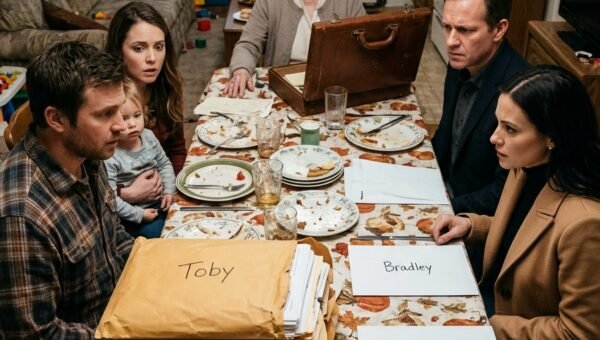
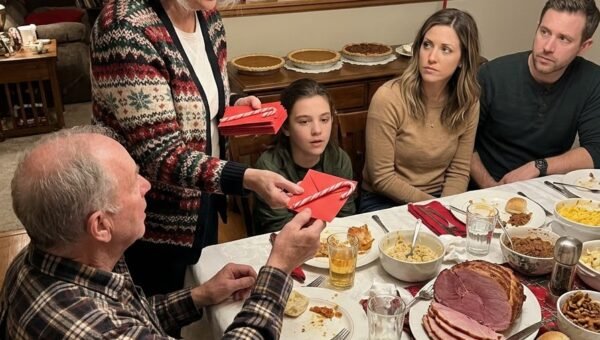
The first result was an email from Royal Travel, sent four days earlier. I’d been looking at Disney prices after Emma started talking about spring break again, and I’d asked a woman named Beth whether there was any way to plan a short trip without putting the whole thing on a credit card.
I had not told Emma. I didn’t want to get her hopes up if the answer was no.
Beth’s email said she’d put together two options, one with three nights and one with four.
Nothing was booked. There was no secret free trip waiting for us. It was just a real price, a real date, and a note that I could call when I was ready.
I read it twice while Emma sat on the bench by the front door, still in that red dress, trying to pull her coat sleeves over the sparkly headband.
“Is it bad?” she asked.
“No, sweetheart. It’s not bad.”
That wasn’t the whole truth. My parents had just made her feel unwanted in front of everyone, and I was holding an email about a trip I might not be able to afford.
But I could at least give her one thing she needed right then.
“I’m going to find a way for us to go,” I told her. “Just you and me.”
She looked at me carefully. “To Disney?”
“If we can make the numbers work, yes.”
I didn’t say we definitely would. I had learned not to make promises because I wanted them to be true.
She nodded once, then looked down at her dress. “Can I change when we get home?”
“Of course.”
I reached for the door. Behind us, my mother was still talking about which hotel rooms made sense. I didn’t turn around.
Outside, Emma held my hand without saying anything. The car heater smelled like dust for the first few minutes, the way it does every winter when I turn it on. I remember that stupid smell because I had nothing useful to say while it warmed up.
At home, Emma took off her headband and put it on the kitchen counter. She didn’t ask about Disney again. That was worse than if she’d cried.
I opened the email on my laptop after she went upstairs to change. Beth’s plan was plain. Flights, hotel, park days. The four-night version was too much.
The three-night one might work if I used my tax refund and the money I’d been setting aside. Emma’s jar could help, but I wasn’t going to take all of it. That was her money. She’d saved it for a dream, not to pay for a family emergency.
I called Beth.
She remembered the email and walked me through the smaller option. There was no special discount, no hidden connection. She could hold the room for a few days while I checked my budget, but she couldn’t promise the flight price would stay the same.
“Take the weekend,” she said. “Don’t book it while you’re upset.”
I appreciated that. I was upset enough to make a bad choice just to prove something.
I wrote the total on the back of an envelope. Then I wrote it again because I had missed a fee the first time. I could cover it if I stopped paying extra on one bill for a couple of months and used the refund. It would be tight, but it wouldn’t mean skipping rent or pretending I had money I didn’t.
When Emma came back downstairs in her pajamas, she saw the envelope.
“Is that the Disney money?”
“It’s the trip price. I’m checking if it works.”
She climbed into the chair beside me. Her little glass jar was still in her room, with DISNEY written across it in marker. I could see the word even from the hallway. I didn’t want her to empty it for me.
“I have my money,” she said.
“I know. You can bring it if you want to buy a snack or something. I’m not using it to pay for the trip.”
“Why not?”
“Because you saved it. It’s yours.”
She thought about that, then leaned her head against my arm. I kept looking at the numbers so I wouldn’t start crying in front of her. I didn’t want Disney to become a way to patch over what my parents had done. It couldn’t do that. But I could make sure Emma knew the trip wasn’t a prize she had to earn.
The next morning, my mother called. I saw her name on my phone and let it ring until it stopped. A minute later she texted that I’d made Christmas uncomfortable by leaving without saying goodbye.
I typed three different replies. I deleted all of them.
Finally, I wrote, “Emma heard you say you ran out. She heard Jessica call her extra. We’re not discussing Christmas in front of her.”
Mom answered almost right away. She said Jessica had been talking about the trip for months and the plan had gotten complicated. She said the rooms were set up for the five children who were going. She said she hadn’t meant to hurt Emma.
I read it twice. It didn’t answer why Diane’s children had been included.
I called her.
“You had five envelopes,” I said. “You planned for five kids.”
“We had the room arrangements figured out,” Mom said.
“You also invited Diane’s children.”
“They’ve been part of our family events for years.”
“Emma has been part of our family her whole life.”
Mom sighed. I knew that sigh. It meant she wanted me to stop making her explain herself.
“Jessica thought it would be easier if the kids all went together,” she said. “I didn’t think you’d be able to take time off, anyway.”
“You asked me to bring Emma.”
“I wanted to see her at Christmas.”
I looked at the envelope with the trip numbers on it. My mother had asked me to bring my daughter, and my daughter had dressed up because she wanted her grandmother to think she looked nice. I kept hearing that more than anything else.
“You wanted her there to watch everyone else get tickets,” I said.
“That’s not fair.”
“No. It wasn’t.”
Mom said she didn’t want a fight. I told her I wasn’t asking for one. I was asking her not to pretend the problem was that I’d left.
She said Emma was too young to understand the whole situation.
“She understood enough,” I said.
Then I ended the call. My hand was shaking a little, so I put the phone down and went to rinse a mug that was already clean.
My father called that evening. He said he’d only suggested the zoo because he was trying to make Emma feel better. He sounded irritated that I hadn’t taken it that way.
I told him the zoo wasn’t the issue. The issue was that he saw her standing there with nothing in her hands and still thought a joke would fix it.
He said, “Your mother planned the trip.”
“And you were standing right there.”
He didn’t answer for a bit. Then he said I was making this bigger than it had to be.
I didn’t raise my voice. I told him we wouldn’t be joining family events for a while if Emma was going to be treated like an afterthought. He said that was my choice.
It was. That part, at least, was easy to understand.
The next few weeks were quiet in a way I had never known with my family. No calls about Sunday dinner. No photos of the cousins sent to Emma. My sister Jessica sent a message saying she hadn’t meant for the “extra kid” comment to sound as bad as it did.
I wrote back that it sounded exactly as bad as it was.
She didn’t reply.
I was not perfect about it. I checked my phone too often. I wanted my mother to call and say the right thing, even though I knew there wasn’t a sentence that could make the Christmas morning disappear. I kept thinking I could explain it one more way and finally get her to see what she had done.
Then I would remember my mother looking straight at Emma and shrugging.
That image was enough.
I called Beth back and asked her to book the smaller trip. I used the refund and my savings. I didn’t touch Emma’s jar. We’d go after spring break, when the flights were less expensive and I could take days off without making a mess at work.
I told Emma on a Saturday morning while she was eating cereal. I set the printed plan on the table. The page had a picture of Cinderella Castle at the top, and she stared at it before she looked at me.
“We’re going?”
“We’re going.”
“Just us?”
“Just us.”
She put down her spoon. “Do I get to meet a princess?”
“I can’t promise which princesses will be there. But we’ll try.”
She reached for the paper and traced the little castle with one finger. I had expected her to jump up or shout. Instead she got very quiet.
“Grandma isn’t coming?”
“No.”
“Did she say she was sorry?”
“No.”
Emma looked at the picture again. “Okay.”
That was all. I let the quiet sit there. I didn’t tell her she should be happy, or that our trip would be better, or that she didn’t need her grandparents. She could miss them and still go with me.
We counted down the days on a calendar on the fridge. Emma put a small sticker on each Friday. She started saving for snacks again, but I told her the trip was paid for and she didn’t need to do that. She kept a few dollars in the jar anyway.
My parents didn’t change their minds. Mom sent one more message about how sad it was that the family was being split up. She didn’t mention the tickets. I answered that I wasn’t keeping Emma from anyone, but I wouldn’t put her in another room where she had to watch her cousins get chosen first.
Mom wrote, “I hope you know what you’re doing.”
I did not answer.
The trip was small. Three nights, two park days, and a hotel room where Emma insisted on sleeping closest to the window. I had packed too many socks and not enough of the snack she liked. We ate one dinner sitting on the hotel bed because we were both too tired to look for a restaurant.
Emma didn’t complain once.
On our first morning in the park, she wore the red dress again. Not the exact same one, because she’d grown a little, but the same kind of red. She brought the sparkly headband and asked if it looked fancy enough.
“It looks like you,” I told her.
She smiled at that.
We walked toward the castle with her hand wrapped around two of my fingers. She kept stopping to look at things, and I let her. I didn’t tell her to hurry up. I didn’t check the time every five minutes. The whole point was that she didn’t have to keep up with a group that had already decided where she fit.
At one point, she asked me to take a picture of her with the castle behind her. She stood with both hands on her hips, then changed her mind and held one hand against her cheek.
“Do I look like a princess?”
“You look like Emma.”
She seemed to like that better. She laughed, and I took the picture before she could fix her pose.
We met a princess later that day. Emma stood in line with her hands clasped, the same way she had stood by my mother’s tree. For a second, I thought she might change her mind and ask to leave. Instead, she walked up when it was her turn and told the princess she’d saved money in a jar for two years.
The princess listened like it mattered.
Emma came back to me holding a small autograph card. She tucked it into the pocket of her red dress and pressed the pocket flat with her palm so it wouldn’t fall out.
“I’m keeping this,” she said.
“I figured.”
At night, she fell asleep before I finished brushing my teeth. The headband sat on the nightstand beside the autograph card. I moved it away from the edge, then stood there longer than I needed to.
I thought about Christmas. About the five envelopes and the one child left out. I thought about all the times I’d accepted less because asking for more made me feel difficult. I had told myself I was being easygoing. Sometimes I was. Sometimes I was just used to being the person who didn’t get picked.
I wasn’t going to teach Emma that.
When we got home, my mother asked for pictures. I sent her one of Emma with the castle behind her. I didn’t add a message about what a wonderful trip it had been. I didn’t send her the picture from the princess line or the one where Emma was asleep with the autograph card in her hand.
Mom replied, “She looks happy.”
I wrote, “She was.”
That was true. It was also all I wanted to say.
I still don’t know whether my parents understand what they did. Maybe they think I’m making a point. Maybe they think I’ll get over it and bring Emma to the next family gathering like nothing happened. I can’t make them see her the way I do.
I can decide what she has to stand in front of.
The red dress is hanging in her closet now. The sparkly headband is on the shelf above it, and the autograph card is tucked into the book where she keeps her favorite things. The jar still says DISNEY, though she’s taken most of the money out for little treats.
She saved for that trip for two years.
I’m glad she got to go. I’m glad she went with someone who wanted her there.