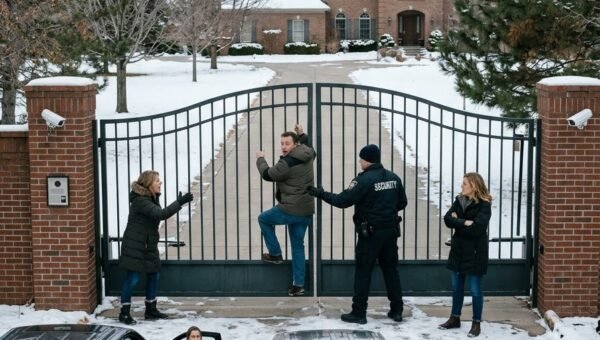
I had one part wrong: I thought if I could get Wyatt to explain Saturday in a way that made sense, I’d know what to do next. I kept waiting for the right sentence, the one that would make it clear whether this was a rotten choice on one bad night or something I couldn’t build a marriage on. I’d spent plenty of long shifts putting out little fires before guests ever saw them. I guess I wanted to do that here, too.
Except this wasn’t a hotel schedule I could straighten out with a phone call.
I went back to the apartment after lunch to pick up the rest of my work clothes. Wyatt was there, sitting on the end of the sofa with his phone in his hand. He stood up when I came in. The food containers were gone, but a faint onion smell was still hanging around. I set my bag on the floor and said I wasn’t there to argue about coffee or the game. He said, “I know.” Then he looked at my bag and asked if I was staying at my sister’s again.
I said I hadn’t decided. That answer seemed to bother him more than anything I’d said so far.
He followed me to the bedroom while I collected a sweater and my work shoes. I could hear his phone tapping against his palm. He said he knew the code thing had been bad, but he didn’t think I understood what his friends were like. I turned around and said I understood that he’d made a choice with me standing on the other side of our door. He replied, “I wasn’t trying to hurt you.” I said, “But you knew I was there.” He didn’t deny that.
He said he’d thought I could wait until they left. I told him that was the part I couldn’t make smaller for him.
I didn’t yell. I wish I could say I did, because then at least I’d have had a reason to feel embarrassed about how the conversation went. Mostly I kept folding things that didn’t need folding. I told him I had read the photo comments. He said he’d seen them too and that the guys were just being dumb. I asked whether he’d corrected them. He said, “I didn’t want to make it a bigger thing.” I said, “It was already a thing.
I was outside.” For a moment he looked like he wanted to argue, then he rubbed his forehead and sat down on the bed.
That was when I asked how long he’d been telling them I was the reason he didn’t go out. He said it wasn’t something he kept track of. I asked for an answer, not a count. He said it had happened here and there, over the years. I asked if he’d ever told them the truth, that he was tired or didn’t want to spend money or just wanted to stay home. He said, “Sometimes.” Then he paused. “Not usually.” It wasn’t some grand secret. It was worse than that. It sounded like a habit he’d never thought he needed to question.
I sat down across from him. I asked if he understood what it felt like to find out his friends had been laughing about a version of me he’d made up. He said they didn’t know me well enough to think that seriously. I told him that didn’t help. They knew enough to call me the boss. They knew enough to make a joke about him being free when I wasn’t in the room. He said, “I should’ve stopped that.” I said, “Yes.” He looked down at his hands and told me he hated feeling like the only one in their group who had to check in. I said I had never asked him to check in about having friends over. He answered, “I know that now.” I asked what he thought then.
He didn’t have a clean answer. He said the teasing got under his skin, and blaming me was easier than admitting he didn’t want to go. I understood that more than I wanted to. I’d done my share of avoiding a hard conversation by making it sound like someone else’s decision. But I hadn’t left him outside our home to help me keep up an act. I said, “You made me pay for a story you told them.” He looked at me and said, “I’m sorry.” Then he added, “I should’ve just opened the door.” I didn’t tell him that was enough. It wasn’t.
I took my clothes to my sister’s and slept there again. My sister didn’t ask me to make a decision that night. She heated up leftover soup and put a towel under the front door because the bottom edge kept catching on the rug. I noticed the towel was the same faded blue one she’d used when I stayed over after my wisdom teeth came out. That’s such a small thing to remember, but my brain will hold onto a towel and let go of what day it is. She asked what Wyatt had said. I told her he was sorry and that he’d admitted it had happened before. She said, “Are you okay with that?” I said I didn’t know yet.
I checked the photograph again later, though I already knew what it said. A new comment had appeared under the old ones, another joke about Wyatt getting a night off. I didn’t reply. I didn’t write a long post naming him or explaining myself. I could have. Some part of me wanted to put the whole story in the comments, including the part where I paid more of the rent and still couldn’t get through the door. But I knew that would turn into me trying to win an argument with people who hadn’t been there. I closed the app, then opened it again a few minutes later. That’s not a proud detail. I wanted to see if Wyatt had said anything.
He hadn’t. I texted him that I wanted to talk through the lease and the wedding plans in person, with no phones and no jokes about how I was making a fuss. He said, “Okay. Tomorrow?” I said that worked. At my sister’s kitchen table, she asked whether I wanted her to sit in with us. I said no, but I wanted her to know when the conversation was happening. She said, “Send me a text when you’re done.” I agreed. It helped to have one person who wasn’t asking me to hurry up and forgive him.
The next evening, I got to the apartment before Wyatt. I stood by the keypad for a moment before I punched in the code. The light turned green. The same code worked. That should’ve felt ordinary. It didn’t. I went inside and put the lease renewal papers on the kitchen table beside my phone. I had also pulled up the venue’s payment email. The next payment was due the following month, and we had both talked about it like it was already settled. I set a glass of water down and watched the ring from it spread under the bottom. I wiped it up before he arrived.
Wyatt came in carrying groceries. He stopped when he saw the papers. I said I wanted to talk about what happened and what we were doing next, not just have him say sorry again. He put the bags down and asked if I had decided something. I said I’d decided I wasn’t paying another wedding deposit while I was still figuring out whether I trusted him. He said, “That’s fair.” Then he looked at the lease papers. I told him I wasn’t ready to renew together. His eyebrows went up. He said he thought we could work on things while staying in the apartment. I said maybe, but I wasn’t going to sign a new lease just because the date was getting close.
He sat across from me. “So you’re ending the engagement?” he asked. I said I was calling off the wedding for now. He said that sounded like ending it. I told him I didn’t know what else to call it. He said, “I don’t want to lose you over one awful night.” I said it wasn’t only one night anymore. It was the night, the post, the way he’d used me as an excuse, and his request that I stay quiet so his friends wouldn’t think less of him. I told him the part that hurt most was how easily he’d made me disappear from our own home. He said, “I didn’t think of it that way.” I said, “That’s the problem.”
He started to tell me that he could talk to his friends. I asked why he hadn’t already. He said he didn’t want to make it worse while we were still upset. I asked whether he meant he didn’t want me to be upset, or he didn’t want them to tease him. He leaned back and rubbed his jaw. “Both, probably,” he said. That was the first answer that felt honest, even if it wasn’t much comfort. I told him he couldn’t keep asking me to carry the embarrassment so he could avoid feeling awkward. He said he understood. I asked how he would show me that, besides saying it in our kitchen. He said he didn’t know yet.
I told him I wasn’t going to decide our whole future based on one conversation. I also wasn’t agreeing to marry him because he finally understood I was hurt. I needed space, and I needed us to stop acting like the wedding and lease were moving forward unless I said so. He asked if we could try counseling. I said I’d consider one appointment, but not as a promise that I was staying. He nodded. He didn’t push me to say more, which I appreciated, but I couldn’t turn that into proof of change. One quiet evening didn’t erase what he’d done. It just meant we could get through the evening without another fight.
We emailed the venue together the next morning to ask what options we had for the payment and cancellation. I didn’t pretend that was easy. We’d already spent time looking at places, and I’d kept the little paper folder from when we first toured them. I slid it across the table to Wyatt and said I didn’t want to make a new payment while we were uncertain. He agreed. We didn’t get some sudden answer that made the money part painless. We got a reply explaining the date and the terms we’d already agreed to. I read it twice and left the folder on the counter.
The lease was harder, because we both lived there and both names were on it. I asked the landlord what choices we had before renewal. We got a plain answer about the steps and dates, nothing dramatic. Wyatt said he could look for another place if I wanted to stay. I told him I didn’t want either of us making a rushed decision that would leave one of us scrambling. We agreed not to renew together while we sorted out the next month. That didn’t mean the relationship was fine. It meant we had a practical plan for the apartment instead of pretending the wedding would solve it.
A few days later, Wyatt told his friends he had been the one who changed the code and that I hadn’t made him do it. He said it without asking me to sit there or reassure him afterward. He didn’t tell me they all apologized. He didn’t say they suddenly understood me. He said one of them told him he’d made it weird, and another said he’d been using the same excuse for years. Wyatt said he’d felt embarrassed. I told him I was sorry he felt embarrassed, then said I wasn’t going to take that feeling away from him. He nodded. I still don’t know if he said it because he finally saw the pattern or because he knew I was close to leaving.
I agreed to one counseling appointment. We went, and I told the counselor I wasn’t there to get talked into trusting Wyatt. I wanted to understand whether there was anything to rebuild. Wyatt admitted he’d liked being seen as the guy who had to ask permission, because it let him avoid saying what he wanted. He also said he hadn’t understood how humiliating the lockout would feel until I described standing outside while he let a delivery driver in. I told him I’d heard him say sorry before. I needed to see what he did when telling the truth cost him something. We left the appointment without deciding we were staying together.
For a couple of weeks, we tried to keep things civil. We shared the apartment and talked about bills, groceries, and what dates we needed to meet. Some nights I could talk to him like I used to. Other nights I heard his friends’ joke in my head when he asked if I wanted to watch a show. He did not change the code again. He did not ask me to pretend Saturday hadn’t happened. Those things mattered. They weren’t enough to make me feel ready to marry him.
I also had to admit my own part in how long I’d let small things slide. When he’d say, “They’ll give me a hard time,” I’d often tell him to go without me, even when I wanted him to say he wanted my company. I’d covered bills and helped him prep for work because I loved him, then acted like I never needed anything back. I didn’t do that to earn a say over his friends. I did it because I wanted us to feel like a team. Still, I could see how I’d helped us avoid plain conversations. That didn’t make the lockout my fault. It did mean I couldn’t fix us by being even more understanding.
The last time we talked about the wedding, Wyatt asked if I’d reconsidered. We were both at the kitchen table. The renewal papers were still there, now with a note beside them about the date we had to answer. I said I had reconsidered, and I was still calling it off. He looked down. “You’re sure?” he asked. I said I was sure I couldn’t keep planning a marriage while hoping he might become someone who stood beside me when his friends were watching. I wasn’t sure I wanted to end every part of what we’d had. I was sure I couldn’t say yes to the wedding.
He asked if there was anything he could do to change my mind. I told him I didn’t want him trying to find the right move to get me back. I wanted him to be honest about himself, even if I wasn’t there to make it easier. He said he loved me. I said I loved him too. Neither of us took that as a reason to pretend the decision had changed. I took off my engagement ring and set it on the table. He reached for it, then stopped. I didn’t know whether that was respect or just not knowing what else to do.
We made the calls we needed to make. We didn’t renew the apartment together, and we worked out the move without turning every box into another argument. I stayed with my sister while I looked for a place I could afford on my own. Wyatt didn’t ask me to keep quiet about why we weren’t getting married. I didn’t give his friends a speech, either. I told my family and the people who needed to know. For a while, I still looked at my phone when I got home, expecting the old code to be waiting there like a problem I could solve.
The last evening I went back for a few things, the keypad flashed green when Wyatt opened the door from inside. He held it for me and stepped back. I picked up the box I’d brought and said I’d take the rest the next day. He said, “Okay.” I could tell he wanted to say more. So did I, probably. I went out carrying the box, and he let the door close behind me. This time, I knew exactly why I was leaving.