The cold wrought-iron of the gate felt stiff against my palm, but I wasn’t the one standing out in the December air. Through the high-definition camera feed glowing on my kitchen tablet, I watched Michael yank the metal bars once, twice, his knuckles turning blotchy and red against the dark paint. He had always been the impatient one, the one who expected every door in Denver to slide open the second he rattled the handle. Behind him, Jennifer had her phone out, her thumb flying across the glass in frantic little arcs, probably trying to reach Thomas Brennan or some emergency real estate lawyer she thought she could bully into a holiday favor.
Lisa just stood near the bumper of her sedan, her breath pluming in the frosty air, arms crossed tight over her puffer jacket like she was waiting for a tardy Uber. They looked so small through the wide-angle lens, huddled by their three separate cars on my freshly shoveled driveway. For a long time, the only sound in my kitchen was the low, steady hum of the refrigerator and the ticking of the old brass wall clock that Richard had hung thirty years ago. I didn’t feel the sudden drop in my stomach that used to come whenever one of them sounded annoyed on the phone.
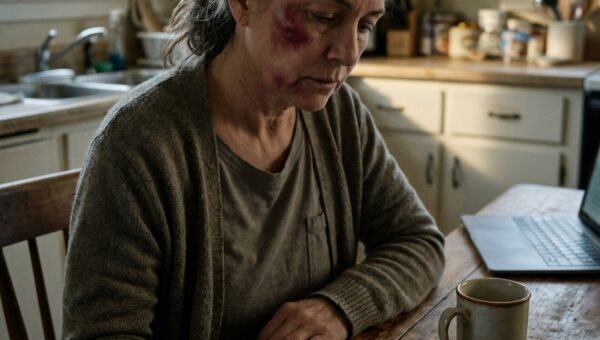
I just felt a strange, heavy quiet settle into my ribs, like the weight of a heavy wool blanket pulled up to the chin after a long flu. They had come for turkey, for pie, and for the spare keys to a future they had already divided up among themselves over Sunday brunches I was never invited to.
When Richard died of that sudden heart attack at fifty-nine, the house had felt too big for about three weeks before it simply felt empty. The kids had rallied then, flying in from their respective corners of Colorado and neighboring states, sitting on my floral sofa with dark circles under their eyes and soft, careful voices.
They told me I would never be alone, that family was everything, that they would check on me every single week without fail. I believed them because I wanted to believe them, because the alternative was sitting alone in a kitchen where the coffee maker still brewed ten cups every morning out of sheer habit. But the weekly calls soon stretched into bi-weekly check-ins, then monthly texts, and finally silence broken only when I dialed their numbers first. I kept telling myself they were busy with promotions, with mortgage rates, with the endless little emergencies of raising teenagers and running companies.
I made excuses for Jennifer’s clipped three-word text messages and Michael’s abrupt goodbyes. Then came the morning I woke up at four o’clock with a crushing band of pressure across my chest, sweating through my nightshirt and gasping for breath while the room spun on its axis. I called 911 because Richard’s face was the only thing I could see in the dark, and when the EMTs rolled me out to the ambulance, I dialed Jennifer with trembling fingers. Her voicemail picked up on the third ring, smooth and professional, telling me she was in a meeting and would call back when she could.
She texted two hours later with three laughing emojis and a hurried note about how glad she was that I was fine, but she never picked up the phone. Michael waited six hours to text a thumbs-up emoji, and Lisa didn’t even acknowledge the hospital stay until the following afternoon when I was already packing my small overnight bag to catch an Uber home.
The ride back from the hospital was thirty-four dollars and fifty cents, and I paid the driver in cash while looking out the window at the gray Denver streets. Sitting alone at my kitchen table that afternoon, watching the sunlight move across the oak floorboards, I started to replay every conversation we had shared over the previous eighteen months. Jennifer hadn’t asked about my heart rhythm or what the cardiologist said; she had asked if Richard’s life insurance policy had finished clearing probate. Michael hadn’t offered to come over and check my blood pressure; he had asked whether I had updated my will to split the property evenly or if I had designated a primary executor.
Lisa had spent twenty minutes on a hurried phone call listing the amenities at a local assisted living facility, casually mentioning how much easier my life would be if I just liquidated everything and stopped rattling around a four-bedroom house by myself. My house, which sat on a large lot in a quiet neighborhood, was currently valued at just under nine hundred thousand dollars. My savings, built up from decades of frugal living and Richard’s prudent investments, sat comfortably at six hundred thousand. And then there was the secondary policy sitting quietly in the drawer of my mahogany desk, waiting for the day I finally joined Richard.
Suddenly, the math of my children’s sudden attentiveness became as clear and cold as winter glass. They weren’t calling to hear my voice or check my pulse; they were conducting an inventory of an estate they believed was already depreciating in value while I occupied it.
I didn’t scream or throw plates across the room when that realization finally landed on me, though part of me wished I had the energy for it. Instead, I finished my lukewarm cup of tea, walked over to the landline, and dialed Thomas Brennan’s office directly. Thomas had known Richard since their days at the firm downtown, and his voice had the gravelly, reassuring cadence of a man who spent his life untangling other people’s family messes. We met the following Tuesday in his conference room, where the leather chairs smelled faintly of old paper and peppermint lozenges. I brought every bank statement, every deed, and every memory of promises made and broken over the past decade.
For three solid weeks, Thomas and I worked through the legal architecture of my life like surgeons removing a stubborn, infected growth. We rewrote the primary will from top to bottom, stripping away the automatic assumption that my children were the default inheritors of my labor and Richard’s thrift. We restructured the investments into a managed charitable trust that would benefit local children’s hospitals and hospice care units in Denver, leaving each of my three children a nominal, symbolic sum of one hundred dollars. Just enough to legally demonstrate they were not forgotten by accident, but not nearly enough to pay off a single luxury car or fund a down payment on a mountain cabin.
Then we turned our attention to the physical boundaries of the property itself. Thomas recommended a local security firm that installed heavy-duty iron gates, perimeter cameras with high-definition audio, and a digital access control system that required encrypted key fobs or verified administrative codes. The old locks, the ones my children had picked or jimmied or simply walked through with spare keys for thirty years, were replaced with commercial-grade deadbolts that could only be operated from the inside or through my personal console.
By the time the system went live in late September, the house felt less like a museum of past disappointments and more like a fortress built by someone who was finally tired of apologizing for surviving. The first month was dead silent, save for the occasional notification ping when a stray cat or a delivery truck passed near the driveway sensor. My children didn’t call to ask how I was adjusting to the new security system because they didn’t even know it existed. They assumed, as they always had, that my life revolved around their convenience, that I would be sitting by the landline on Christmas Eve waiting for the sound of their tires on the gravel.
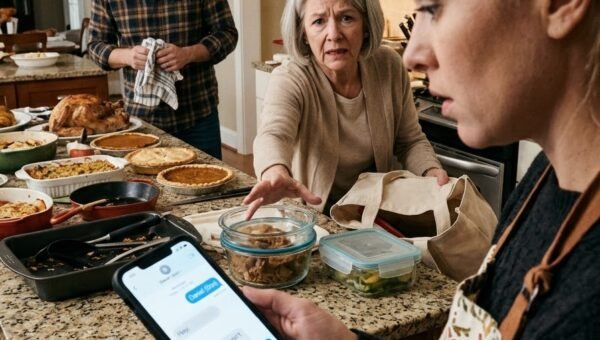
When Jennifer’s name finally flashed across my screen two weeks before the holiday, her tone had that bright, artificial cheerfulness of someone delivering an announcement they expected everyone else to celebrate. She didn’t ask if I wanted company or whether I had already made plans for the holiday roast; she simply informed me that all three families were descending on my address like a migratory flock. When I asked her why now, after months of ignored phone calls and unreturned text messages, her cheerful facade cracked just enough to let the real motive slip out. They were worried about my future management, she said, using that sterile corporate language they always deployed when they wanted to discuss putting me out to pasture.
I told her plainly that I didn’t want them here, that they were not welcome to treat my home like a holiday hotel after treating me like an inconvenient ghost for the rest of the year. Jennifer laughed that short, dismissive laugh that used to make me second-guess every boundary I ever tried to set when she was a teenager. She told me they would be at the front door on the twenty-third at two in the afternoon, and then she hung up without waiting for my answer.
True to their word, three distinct vehicles pulled up to my security gate at exactly two o’clock on a gray, overcast afternoon. From my kitchen window, I watched Michael step out of his silver truck with that familiar slouch of arrogant certainty, walking right up to the keypad as if muscle memory alone could override a digital lockout. When the screen flashed red and the gate refused to budge, his shoulders tightened perceptibly under his winter coat. He punched the old four-digit code again, hitting the buttons with enough force to crack a walnut, but the mechanism remained locked tight.
That was when Jennifer leaned on the intercom button outside the gate, her voice tinny and irritated as it crackled through my kitchen speaker. She demanded I open the gate immediately, acting as though a minor technical glitch was keeping her from her rightful place at the head of my dining table. When I spoke through the intercom and told her no, the silence from the other side was thick enough to cut with a bread knife. Michael didn’t hesitate; he grabbed the vertical iron bars of the gate and started hoisting himself up with the casual entitlement of a man who believed every fence in Colorado existed purely for his convenience.
That was when Marcus, the private security contractor Thomas Brennan had retained to manage the property, stepped out from the side garage with his hands resting quietly at his sides. He wore a heavy navy parka and spoke in a low, measured tone that carried clearly through the intercom mic. When Marcus asked Michael to get down from the gate immediately, my son dropped back onto the pavement with a flushed, angry face, turning toward the camera with his jaw working furiously. Marcus looked straight into the lens, his expression entirely neutral, and asked me if I wanted these unauthorized individuals removed from the private property.
I looked at my three children through the high-definition screen, seeing them not as the small, helpless babies I once rocked to sleep through midnight fevers, but as grown strangers who had calculated the exact financial value of my absence. My heart gave a small, familiar flutter, but it wasn’t fear or panic; it was simply the cold realization that the tie had finally been severed by their own hands. I pressed the transmission button on the console and spoke clearly so that every syllable reached their ears through the gate speaker. “Marcus, go ahead and have them escorted off the property,” I said, my voice sounding steadier than I felt.
Michael took two steps toward the intercom, his face purple with outrage, shouting something about police and trespassing laws while Jennifer screamed my name in sheer disbelief. Lisa just stood by her car, her mouth slightly open, finally looking like someone who realized the ground beneath her feet had just given way. I watched on the monitor as Marcus calmly escorted them back to their respective vehicles, standing his ground until all three engines turned over and they backed out of my driveway in a flurry of spinning tires and exhaust fumes. I didn’t run to the window to watch them drive down the street; I simply walked over to the kitchen counter, poured myself a fresh cup of coffee, and sat down at the table.
The house was unimaginably quiet, wrapped in the kind of deep, unbroken silence that only comes when you stop waiting for people who are never going to show up. My phone remained dark, no longer buzzing with demands or polite inquiries about my estate, and for the first time in years, the space around me belonged entirely to myself. Richard’s clock ticked steadily on the wall, marking out the minutes of an afternoon that was cold, lonely, and entirely my own to keep. I looked down at the empty chair across from me, then out at the snowy lawn where the iron gate stood locked and sealed against the world.
It wasn’t a fairy tale ending, and my chest still felt a dull, familiar ache whenever I thought about the children I had raised and lost along the way. But as I took a slow sip of my coffee, I knew I had finally traded the heavy burden of being used for the quiet dignity of being left alone.