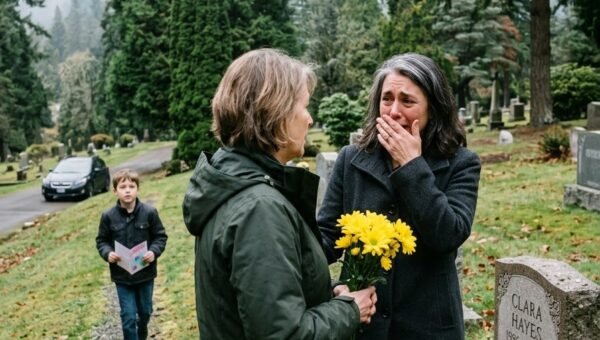
The ivory roses cost seventy-four dollars at the florist off Maple Street, wrapped in heavy white paper with a green silk ribbon that felt a little too stiff between my fingers. I remember the weight of them in the passenger seat of the Cayenne, leaning against the leather console like a passenger who knew they didn’t belong there. Nine days in Santa Barbara with Alana is a long time to spend pretending that your real life doesn’t exist, especially when you are staying in a suite that overlooks the marina and you spend every evening drinking gin-and-tonic out of heavy crystal tumblers while the sun drops behind the Pacific like a red coin.
Alana had laughed when I bought the flowers before the drive back up the grade, telling me that buying flowers for a wife after a nearly two-week absence was like trying to patch a hull breach with a band-aid. I told her she didn’t understand Corinne. Corinne was different. Corinne had the kind of gentle, unfailing patience that belongs to another century, a quiet sort of loyalty that I had tested half a dozen times over the four years of our marriage and always found waiting for me when I came back around. I figured she would be sitting in the sunroom with the baby, eyes red-rimmed from crying while she nursed little Julian, ready to offer those soft, forgiving sighs that always made me feel both guilty and comfortably absolute in my dominion over our house.
The gravel on our drive had a dry, familiar crunch under the tires at 4:14 in the afternoon, the kind of sound that usually brought the front door open before I even killed the ignition. But the porch was empty. The wicker chairs sat with their striped cushions neat and undisturbed, and the double front doors looked dead and heavy under the late-autumn glare. I grabbed the roses from the passenger seat, kicked the Cayenne door shut with the heel of my loafers, and walked up the three slate steps with that faint, dull knot of annoyance starting to tighten behind my ribs.
I had left her with a full staff, a black American Express card with no preset limit, and a six-month-old infant who slept through the night in an imported crib that cost more than my first used sedan. There was no earthly reason for the house to look this dead on a Tuesday afternoon. I turned the brass handle, expecting the stiff resistance of a night latch, but the door swung open without a click, sliding smooth and silent on oiled hinges into the foyer. The first thing I noticed wasn’t the silence, though the silence was thick enough to hum against my eardrums.
It was the smell. A house with a six-month-old baby always carries a faint, warm background of baby powder, spit-up flannel, damp wipes, and the sweet, yeasty smell of formula warming in the bottle warmer on the granite counter. This house smelled like nothing. It smelled like bleach and cold air.
I dropped my leather travel bag by the console table and walked down the wide hallway toward the kitchen, my heels clicking too loud on the hardwood. “Corinne?” I called out, my voice bouncing off the high ceilings and dying in the formal dining room where the silver candlesticks still sat in their polished rows. Nobody answered. I rounded the corner into the kitchen and stopped dead, the stems of the ivory roses slipping an inch in my palm. The granite counters were completely bare. The espresso machine was gone, the chrome toaster was gone, and even the small ceramic dish where Corinne always dropped her house keys and grocery receipts was missing from its usual spot beside the sink.
The only thing sitting on that vast expanse of gray stone was a single, thick manila envelope with my name written across the front in Corinne’s careful, sloping handwriting. It wasn’t typed. It wasn’t a quick sticky note. It was my full name, Arthur Keaton, written in black fountain pen ink with the kind of deliberate, steady pressure that took hours to practice. I laughed out loud, a short, nervous sound that felt thin in the empty room. I laid the ivory roses down right on top of the granite, their white petals already starting to bruise against the cold stone, and reached for the envelope with a thumb that felt just a fraction too stiff.
I figured it was another one of her quiet little emotional statements, the kind of performance where she would pack an overnight bag, take the baby to her mother’s place down in Pasadena, and wait for me to show up with a necklace and a box of imported chocolates to coax her home. Corinne had done something similar about eighteen months into our marriage, back when she still thought my secretary’s late-night calls were strictly about commercial real estate zoning permits. She had gone to stay with an aunt in Ventura for three days, and when I finally drove down to bring her back, she had looked at me with those wide, dark eyes and asked me if I ever thought about what kind of father I would be if I didn’t learn how to stay in one place.
I had kissed her forehead, told her she was being melodramatic, and taken her out for prime rib at the steakhouse on the harbor. That was the last time she had ever raised her voice to me. After that, she had simply gone quiet. She had traded her graduate school books for floral arranging classes and charity board meetings, smoothing out every rough edge of my life until I didn’t even have to look at a calendar to know my suits were pressed and my portfolio was balanced. I slid my finger under the heavy brass clasp of the manila envelope, flipped it open, and tipped the contents out onto the granite beside the bruised roses.
Three distinct items slid out across the stone, and my brain simply refused to process them in any logical sequence. The first was a formal legal petition for dissolution of marriage, stamped with the seal of the Los Angeles Superior Court and dated six days ago, right in the middle of my second night in Santa Barbara. The second was a stack of certified bank statements from our primary joint accounts and my corporate development holdings, showing balances that had been systematically zeroed out through a series of legal wire transfers executed by a firm called Vance & Associates. But it was the third item that made my chest tighten so hard I couldn’t draw a breath.
It was a photograph, printed on heavy matte paper, showing two men standing on the wooden deck of a yacht out in Marina del Rey, laughing with their arms slung over each other’s shoulders, holding amber glasses of whiskey toward the camera. On the left was me, ten years younger, wearing my favorite linen blazer and looking like a man who owned the entire coastline. On the right was Julian Vane, his bright blue eyes squinting against the glare, his crooked front tooth showing in a wide, careless grin that I hadn’t seen since the morning we signed the incorporation papers for Keaton-Vane Development.
I stared at the paper until the ink started to blur, my hand hovering over the edge of the granite like I expected the photograph to burn me if I touched it again.
The sudden, violent ringing of my cell phone from inside my jacket pocket on the floor made me jump so hard I kicked the base of the island. I hauled the phone out, my fingers clumsy against the glass, and saw an unfamiliar downtown Los Angeles office number blinking on the screen. I swiped the green button and barked into the receiver before the caller could even draw breath. “Who is this?” I demanded, my voice cracking slightly on the second syllable. A low, measured voice came back through the speaker, carrying the flat, frictionless cadence of a man who spent every working day delivering bad news to people who thought they were untouchable. “Mr. Arthur Keaton?” the man asked, not waiting for confirmation. “My name is Arthur Vance.
I am the legal counsel and designated estate representative for Corinne Vane Keaton. I am calling to ensure you have located the documents left for you at your residence.” I stood there in the middle of that empty, bleached-out kitchen, staring down at the face of a dead man and the divorce papers that bore my wife’s maiden name, and felt a cold drop of sweat track slowly down my spine. “Where is my wife?” I yelled, the volume of my voice rattling off the stainless steel refrigerator panels. “Where is my son? You tell me right now where she took him or I swear to God I’ll have an injunction slapped on your entire firm before the sun goes down.”
Arthur Vance didn’t even pause. His voice stayed at that exact, terrifying level of professional calm, like a doctor reading off a chart after a routine blood test. “Mr. Keaton, your wife has instructed me to inform you that your access to the family accounts, the corporate credit lines, and the secondary development trusts has been permanently terminated as of 8:00 AM this morning.” I started shouting then, a ragged stream of curses and legal threats that I wouldn’t have believed I had in me, telling him about my connections, my board seats, the district attorney I played golf with every third Thursday at Riviera.
Vance let me rant for nearly twenty seconds before he cut straight through my noise with a single sentence that stopped my heart cold. “Mr. Keaton, you can scream until your throat bleeds, but it won’t change the ledger,” he said softly. “That isn’t the worst news. You need to sit down before I tell you who your son really is.” I didn’t sit down. I grabbed the edge of the marble island so hard my knuckles turned the color of chalk, my eyes fixed on the photograph of Julian Vane lying beside the dead roses. And then Vance said the name that I had spent seven years burying under layers of offshore accounts, forged indemnity clauses, and quiet California dirt. “Julian Vane,” Vance said clearly into the ear of my phone, the syllables dropping like lead weights into the silence. “Your son’s name is Julian Vane Keaton, and he is the sole legal heir to every square foot of property you stole from his uncle when you pushed him off that balcony in Malibu.”
The kitchen didn’t feel quiet anymore. It felt like a tomb where someone had left the lights on. I remember dropping the phone onto the granite counter, the speaker still rattling with Vance’s dry, steady voice reading off case numbers and probate filings, but I couldn’t make my fingers reach down to pick it back up. Seven years ago, Julian Vane was the only reason Keaton-Vane Development was anything more than a stack of unpaid bills and a rented desk in a damp basement off Olympic Boulevard. Julian was the architect, the dreamer, the brilliant, scatterbrained kid who spent twelve hours a day hunched over a drafting table sketching out cantilevered rooflines that everyone else said were structurally impossible.
I was the talker, the guy who could walk into a bank with a bad suit and a three-page pro forma and walk out with a quarter-million-dollar line of credit to buy up derelict duplexes in Silver Lake. We were partners, or at least that was what we told the lenders until the market started tightening up in the fall and the banks began calling our construction loans due all at once. I remember the exact night Julian found out about the second set of books I had been running through an LLC registered in my mother’s maiden name. He didn’t yell.
Julian wasn’t the yelling kind. He just stood by the glass railing of the balcony in his little rental house above Malibu, holding a rolled-up set of blueprints for a twelve-unit courtyard we were supposed to break ground on the following Monday, and looked at me like I was a stranger he’d met in a bus station. “You didn’t have to forge my signature, Artie,” he had said, his voice quiet against the sound of the surf rolling in five hundred feet below us. “If you needed the equity that badly, I would have signed the deed over to you just to keep the payroll from bouncing.”
Three days later, Julian’s rusted Honda Civic was found parked near the shoulder of the Pacific Coast Highway with the keys still in the ignition and a half-empty pack of cigarettes on the passenger seat. His body washed up near Paradise Cove two weeks after that, the coroner ruling it an accidental drowning compounded by exhaustion and a toxic level of prescription sedatives that nobody had ever seen him take. The police asked me a few standard questions in my lawyer’s office, my signature on the corporate buyout agreement was validated by a notary public I paid three hundred dollars to back-date, and within six months I had sole title to the entire inventory of commercial land that Julian’s pencil had drawn into existence.
I used that land to build the apartment complex in Santa Monica that netted me my first four million dollars, and I bought the Cayenne, and I joined the club, and I buried Julian Vane so deep in my own mind that I honestly stopped believing he had ever been a real person. Until Corinne walked into my life three years after the funeral, wearing a simple linen dress at a gallery opening in West Hollywood, with those same wide blue eyes and that exact same habit of tucking her dark hair behind her left ear whenever she was trying to figure out if someone was lying to her.
I had thought it was luck. I had looked at her soft mouth and her gentle, retiring manners and figured the universe was finally rewarding me for being the kind of ruthless bastard who knew how to win when the game got dirty. I never once asked her where she grew up, and she never once mentioned a brother who had gone to architecture school at Berkeley and never came home.
I left the phone buzzing on the counter and walked out of the kitchen, my legs feeling stiff and hollow like they were made of dry pine. I didn’t go to the master bedroom. I went straight down the hall to the nursery, the room I hadn’t stepped foot in since before I flew down to Santa Barbara with Alana. I pushed the white wood door open with my shoulder. The room was immaculate, but it was an immaculate that hurt to look at. The crib was stripped down to the bare wooden slats, the mobile of painted woodland animals was gone from the ceiling hook, and the rocking chair where Corinne used to sit for hours feeding the baby sat crooked against the baseboard.
On the wide white windowsill, right where the afternoon sun cut a sharp square of gold across the white paint, sat a single object that made my stomach drop into my shoes. It was Julian’s silver drafting compass, the one he used to carry in the breast pocket of his denim shirt everywhere he went, the one I had sworn I threw into the ocean off the Malibu pier the night after his funeral so I wouldn’t have to look at its scratched brass hinge ever again. Beside it was a small piece of heavy white stationery, folded once, with my name written in that same sloping black ink.
I picked it up with shaking fingers and unfolded it, my eyes straining against the glare of the window to read the four lines Corinne had left behind for me.
*Artie,* the note said, *you were always terrible at hiding things in plain sight. While you were spending nine days in Santa Barbara paying for Alana’s hotel bills with the credit card tied to Julian’s estate restitution fund, I was sitting in Arthur Vance’s office signing the final transfer documents for every last square foot of this house. You thought I was quiet because you thought I was weak. But every time you went away, every time you stayed out until three in the morning and came home smelling like cheap gin and someone else’s perfume, I was in your home office photographing your ledgers, copying your tax returns, and matching the serial numbers on the forged deeds you used to steal my brother’s life.
Julian Vane Keaton isn’t just your son, Artie. He is the court-appointed owner of Keaton Development LLC, and by the time you finish reading this, the sheriff’s deputies will already be changing the locks on your commercial properties downtown. Don’t call me. Don’t look for us. We’ve gone home.*
The silence in the nursery was heavier than the silence in the kitchen. I stood there with the little silver compass in one hand and the note in the other, listening to the faint, distant hum of a delivery truck shifting gears down on the main road outside the gates. My mind raced back over the last four years of my life, scanning every quiet evening, every gentle smile, every time Corinne had kissed my cheek when I walked in late from the office with Alana’s lipstick still faintly smudged on the collar of my shirt. I had looked at her soft voice and her domestic routines and seen a trophy, a quiet ornament I had earned by virtue of being smarter and tougher than everyone else in the room.
I had never once suspected that the woman sleeping in my bed, wearing the diamond tennis bracelet I bought with the dividends from Julian’s liquidated patents, was an auditor who had spent four years cataloging every crime I ever committed with the patience of a stone mason. She hadn’t been enduring my affairs because she was afraid of losing me; she had been enduring them because she needed me to keep leaving town for nine days at a time so she could finish cleaning out the safe behind the built-in bookshelves in my study without me noticing the missing files.
My feet carried me back down the hall toward my office, the double doors standing wide open as if inviting me in to inspect the damage. The room looked like it had been hit by a professional moving crew that only had twenty minutes to work. The leather executive chair was pulled away from the mahogany desk, and the heavy oak paneling on the west wall, the paneling I had custom-built to conceal the wall safe where I kept my cash reserves, my bearer bonds, and the original corporate ledger from the Vane partnership, was swung wide open on its heavy brass hinges.
The safe wasn’t just empty. It looked like it had been scrubbed with wire wool. Every file folder, every tax return from 2017 onward, every holographic signature I had ever forged onto a bank guarantee or an indemnity waiver was gone, replaced by a single manila folder containing a typed inventory signed by three separate forensic accountants and certified by the Los Angeles County Court. I dropped down onto my knees right there on the Persian rug, my trousers catching on the fringe, and stared into the dark, empty maw of the steel box where I had hidden my entire life for the last seven years.
The smell of cold iron and dust filled my nose, reminding me of the basement off Olympic Boulevard where Julian and I used to sit on overturned milk crates eating cold pizza out of cardboard boxes while we dreamed about building a company that would put our names on the skyline.
I stayed on the floor for a long time, watching the square of sunlight move across the dark wood floor until it hit the leg of the mahogany desk and started to fade into the gray shadows of early evening. My phone had stopped buzzing on the kitchen counter, but the quiet of the house seemed to grow louder, pressing in against my ears like water under pressure. I got up slowly, my knees clicking in the stillness, and walked back out to the kitchen island where the ivory roses were already beginning to drop their white petals onto the gray granite.
I reached out and picked up one of the heavy stems, my thumb brushing against a sharp thorn that hadn’t been trimmed properly at the shop, drawing a tiny bead of bright red blood that welled up against my skin before I wiped it away on the leg of my trousers. I looked down at the bruised white petals and the silver drafting compass sitting beside them, realizing with a cold, absolute clarity that the game was over, the accounts were frozen, and the empire I had built on a dead man’s back had just been dismantled by the only person in the world I was too arrogant to ever see coming.