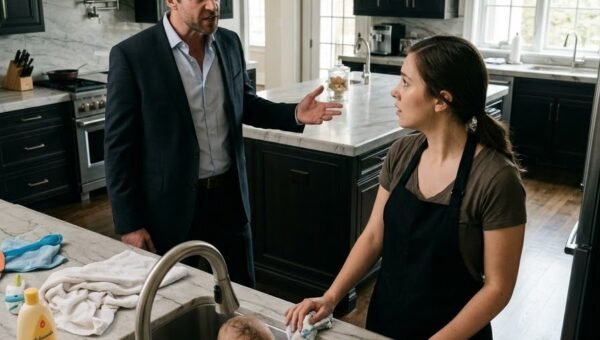
I was measuring coffee into the filter when Alyssa came into my kitchen waving a brochure for a mansion. Four months after Wyatt died, my sister was talking about a February 25th closing as if she’d already picked out curtains.
“We close on February 25th!” Alyssa squealed.
I looked at the brochure, then at my father, who had followed her in. “Whose house did you steal to pay for it?”
“You’re a widow,” Dad sighed. “Stop holding on to the past.”
“At least his house finally did something useful,” Alyssa laughed.
I started laughing too. I couldn’t help it. The sound surprised me as much as it surprised them.
Her smile disappeared. “What’s so funny?”
I looked straight at Dad. “I was just wondering who’d be stupid enough to buy it.”
Dad’s mouth opened, then shut. Alyssa lowered the brochure. They’d forgotten one thing before they put Wyatt’s land up for sale. I knew that much. I didn’t yet know how far they’d gone with the paperwork, or how much they’d signed away.
I turned off the coffee maker. Nobody wanted coffee after that.
Wyatt had been dead four months. I was still learning which parts of the day belonged to me now. I’d kept his mug by the sink because I couldn’t stand to put it in a box, and I still bought the plain cereal he liked without thinking.
Small things. Dumb things, maybe. But grief doesn’t check whether a habit makes sense before it keeps it.
Alyssa didn’t come by much while Wyatt was sick. She sent a card once, then called me to ask if he’d updated his will. Dad came around more often, but mostly to talk about the land Wyatt had inherited from his family. He called it “prime acreage.” Wyatt called it “the back forty,” even though it was bigger than that.
He never wanted to sell it. Not because he thought it would make us rich. Mostly because it had been in his family for generations, and he didn’t like the idea of someone cutting it up for houses.
He’d take me out there in his old truck and point to the wetland at the edge of the property. There were frogs in spring that got so loud we had to raise our voices to talk.
That’s what I remember. Not the size of the place or what someone might pay for it. The frogs. Wyatt’s hand on the steering wheel, his thumb rubbing a worn spot in the leather.
Four years before he died, a survey turned up something buried on the parcel: an old commercial fuel reservoir from a highway depot that had operated there in the 1960s.
Fuel had leaked into the soil and reached the wetlands. Wyatt didn’t tell me every detail at first. He was already sick, and I had enough to do keeping track of his medicine and appointments. When he finally explained, he didn’t make it sound like a disaster. He said he’d found the right people to handle it.
He also said, “This part won’t land on you.”
I believed him. Maybe I should’ve asked more questions. I’m not proud of how relieved I was to let him manage it.
The land went into a specialized environmental trust, with a strict covenant registered with the county. The trust kept the parcel out of ordinary development and required an environmental assessment if anyone tried to convey it outside the conservancy. The likely bill was more than $800,000. By the time the terms were finalized, the estimate was $850,000.
Wyatt’s lawyer explained the paperwork to us both. I signed what I needed to sign as his spouse, and Wyatt made sure the parcel stayed under trust management. It wasn’t part of the property I’d be handling through probate. I understood that much. I also understood that he’d done it to keep the cleanup liability from becoming my burden.
The lawyer gave me certified records. Wyatt put a second set in his safe-deposit box. After his funeral, I was so tired I couldn’t remember which documents I’d put where. I knew the parcel wasn’t mine to sell, but I didn’t go looking for those records until Alyssa showed me the mansion brochure.
The next morning, I drove to the bank and asked for the safe-deposit box. I kept rereading the little card the bank gave me because my hands weren’t quite steady, and I didn’t want to lose the number. Inside was a folder in Wyatt’s handwriting. The folder smelled faintly of the cedar drawer where he’d kept his old maps.
There were certified county land records, the environmental covenant, and the trust documents. The covenant was recorded three years earlier, a few months after the survey came back. It named the fuel reservoir and the contaminated wetlands. It said any unauthorized sale outside the conservancy would trigger the required assessment and remediation obligation. Residential development was prohibited.
I read it once, then again slower. It wasn’t a vague note or a warning that could be argued away. It was on the public record. Wyatt had done what he told me he’d do.
I called his estate attorney, Ms. Patel. She asked me to bring the folder to her office. I expected to hear that Dad had misunderstood something. That would’ve been bad enough. Instead, she pulled up the land records and asked if I knew about a quitclaim deed filed six weeks earlier.
I didn’t.
She turned her screen toward me. Dad and Alyssa had tried to transfer the parcel to Marcus Vance, a commercial developer. They had used an old copy of the deed and paperwork that looked like an outdated power of attorney. Dad had signed the quitclaim, though he didn’t have authority to act for Wyatt’s estate or for the trust.
“That transfer isn’t valid,” Ms. Patel said.
I kept looking at the screen. “But the sale?”
“The contract is another problem,” she said. “Your father signed the seller representations himself.”
She showed me the purchase agreement. Dad had checked boxes stating there was no known hazardous waste, no environmental restriction, and no deed covenant affecting the land. Alyssa had signed too. Both had promised that the title was clean and the parcel could be sold for development.
They hadn’t asked me to sign anything. They didn’t need me to see the paperwork before they signed it. That part still bothers me.
“Does Marcus know?” I asked.
“He will,” she said. “The title search is still underway.”
I asked if I had to stop the sale. Ms. Patel said I had to make sure the official trust records were disclosed and not sign anything that waived the restrictions. She would notify the title company through the proper channel. I didn’t have to make a scene or take money out of Wyatt’s estate. I only had to tell the truth and leave the documents in place.
So that’s what I did. I didn’t call Alyssa and threaten her. I didn’t tell Dad what I’d found. I let the title process continue because the public record was going to surface either way. I knew that could sound cold. But I wasn’t going to help them hide what Wyatt had spent years making clear.
Alyssa kept talking about the mansion. She sent me photos of a dining room set and asked whether I thought the pale wood would look “too country.” I didn’t answer. She’d always wanted to be around people with bigger houses and nicer cars. That wasn’t new. What was new was hearing her talk about Wyatt’s property as though it were a check with his name on it.
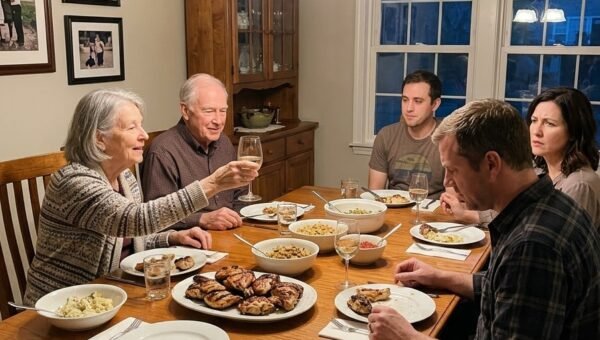
One Sunday, Dad called to say they were celebrating. I didn’t go. Alyssa posted pictures from dinner at a restaurant in the county seat, with a champagne glass in front of her and the mansion brochure beside her plate. The caption said, “New chapter.” I looked at the picture longer than I meant to.
Then I put my phone facedown.
Ten days before February 25th, Ms. Patel called. The title company’s search had found the environmental covenant and the mandatory remediation lien. The title officer had flagged it for Marcus Vance’s legal team. The transfer couldn’t close as promised, and the seller disclosures were now a serious issue.
That afternoon, Marcus’s lawyers sent Dad and Alyssa a notice of default and breach of warranty. They were demanding the return of the earnest money and $850,000 in remediation indemnification. Dad had signed the seller warranties. Because he’d signed them personally, and because both he and Alyssa had made claims about the property, they were exposed to a civil fraud claim as well as breach of contract.
Dad called me three times. I didn’t pick up. Alyssa sent a text saying I needed to call her before “this gets out of control.” I didn’t answer that either.
They came to my house that evening. Dad looked as if he hadn’t slept. Alyssa still had the mansion brochure in her bag, folded down the middle. I let them in because I wanted to hear what they were asking for, though I already knew.
Dad put a stack of papers on my kitchen table. “You need to sign an amendment.”
I sat down but didn’t touch it. “What amendment?”
“Something to make the estate responsible for the environmental costs,” he said. “That’s what the lawyer says will fix it.”
Alyssa looked at me. “You can use Wyatt’s life insurance. It’s more than enough.”
I don’t know why I expected them to ask for help before they asked for money. Maybe because I was still trying to believe they had any idea what Wyatt had done for me.
“Wyatt’s life insurance isn’t yours,” I said.
“We’re family,” Dad answered. “We’re trying to keep this from destroying everybody.”
I thought of Wyatt in the truck, pointing out the wetland. I thought of the folder he’d left in the safe-deposit box, labeled in his blocky handwriting. I had not known how much that folder would matter until I was sitting at the table with my father asking me to undo it.
“You signed the contract,” I said. “You checked those boxes.”
Dad rubbed his forehead. “I thought the land was clear.”
“You signed that it was clear.”
“I was trying to get the sale done,” he said. “We didn’t know the details.”
Alyssa’s voice got sharp. “You knew about the contamination, didn’t you?”
“I knew Wyatt had put the land in a trust. I didn’t know what you’d signed until the attorney showed me.”
She looked away. Dad didn’t.
I opened the folder I’d brought from the bank. Then I set the certified county records on the table between us. I didn’t shove them at him or raise my voice. I put them down carefully because the corners were bent, and I didn’t want them to tear.
“This was recorded before Wyatt died,” I said. “The land is protected. I’m not signing an estate amendment, a waiver, or anything else.”
Dad leaned toward the documents. “You could get the trust to release it.”
“No.”
“It’s just land,” Alyssa said. “It’s sitting there doing nothing.”
“It’s keeping the cleanup where it belongs.”
“What does that even mean?” she asked.
“It means Wyatt made sure this didn’t become my bill.”
Dad stared at the certified copies. His fingers moved over the county stamp without touching it. “You’re going to let us lose everything over this?”
“You already sold something you didn’t own.”
Alyssa’s eyes filled, but she stayed angry. “You’re my sister.”
“I was your sister when you laughed about his house.”
Nobody spoke for a few seconds. Dad finally asked if I’d told Marcus what the documents said. I told him the title company had found the public record, and Ms. Patel had made the proper disclosure. I hadn’t hidden anything. I hadn’t changed anything. The land was under the same trust Wyatt had set up before either of them made a deal.
Dad asked me to call Marcus’s lawyer and explain that he hadn’t meant to lie. I said that was something he needed to do himself. Alyssa asked again about the life insurance. I said no.
I didn’t say it loudly. I didn’t need to.
The next days were ugly. Dad’s lawyer worked out a settlement with Marcus Vance’s team. Dad had to liquidate part of his retirement savings to pay it. The amount wasn’t made public to me, and I didn’t ask. Alyssa lost the mansion contract because she couldn’t cover the required funds after the earnest money was forfeited. The closing on February 25th never happened.
She moved into an apartment instead. I heard that from a cousin, not from Alyssa. Dad sent me a short letter saying he was sorry the situation had become “so painful.” He didn’t say he was sorry he’d signed false disclosures. I put the letter in a drawer and didn’t reply.
I changed the locks because Dad still had an old key. I removed his access to the estate records and asked Ms. Patel to put all communication through her office. It wasn’t a dramatic thing. I just didn’t want to wonder who could come into my house or call asking me to fix a problem I didn’t make.
The land remains in Wyatt’s environmental trust. No mansion, no subdivision, no shortcut around the covenant. I don’t know whether the cleanup work will take years or what the county will decide next. I only know the trust is still doing what Wyatt set it up to do.
I went back to the bank once more to return a document I’d taken out by mistake. By then, I could open the safe-deposit box without having to reread the number on the card.
At home, I placed Wyatt’s brass compass on the sunlit kitchen table beside the finalized estate decree. I used to think the compass was just one more thing he liked to keep close. Now it sat where I could see it, while the afternoon air outside stayed entirely still.