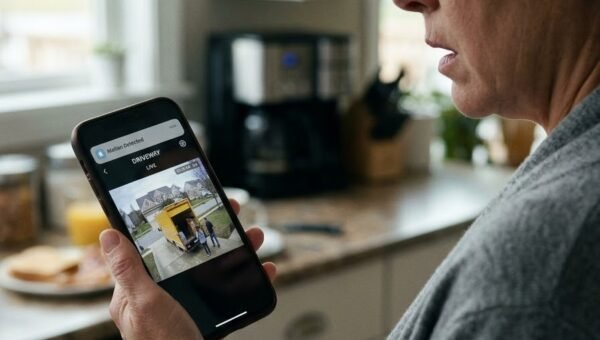
The salt air always smelled the same when the tide turned against the pilings, heavy with old kelp and wet cedar, but on that particular Tuesday morning, the only thing I noticed was the small vibration of my phone resting against the laminate kitchen counter. For eight years, I had lived as a ghost in my own family tree, an invisible name omitted from printed invitations, group chat lists, and holiday place settings. I was the difficult one, the spinster aunt who lacked the proper social grace to smile while my brother Jason cleared out another line of credit or while my sister Amanda turned every family dinner into a roasting session directed squarely at my quiet habits.
I had spent eight winters working double shifts at the medical records desk and cutting back on every unnecessary luxury until last spring, when the notary slid the final closing papers across a mahogany table and handed me the keys to a modest, cedar-shingled cottage tucked behind the dunes in Cape May. It had two small bedrooms, a patchy lawn of sea grass, and four locks that actually worked, and for the first time in my adult life, the front door belonged to me alone.
The phone buzzed again, a sharp, insistent vibration that rattled against the ceramic coffee mug I had inherited from my grandmother.
I did not recognize the ten-digit number blinking on the screen, but living near the coast meant dealing with local contractors and utility crews, so I swiped the green bar without hesitation, expecting a call about the back porch steps. Instead, Amanda’s sharp, nasal cadence filled the speaker before I could even draw a breath, carrying that familiar, performative lightness she always used when she wanted something she knew she had no right to ask for. She did not say hello, and she certainly did not ask how I had survived the two years of radio silence we had tacitly agreed upon after the disastrous Christmas of my father’s passing.
Her voice was bright, hurried, and entirely unbothered by the passage of time or the miles of highway between us.
“Hey, Sarah! So, Mom told us about the beach house,” Amanda announced, as if she were reading from a shared calendar we had both been maintaining. “We’re thinking the first week of July would be perfect for the whole family.”
There was no pause for me to answer, no tentative inquiry into whether the house was even finished or whether I might already have plans of my own. It was a royal decree issued from the living room of her suburban split-level, assuming that my hard-earned sanctuary was simply an unoccupied annex waiting for them to populate it with coolers, inflatable rafts, and Jason’s endless trail of half-empty beer cans.
I could hear the faint clatter of silverware in the background, someone yelling at a television, and the unmistakable low hum of my mother Evelyn’s refrigerator running through the speakerphone function. They were sitting around the kitchen table in Pennsylvania, mapping out their summer leisure schedule using my address as the anchor point, exactly as they had done with every relative who ever owned a cabin in the Poconos or a camper by the lake.
“Sorry, I only host people who actually like me,” I said, my voice remarkably steady even to my own ears.
The silence that followed was not the quiet of a dropped call, but the stunned pause of a small-town tyrant whose subjects had suddenly spoken Latin. Amanda went ballistic instantly, her voice climbing an octave as the performance of cheerfulness evaporated to reveal the cold, reactive entitlement underneath. She screamed that I was bitter, selfish, and fundamentally broken, shouting that my petty grudge-holding was the exact reason they had been forced to cut me out of the family circle in the first place, proving every harsh thing they had ever said about my temperament behind my back.
“Glad we finally agree on something,” I said, and tapped the red circle to block her number before she could draw breath for her next tirade.
I set the phone back down on the laminate counter, and my hand did not even shake as I picked up my mug. The kitchen was quiet again, save for the refrigerator humming in the corner and the distant cry of a gull banking over the marsh grass outside the kitchen window. I walked over to the small round table by the window and looked out at the narrow gravel drive that led from the county road to my back porch, taking in the neat row of wild hydrangeas I had planted myself two weeks ago. Eight years of sitting at the far end of long tables while my mother made pointed remarks about daughters who never married or settled down had left a thick calluses on my ribs, but looking out at the sunlit grass, I realized the armor had finally set.
I had spent my entire thirties apologizing for taking up space, for saving my own money, for refusing to hand over my savings to bail Jason out of his latest truck financing scheme, and for declining to laugh when Amanda made a sport of my clothing choices.
The memory of those family dinners was a persistent ghost, but standing in my own kitchen, the fog of those old obligations finally began to burn off in the morning light. I remembered the Thanksgiving eight years ago when Jason had leaned across the carving board and asked me to co-sign a commercial loan for his landscaping business, a business that existed mostly on paper and in the optimistic stories he told our mother over Sunday pot roast. When I had calmly looked at the bank disclosures and told him the numbers did not add up, Evelyn had set her gravy boat down with a sharp clatter and told me that real sisters did not count pennies when a brother’s livelihood was on the line.
Amanda had chimed in with a dry observation about my savings account, wondering aloud who I was planning to leave my money to anyway since I couldn’t even keep a houseplant alive.
They had stopped inviting me to Easter the following spring, and by the time my fiftieth birthday rolled around, the silence was total and absolute, broken only by the occasional holiday card from an aunt who didn’t know any better. I had taken that silence, packed it into three cardboard boxes, and driven three hours east toward the salt marshes until the air smelled of tide pools instead of pine trees. I had worked three extra shifts a week at the clinic records room, eating canned soup and wearing my winter coats for an extra season until the deed to the Cape May cottage was recorded in my name alone, free of mortgages, liens, or family names.
Two weeks passed in a blur of small, satisfying chores: painting the baseboards a pale seafoam green, patching a loose shingle near the chimney, and learning the names of the local shopkeepers who did not care who my mother was or what my brother drove. Then came the second wave, exactly as I knew it would, arriving not with a shout from Amanda, but with the heavy, calculated gravity of my mother’s voice leaving a voicemail on my landline. Evelyn had never learned how to text properly, so her messages always sounded like depositions delivered from a wing-backed chair in a nursing home she hadn’t yet entered.
“Sarah, it’s your mother,” the machine clicked, her voice dripping with the practiced martyrdom of a woman who believed every slight against her children was an insult to the Almighty. “Amanda is beside herself, and honestly, I don’t know what kind of company you’re keeping down there in that little fishing village to make you treat your own blood this way. Jason has had a terrible run of luck with his truck transmission, and the children were so looking forward to the beach house after all these months of disappointment. Family forgives, Sarah. That’s what we do. Call me back before noon so we can sort out the bedroom arrangements.”
I listened to the tape spin in its little plastic housing until the click of the disconnect tone signaled the end of her monologue. I did not call her back, just as I hadn’t called her when she missed my milestone birthday three years prior, because I finally understood the arithmetic of their affection. To Evelyn and her circle, family was not a network of mutual care, but a revolving line of credit where the oldest sibling held the keys and the youngest was expected to pay the interest with compliance. Jason’s timeshare in the Poconos had fallen through because he owed back dues to the property association, and rather than telling his wife the truth, he had let Evelyn convince them all that my modest coastal cottage was a family asset waiting to be claimed by right of birth.
Three days before the first of July, an email arrived in my inbox from an address I didn’t recognize, though the opening lines made the sender’s identity transparent before I even scrolled down to the signature block. Jason wrote with that breezy, half-literate familiarity that always preceded a request for money, suggesting that we let bygones be bygones and focus on the kids getting a week of fresh air by the water. He even offered to bring up a couple of cases of cheap beer and a portable grill as if he were doing me a favor by turning my back porch into his private tailgating lot. I deleted the message without replying, dragging the icon straight to the trash bin and emptying it with a sharp double-click of my mouse.
By the afternoon of June thirty-first, the atmosphere around the cottage had grown preternaturally still, the kind of heavy, humid quiet that usually precedes a summer squall off the Delaware Bay. I spent the afternoon cleaning the salt spray off the front windows and checking the heavy iron bolt on the white wooden fence that enclosed the gravel driveway, making sure the latch dropped cleanly into its keeper without a hitch. I was not hiding, and I was certainly not afraid, but I knew the pattern of their stubbornness better than they knew mine, and I knew that Amanda never accepted a closed door until she had rattled the knob hard enough to wake the neighbors.
The sun was just beginning to dip below the line of dune grass on the morning of July first when the first engine sound broke the morning quiet, a deep, rumbling diesel note that vibrated through the floorboards of the front porch. I was sitting in the wooden rocking chair with a ceramic mug of green tea, watching a pair of ospreys circle over the marsh channel, when two heavy SUVs turned off the county highway and rolled down my private gravel lane. The lead vehicle was Amanda’s charcoal-grey crossover, its roof rack laden with striped beach umbrellas and colorful plastic coolers, followed closely by Jason’s dented white pickup truck with its bumper dragging slightly from the weight of three teenagers and a cargo bed full of luggage.
They didn’t park neatly in the turnaround space by the shed; they simply pulled up right behind my sedan, blocking the exit entirely, as if they intended to stay until Labor Day whether I liked it or not. The doors flew open almost simultaneously, kicking up small clouds of white shell-grit and dry sand that settled against the tires of my car. Amanda stepped out first, wearing her oversized designer sunglasses and a tight linen tunic that looked entirely unsuited for the humid salt air, followed by Jason, who slammed his truck door hard enough to rattle the side mirrors. Evelyn emerged more slowly from the passenger seat of the crossover, leaning heavily on Jason’s forearm while she adjusted her stiff-brimmed sunhat with a gloved hand, looking around the small property with the critical eye of a hotel inspector who had found a speck of dust on the lobby desk.
I didn’t get up immediately from the rocking chair. I took another slow sip of my tea, watching through the porch screen as Amanda marched up the three wooden steps with her chin tilted at that familiar, combative angle that meant she was ready to deliver a speech she had rehearsed all the way from the state line. She didn’t bother knocking on the front door; she simply grabbed the screen handle and rattled it twice, her expression twisting into an ugly mix of righteous indignation and simulated injury when she found it locked tight against her hand.
“Sarah! Open up this door right now, we can see you sitting right there,” Amanda called out, her voice sharp enough to cut glass as she slapped her palm against the wooden frame. “Honestly, hiding in your own house like a teenager? Mother is right here in the heat, and you have the front door locked like a fortress.”
I set my mug down on the small side table, stood up slowly, and walked down the steps to the screen door, pushing it open just far enough to stand in the threshold without stepping out onto the porch floor. I looked down at the three of them standing near the bottom of the steps, their faces flushed from the humid morning air and the irritation of a three-hour drive that hadn’t ended with a red carpet.
“You’re trespassing,” I said, my voice completely level, lacking the tremor or the defensive spike Amanda was clearly waiting for. “Turn the cars around and head back down the lane. You aren’t coming in here.”
Amanda threw her hands up in the air, turning toward Evelyn as if to appeal to a higher court of maternal suffering. “Do you hear her, Mom? After everything we’ve been through as a family, after you drove three hours in the middle of a heatwave because we thought we were coming to visit our own sister, she stands there and tells us we’re trespassing on her private little lawn. Have you completely lost your mind, Sarah?”
Evelyn stepped forward, her face set in those familiar, rigid lines of ancient disappointment that had been her primary parenting tool since I was old enough to hold a fork. “We are your family, Sarah,” she said, her voice dropping into that low, gravelly register meant to invoke generations of ancestors who had suffered through worse winters than mine. “Your brother needs a place for the children to decompress after a very difficult spring, and Amanda only wanted to bring everyone together under one roof. Is this really the person you’ve become? A stranger who locks her own mother out in the gravel?”
“You didn’t come to visit, and you certainly weren’t invited,” I said, looking past Amanda’s shoulder toward Jason, who was leaning against the side of his truck with a sullen, bored expression on his face, as if he were waiting for a tow truck on the interstate. “You came because you ran out of money for a proper rental and you thought Mom could bully me into handing over the keys while you treated my house like a free resort. Well, the door stays locked.”
Jason pushed off from his truck fender and took two heavy steps toward the bottom of the porch stairs, his jaw working as his temper finally got the better of his casual posture. “Don’t give us that holier-than-thou garbage, Sarah,” he shouted, pointing a thick finger up at the porch railing. “Mom told us you bought this place with spare change from your little records job while the rest of us were actually working for a living. We drove three hours, the kids are exhausted in the back seat, and you’re going to stand there and act like a total stranger over some petty grudge from eight years ago?”
“It’s not a grudge, Jason, it’s a boundary,” I said, my hand resting calmly on the wooden door frame. “And you have about ten minutes to get back in your trucks and head back to Pennsylvania before I call the county sheriff to have your vehicles towed from my private drive.”
Amanda let out a harsh, disbelieving laugh, stepping right up to the base of the stairs and looking up at me with absolute contempt. “Go ahead, call him! Tell the deputy that your own family drove down to see you and you’re hiding behind a padlock like a criminal. Let’s see what the town police think of a daughter who won’t even offer her mother a glass of water on a July morning.”
“I already called him,” I said quietly, pointing toward the end of the gravel lane where a marked cruiser from the county precinct was just turning off the public road, its light bar dark but its engine humming as it pulled up behind Jason’s truck and dropped into park.
Deputy Miller didn’t turn on his siren or draw any weapons; he simply stepped out of the cruiser with his thumbs tucked into his duty belt, a tall, grey-haired man who knew every property line within twenty miles of the marsh. He walked slowly up the shell drive, nodding once to me on the porch before turning his steady, neutral gaze toward the three figures standing near the bottom of the steps.
“Morning, folks,” Deputy Miller said, his voice smooth and professional as he glanced from Amanda’s agitated stance to the heavy luggage piled on the crossover roof. “Got a call about an unauthorized vehicle blockade on private property. Is there a problem here we need to sort out at the precinct, or are these cars about to be moved back to the highway?”
Amanda turned on the deputy with the righteous indignation of a suburban homeowner accustomed to municipal employees taking her side by default. “We are family, Officer! This is our sister’s house, and she’s locking us out in the heat like we’re vagrants. We have a right to be here!”
Deputy Miller looked at Amanda, then at Evelyn, and finally turned his head slightly toward me on the porch. “Ma’am, is this your primary residence, and are these individuals listed on your deed or invited guests?”
“No, Deputy,” I said clearly. “They don’t live here, they weren’t invited, and I’ve asked them three times to leave my property.”
The deputy turned back to the family, his expression hardening just enough to signal that the conversation was over before it really began. “You heard the owner. You’re parked on private deeded land without authorization, and the property owner wants you off the premises. I suggest you turn those vehicles around right now, or I’ll be writing three separate tickets for criminal trespass and calling a flatbed for the truck.”
Jason swore under his breath and kicked a loose oyster shell across the gravel, glaring up at me one last time before turning sharply on his heel and heading back toward the driver’s side of his truck. Amanda stood her ground for another three seconds, her face mottled with rage and humiliation, before she shot me a look that promised a lifetime of future silence, a promise I intended to match word for word.
“You’re a cold, miserable person, Sarah,” Amanda spat out, her voice shaking as she turned and marched back to the crossover, climbing inside and slamming the door hard enough to rattle the side mirrors.
Evelyn didn’t look at me as Jason guided her arm back toward the passenger seat of the crossover. She simply stared straight ahead through the windshield, her lips pressed into a thin, white line of absolute defeat as the engine roared to life with a puff of exhaust.
I stood silently on the threshold as the two vehicles threw up another cloud of grey dust, backing slowly down the narrow lane in a tight, awkward three-point turn before heading back toward the county highway without a single wave or backward glance. I watched until the dust settled back into the gravel and the hum of their tires faded entirely beneath the steady, rhythmic wash of the Atlantic tide rolling against the distant dunes.
When the lane was completely empty, I walked back to my rocking chair, picked up my ceramic mug, and sat down in the warm morning air. The gate behind the gravel drive was securely latched, the salt breeze was clearing the last of the exhaust from the yard, and the only sound left in the world was the steady, unbroken music of the sea.