The phone on the kitchen wall started ringing at 10:14 on a Tuesday morning, and the sound made the empty house feel ten times larger than it had any right to be. Hank Miller from the garage down on Route 6 didn’t usually call during the middle of the workweek unless a part was delayed or an inspection had failed, but his voice on the other end wasn’t the hurried rattle I was used to hearing over the whine of an air compressor.
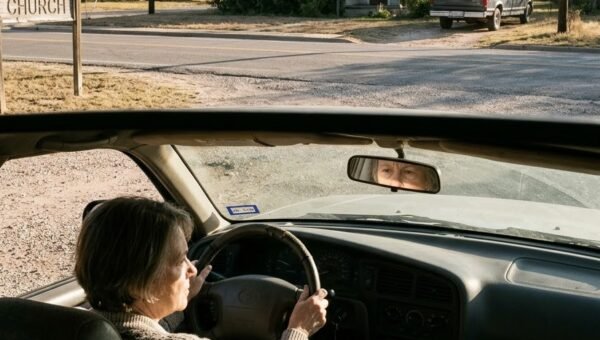
He just said my name twice, slow and careful, like he was standing on thin ice and testing where to put his boots. Mrs. Powell, he said, your husband left something in the back bay, and you need to come get it before I close up for winter. Jim had been gone two months, ever since that suffocating August afternoon when his heart simply gave out while he was tying up the tomato vines by the back fence, and my days had settled into a heavy, mechanical routine of moving from room to room without really touching anything. I drove the old sedan down Route 6 with the window cracked half an inch because the upholstery still smelled faintly of the peppermint lozenges Jim kept in the glove box, and the asphalt shimmered under a pale October sky that looked like old pewter.
When I pulled into the gravel lot beside the grease-stained cinderblock building, Hank was waiting by the service door with his hands shoved deep into his denim pockets, looking down at his boots the way men do when they have bad news or heavy business to deliver. He didn’t offer a handshake or any of those polite little speeches people hand out at the grocery store, just pushed the side door open wider and told me to step inside out of the wind.
The garage smelled of warm oil, old iron, and burnt coffee, the exact same mixture that had clung to Jim’s flannel shirts every evening for the thirty years he kept his own garden tractor running.
Hank didn’t take me toward the hydraulic lifts or the parts counter where the calendars with the faded tractor pictures hung crooked on the drywall. Instead, he led me past the Coke machine into the dark little storage alcove where they kept old battery chargers and broken axle shafts, and there it sat like an unexpected anchor dropped onto the concrete floor. It was an old four-drawer metal filing cabinet painted that institutional olive green that nobody had bought since the seventies, the bottom drawer slightly warped where someone had shoved it too hard against a stud. Hank reached out and gave the top drawer a sharp pull, and it slid open with a heavy metallic screech that made my teeth ache.
Inside were neatly labeled manila folders, standing upright in tidy rows with tabs written in Jim’s familiar, blocky hand, the kind of handwriting he used when he built the porch swing or marked the planting rows in April. There were one hundred and twelve folders in all, each one fat with receipts for oil changes, tire rotations, brake pads, and state inspections, spanning all the way back to the year Jim took early retirement from the county road department. Hank leaned his hip against the corner of a grease-streaked workbench and cleared his throat, his jaw working on a toothpick he’d had parked in the corner of his mouth since I drove up.
For sixteen years, Jim prepaid oil changes and tires for single mothers, Hank said, looking right at a grease spot on the floor instead of at my face. Three hundred dollars a year for each one, paid in cash every January right after the holidays. The church referred them, and nobody else in this town knew a blessed thing about it except Pastor Thomas and me.
I had to reach out and catch the edge of the metal cabinet because my knees suddenly felt like wet cardboard, and the grey concrete floor seemed to tilt just enough to make the rows of folders blur together. Three hundred dollars a year for sixteen years across that many names meant a total that made my chest tighten, thirty-three thousand six hundred dollars pulled out of nowhere while we were pinching pennies to replace the roof and worrying over the cost of heating oil during the polar vortex winters. Jim didn’t have a secret pension or some hidden stock portfolio he forgot to mention, and we lived on my small salary from the county library desk and his modest social security plus whatever he made fixing lawnmowers behind the garage.
I just stood there in the drafty corner of that repair shop with the smell of motor oil heavy in my nose, trying to reconcile the man who complained about the price of a gallon of exterior paint with the man who had quietly kept over a hundred women rolling down the highway when their lives were falling apart. Hank shifted his weight and reached into the back of the open drawer, pulling out a single, thicker folder that didn’t look like the rest because the tab was blank except for my name written in pencil. He laid it across the top of the metal cabinet like he was handing over a piece of evidence at a hearing, his thumb lingering on the corner of the cardboard for a second before he pulled his hand back.
He came every January with an envelope of folding money, Hank said, his voice dropping an octave as he looked up at me with eyes the color of muddy river water. Said his mother’s car broke down when he was eleven years old, and she had to walk five miles each way to her cleaning job at the old textile mill through a whole stretch of winter. Said she did it until her toes turned blue in those thin patent leather pumps she refused to throw away.
I pressed the palm of my hand hard over my mouth to keep the breath from hitching, because suddenly I was fourteen again and sitting on the floor of my parents’ kitchen while Jim told me about growing up with no father and a mother who smelled like lye soap and frozen wool when she finally came home after dark. Jim never talked about his childhood much after we got married, treating those hard years in the tar-paper shack by the creek like a locked trunk he had no intention of ever opening again. I opened the tab on the folder Hank had handed me, my fingers shaking so badly I almost tore the corner of the paper right off the staple.
Inside wasn’t an ordinary receipt for brake shoes or tire balancing, but a folded piece of yellow ledger paper covered in Jim’s slow, deliberate penmanship, written on the back of an old parts order from 1994. The top line was clear enough, but as my eyes tracked down the page to the bottom where the signature should have been, the sentences started to trail off into a jagged scrawl that looked like he was writing in the dark or while the light was failing. For my Ruth, it started, the ink slightly smeared where a drop of moisture had hit the page years ago.
My mother walked those miles alone through the snow because there wasn’t a soul to hand her a five-dollar bill or tighten a fan belt. Every car I fix here on Route 6 is the one she couldn’t get to start, and every tire I buy is the tread she didn’t have when she slipped on the ice by the culvert. Tell them the man at the shop was just a boy who watched his mother walk herself to death and swore he’d never let another woman…
The sentence just stopped right there in the middle of the line, the ink trailing off into a thin scratch where the ballpoint ran dry against the paper grain, leaving the thought hanging in the empty air of the garage like smoke from a snuffed candle. I stared at that broken line until the letters started to swim behind a hot wash of tears I hadn’t given myself permission to shed since the day we lowered Jim into the brown clay behind the Methodist church. Hank didn’t say anything, just reached into his shirt pocket and pulled out a folded carbon sheet that had been tucked behind the flap, handing it to me like it was something fragile that might crumble if the wind hit it too hard.
There’s another slip inside the flap, Mrs. Powell, Hank murmured, nodding toward the bottom of the cardboard. Jim didn’t finish that one on the ledger because he dropped his pen when the arthritis flared up that afternoon, but he gave me the rest of it in an envelope two years back with instructions on what to hand you if anything ever happened to him out in the garden. I took the carbon paper out with two fingers, my breath catching in my throat as I unfolded the thin, purple-tinted sheet where Jim’s small, neat capitals spelled out the rest of the thought that had haunted him for half a century….swore he’d never let another woman walk alone in the dark when he had the two hands to prevent it, the words continued on the lower half of the sheet, steady and clear now.
But you were the hands that made my life warm, Ruthie. Whatever good I did in this world was because you loved me enough to let me be quiet and do my work without asking me to explain the ghosts.
The silence in the garage was absolute except for the rhythmic dripping of a leaky garden hose out by the wash rack, the kind of small, everyday sound that makes you realize the rest of the world is just going about its business while your own small corner has been turned completely upside down. I folded the papers back into the manila folder and held it against my ribs, the cardboard stiff and comforting beneath my arm, while Hank reached down and clicked the heavy metal drawer shut with a solid, definitive thud that echoed off the cinderblock walls. I needed to see where the money came from, not out of suspicion or some petty grudge about household ledgers, but because I needed to touch the physical proof of how my husband spent his nights when I thought he was just out in the garden shed tinkering with rusty lawnmower blades.
When I drove back up our gravel driveway fifteen minutes later, the house looked smaller than it had that morning, the white siding needing a coat of paint and the autumn leaves piled deep against the porch foundation where Jim hadn’t had time to rake them before August came down on us. I walked straight past the kitchen table with its stack of unopened circulars and went out through the back screen door, letting it slam behind me with a dry rattle that sent two blue jays flying out of the old apple tree. The garden shed was locked with the same brass padlock Jim had hung there back in the Reagan administration, the key still riding on the brass ring in my pocket alongside the keys to his old pickup truck.
The key turned in the worn brass tumbler with a familiar, gritty click, and the heavy wooden door swung open on hinges that smelled of three-in-one oil and dried cedar shavings.
The shed was exactly how he left it on the morning of his seventy-first birthday, right down to the Sears coffee mug sitting on the workbench with a grey ring of dried grounds at the bottom and his box of wood-carving gouges laid out on a clean flannel rag. I didn’t turn on the overhead bulb because the afternoon sun was pouring straight through the west-facing window, illuminating the dust motes dancing in the air above his workbench like tiny golden gnats. I pulled out the wooden crate where he kept his scrap pine and old hardware jars, sliding it away from the base of the workbench to reveal the loose floorboard he’d notched out with a chisel back when we first moved in.
Beneath it sat a heavy metal cigar box, the green paint chipped around the corners where the lid had been dropped a thousand times against the cement blocks. Inside wasn’t a fortune in gold or hidden bonds, but neat stacks of small bills bound together with rubber bands that had rotted and snapped into amber brittle rings, along with hundreds of tiny square receipts from estate sales, farm auctions, and neighbor boys who paid five dollars for him to sharpen their mower blades on his old foot-powered grindstone. There were little slips of paper where he’d calculated the price of maple boards he milled himself and sold to the cabinet maker over in-county, every single penny accounted for in columns of figures so precise they looked like they’d been drawn with a drafting pen.
Jim hadn’t stolen a dime from our grocery money or skimmed a cent from the county retirement check; every single one of those oil changes and tire sets had been bought with the sweat of his own palms after I’d gone to bed at nine o’clock with my library books and my reading glasses. He had sat out here in the dark with a six-volt work light, carving duck decoys and turning table legs on his lathe, trading his sleep for the peace of mind of women whose names he probably didn’t even know, just so some stranger wouldn’t have to walk five miles through the freezing slush the way his mother had done back when the world was harsh and unforgiving.
By three o’clock I was sitting in the worn blue armchair in the living room with the cigar box on my lap and Pastor Thomas sitting across from me on the floral sofa, his old leather Bible resting between his knees like an old friend he didn’t need to open. Pastor Thomas had known Jim since the days when the church roof leaked over the baptismal font and Jim had climbed up there in the freezing rain with a bucket of tar to fix it without charging the deacons a single nickel for his labor. He looked at me over his wire-rimmed glasses, his white hair standing up in little tufts on the sides of his head where he’d been running his fingers through it while I talked.
Jim never wanted a single person in those pews to know where the repair money came from, Mrs. Powell, the old man said softly, his voice trembling just enough to show his age. He’d come into my office on Tuesday mornings once a month with an envelope of cash, put it right here on this corner of my desk, and make me swear on my ordination that I’d tell Hank to put it down under church benevolence so the tax man wouldn’t come sniffing around. He told me those women had enough on their plates without wondering who was paying their bills, and he didn’t want any of them looking at him with that sideways kind of gratitude that makes a proud person feel small.
I asked him why he never told me, even after we were old and the mortgage was burned in the backyard barrel, and the pastor just shook his head slowly from side to side. Because you were his peace, Ruth. When Jim came home to this house, he didn’t want to carry the ghost of that eleven-year-old boy walking behind his mother in the sleet anymore; he wanted to sit at your kitchen table and eat pot roast and talk about the library books you brought home, and if he’d told you what he was doing with every spare hour in that shed, you would have started worrying about him wearing himself into the ground before his time.
The next morning, I didn’t wait for the postman or let the coffee get cold in the pot before I put on my good wool coat and drove the truck back down Route 6 toward the garage. The sky had cleared overnight into a sharp, brittle blue that made the frost on the dead cornstalks look like powdered sugar spread across the bottomlands. When I pulled up to the service bay, Hank was out by the air hose wrestling with a stiff rubber line that had frozen into a rigid loop in the morning wind. He dropped the hose the second he saw the truck door open, wiping his greasy palms on his trousers as he walked over to meet me near the gravel pump.
I didn’t say a word until I had reached into my coat pocket and pulled out the thick brown envelope I’d packed with the first half of Jim’s remaining cedar-carving money from the cigar box, sliding it across the cold metal of the parts counter right where his own hands had rested two days before. That’s for this winter, Hank, I said, my voice sounding steadier than it had any right to be in a place that smelled so strongly of my husband’s absence. You keep the books open for the church referrals, and if Clara Jenkins or any of those other girls come in with bad tires or smoking alternators, you put it on Jim’s ledger just like you’ve been doing since the Bush administration.
Hank looked down at the brown envelope, his weathered face twitching around the edges where his mouth set into a hard, stubborn line, before he reached out and laid his large, grease-blackened hand right over the top of the paper. Jim would have liked that, Mrs. Powell, he muttered, clearing his throat and looking out past the open bay doors toward the highway where the morning traffic was starting to pick up. He’d have liked it a lot.
As I drove back home along the state road, the blue station wagon from three doors down passed me going the other way, headed toward town with a young mother behind the wheel and two little tow-headed kids bouncing around in the back seat on brand-new winter treads that gripped the wet asphalt without a single wobble or slide. I slowed the truck down just enough to watch them clear the intersection, the old blue wagon steady and true between the white lines of the highway, carrying its load through the cold morning without a stutter in the engine or a bald spot on the rubber.
When I pulled into our driveway and shut off the motor, I didn’t go inside right away, but sat there for a long moment with my hand resting in my coat pocket where Jim’s brass-handled screwdriver had been riding all morning like an extra finger. I walked around to the side of the house where the garden fence met the old cedar trellis, looking out across the dark, turned earth of the tomato patch where the frost had blackened the last of the vines right down to the ground. Standing there by the gate with the cold wind coming off the creek and the sound of the highway humming half a mile away, I didn’t feel the hollow, tearing loneliness that had been sitting on my chest since August, but something heavy and quiet and entirely solid, like a stone wall built by hands that knew how to make things last against the weather.
Jim was gone into the dirt and the memory, but the road was still full of women trying to get to their jobs before the shift whistle blew, and somewhere out there in the grey morning light, another wheel was turning because a boy who walked in the snow had grown up to make sure nobody else had to walk alone.