My phone was halfway to my ear when I read the last line of my parents’ email for the third time.
“Family comes first. You’ll understand eventually.”
I was in a glass meeting room in Singapore, 7,000 miles from home, with a stack of contract pages in front of me and six people waiting for me to answer a question about delivery dates. My palm had gone damp around the phone. The email said Arthur and Evelyn had sold my oceanfront villa to pay off Chloe’s $3.9 million debt.
I thought I had misunderstood it. I went back to the top and read it again. The sale had gone through, they wrote. The money was being handled. They were sorry I was hearing about it by email, but they’d made the only choice that could keep Chloe from losing everything.
They did not say they were sorry for taking my house.
My name was the only name on the title. I’d bought the villa years earlier with my own money, after building a consulting business one client at a time. It wasn’t an inheritance, and it wasn’t a family place.
My parents had no ownership in it. They did have an old power of attorney I’d signed for a narrow reason, and I had believed that was long dead.
That was the part I didn’t know yet.
I called Marcus Vance, my attorney. He answered while I was still standing by the meeting-room door.
“Don’t reply to the email,” he said.
“I’m not going to.”
“Send me the full message. I’m calling the registry now.”
The second call was to the property registry. The third was to the police. I left my name and number with the officer taking reports and said the words “unauthorized transfer” and “forged documents” slowly, because I didn’t want anyone mistaking my meaning.
Then I put my phone face down, sat back at the table, and asked the group to repeat the question.
I finished the meeting.
That is the part people find hard to believe. I had a contract to close, and I knew if I left the room shaking and furious, I’d make a mess of the only thing in front of me I could still control. So I took notes. I signed the pages that needed signing. I even apologized when I missed a date in the schedule.
My hands kept wanting to reach for the phone.
When the meeting ended, Marcus called again. He’d already pulled the registry record.
A transfer had been filed two days earlier. It listed a buyer I didn’t know and showed an authorization signed by my parents, supposedly on my behalf. The title had been pushed through using an archived power of attorney.
“Was it valid?” I asked.
“No,” Marcus said. “It expired. I’m looking at the copy now.”
I leaned against the wall outside the conference room. Somebody was laughing at the far end of the hall. I remember the sound, though I couldn’t tell you what anyone was laughing about.
“Then how did they sell it?”
“I don’t know yet. But someone accepted paperwork that should’ve been rejected.”
He told me the registry had already flagged the transfer because the digital verification seal was missing. The title hadn’t fully cleared, and the escrow funds had not been released. He was filing for an emergency hold before anyone could move the money.
“So the buyer doesn’t own the villa?”
“Not if I can get the court to stop this before the file moves any further.”
I asked him to do it. Then I asked him to send me every document he had, even if I was still overseas when it arrived.
The call ended, but I didn’t feel calmer. I felt focused, which isn’t the same thing. I had been raised to call my parents first when something went wrong. I’d spent years learning that a phone call with them could turn a problem into a debt I was supposed to carry.
I kept thinking about the old form.
Years earlier, I’d been scheduled for surgery after a bad infection. It was minor, but the doctors wanted me out of town for a week, and I was leaving the country soon after. I gave my parents a limited power of attorney so they could arrange emergency repairs if a pipe burst or a storm damaged the place while I was away. Marcus drafted it. The dates were clear. The powers were narrow. It expired.
My mother had said, “It’s just so we can help if something happens.”
I’d signed because I trusted them. I didn’t remember ever asking for the original back. I should have.
The next morning in Singapore, Marcus sent over the copy. There was the old form, with its expiration date. There was also a second page with a later date typed onto it, and what looked like my signature at the bottom. I knew my own signature. This one had the shape of it, but the capital letter was too round and the last stroke didn’t lift the way mine did.
I stared at it until the screen dimmed.
My parents had not just assumed they could use the old authority. Someone had altered the date and added paperwork to make it look as if I had renewed it. Marcus said the registry was checking the file and had found other problems, including the missing seal and an unauthorized signature on the transfer deed.
“Don’t contact them yet,” he said. “I want the freeze in place first.”
I didn’t argue. I was angry enough to say things I couldn’t take back, and the whole point was not to give them another chance to get ahead of what was happening.
Three days later, the court issued an emergency injunction. The property registry blocked the transfer, and the escrow account was frozen pending review. The buyer’s money could not be released. The villa remained in my name while the court sorted out the fraudulent documents.
By then, I had cut my trip short. I lost the last part of the business meeting and the follow-up dinner with the partners. The deal would still close, but I would have to handle the rest remotely. One of the people I was working with asked if I had a family emergency. I said yes, because it was true, and because explaining the rest would’ve sounded made up.
The flight home took long enough for me to read the documents Marcus had sent at least ten times. I kept stopping at the same things: the wrong date, the copied signature, the old form that I’d signed to make life easier for everyone.
My parents’ names were on the filing. So was the name of a junior escrow officer. Marcus told me the officer appeared to have bypassed normal checks, but it wasn’t clear yet whether the officer had knowingly helped them or had just been careless.
The buyer was a distressed-asset company. They’d been promised a fast sale at a discount. My parents had agreed to it because the money would cover Chloe’s debt. They had made this sound like an emergency rescue, but the papers showed they had been planning the sale before they emailed me.
That was when I started seeing how much they had decided for me without asking.
I had helped Chloe before. Not with $3.9 million, obviously. I’d paid a few months of rent after one of her businesses failed, and I’d covered a tax bill she said she couldn’t manage. My parents told me those were temporary fixes. Chloe told me the next venture would work. I said yes because I had the money, and because I hated being treated as the one who could afford to say no.
I was not proud of that. I’d made it easy for them to think my bank account was just another family resource. But I had never said they could take my home.
At the local precinct, Detective Miller took my statement in a small interview room. I put the email, the old power of attorney, the altered copy, and the registry filings on the table. He asked me when I had last given my parents permission to sign anything on my behalf.
“Years ago,” I said. “For maintenance only. It had an end date.”
“Did you authorize this sale?”
“No.”
“Did you authorize your sister to borrow against the villa?”
“No.”
He wrote down each answer. I watched the pen move across the paper and thought about how simple the words sounded when they were written down.
Detective Miller said they were investigating forgery, identity misuse, and fraud connected to the attempted transfer. The escrow records would matter. So would the communications between my parents and the title office. He couldn’t promise how quickly charges would follow.
“I’m not asking you to promise anything,” I said. “I want the report filed.”
He nodded and slid it toward me to review. I signed each page. My hand didn’t shake. I noticed that and felt a little ashamed of noticing.
The following day, Marcus got the escrow audit logs. The logs showed that my parents had sent the altered authorization directly to the junior escrow officer, then followed up repeatedly to rush the transfer. The officer had accepted a version of the document with changed date stamps and skipped the required verification steps. There were messages about getting the sale done before I returned from overseas.
The bank had frozen the funds. The buyer had been told the transaction was under judicial review. The escrow officer was suspended while the title company investigated. Marcus said the facts were strong enough to put the matter in front of the prosecutor.
That should have been enough. It wasn’t. My parents still had not called me.
I called them.
Arthur picked up. I could hear the television behind him.
“Where are you?” he asked.
“On my way to your house.”
There was a pause. “We thought you were still away.”
“I was.”
“You need to calm down before we talk.”
“I’m calm.”
He didn’t believe me. Or maybe he did, and that bothered him more.
When I got there, Evelyn opened the door. She looked past me toward the driveway as if she expected Marcus or Detective Miller to be waiting behind me. I had the injunction and the escrow records in a folder under my arm.
Chloe sat at the kitchen table. She had a legal pad in front of her and her phone face down beside it. She looked exhausted, but I knew better than to let that stand in for an apology.
Arthur was already sitting down. “You’ve made this much worse than it had to be.”
I set the folder on the table.
“No,” I said. “You did that when you used my name.”
Evelyn touched the edge of the folder but didn’t open it. “We were trying to help Chloe.”
“You tried to sell my house.”
“We had authority,” Arthur said.
“Not anymore. It expired.”
“It was a formality,” he said. “You gave it to us.”
“For repairs. Not for selling the villa.”
Chloe pushed the legal pad away. “I didn’t know they were going to forge anything.”
“Did you know they were selling it?”
She looked down at the table.
“I knew they were trying to work something out.”
“That’s not the same as not knowing.”
“They said you’d understand,” she said. “They said you’d help once you got home.”
“Help with what? The $3.9 million?”
She rubbed her forehead. “I didn’t think it would get this bad.”
I had heard that sentence before, just with smaller numbers. I used to answer by asking what I could cover. That day I didn’t.
Arthur leaned back in his chair. “Chloe’s going to lose everything.”
“She borrowed the money.”
“She’s your sister.”
“And the villa is mine.”
Evelyn finally opened the folder. She pulled out the copy of the injunction and read the first page. I watched her eyes move down the lines. Then she stopped at the escrow notice.
“What is this?” she asked.
“The account is frozen. The sale can’t go through.”
Arthur took the paper from her. His mouth tightened as he read. “You called the police?”
“I filed a report with Detective Miller.”
“You’re bringing the police into your own family?”
“You brought my name into a sale I never approved.”
He set the page down too hard. It slid across the table and hit Chloe’s legal pad.
“We did what we had to do,” he said.
“No. You did what you decided you could get away with.”
Evelyn’s eyes were wet now. “We thought you had enough to spare.”
There it was. Not the apology I’d expected, because I’d stopped expecting one. The belief underneath everything. I had more, so it could be used. I had been doing well, so whatever I owned was somehow less mine than theirs.
I looked at Chloe. “Did you ask them to do this?”
“I asked for help,” she said. “I didn’t ask them to sell your house.”
“But you were willing to let it happen.”
She didn’t answer.
I didn’t push. I had enough on the table already. The altered power of attorney. The transfer filing. The audit logs showing my parents had worked with the escrow officer to rush the transaction. The bank freeze. The police report.
Arthur said, “You can still fix this.”
“I can’t fix what you did.”
“You can withdraw the complaint.”
“I’m not withdrawing it.”
He looked at me like I had used a word he didn’t know.
Evelyn started crying. “We raised you to care about family.”
I used to think family meant I should keep making room. I’d made room for late payments, failed businesses, and hurtful calls that ended with me apologizing because I was the one who could afford to stay calm. I had called that forgiveness. Maybe sometimes it was. Sometimes it was just fear of what would happen if I said no.
“I do care about family,” I said. “That’s why I’m not going to lie about this.”
Arthur’s voice got lower. “You’d put your own parents in prison over a piece of property?”
“It’s my home. And you forged my name.”
He shook his head, like the important part was my tone instead of the documents.
Then he said the line I’d been hearing in different forms since I was a kid.
“We raised you, so what you own belongs to us.”
Nobody spoke after that. Chloe put both hands over her mouth. Evelyn looked at Arthur, not me. I don’t know if she was surprised by what he said. I only know he said it plainly, and nobody tried to take it back.
I closed the folder.
The meeting ended there, though it took another twenty minutes for me to get to the door. Evelyn asked me to wait. Arthur said the whole family was in danger. Chloe asked if I could at least help her find a lawyer. I told her I would send her the name of a bankruptcy attorney. I would not pay her debt or replace the money.
She said, “You’re leaving me with nothing.”
I said, “I’m leaving you with what you chose.”
I wasn’t proud of how hard that sounded. I was also not sorry.
The sale fell apart over the next several weeks. The court voided the transfer, and the registry restored the title to my name alone. The buyer walked away from the deal and brought a claim against the title company. The escrow officer was fired and later indicted for her role in the transaction. The prosecutor filed charges against my parents tied to the forged documents and their part in the conspiracy.
Chloe filed for bankruptcy. Her lenders went after what she still owned. I did not step in. My parents’ case took longer, and I won’t pretend I know exactly what sentence they may face. The investigation was still open when I stopped getting updates from people who thought I should feel bad for them.
My parents sent one email through Marcus, saying they hoped I would reconsider. I didn’t answer. Chloe sent a text asking if I had ever loved her if I could let this happen. I read it twice and deleted it. I’m not proud of that either. I just knew another conversation would turn into a request for money, then a fight about whether I was cruel for saying no.
I changed the locks at the villa. I removed their names from every contact form and account where I could find them. I told the property manager not to let anyone in without calling me first. It felt like a lot of work for something that should have been obvious from the start: the house was mine, and I was allowed to decide who could enter it.
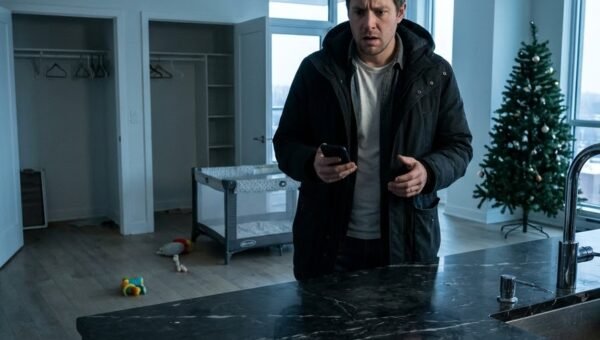
A month later, I stood on the balcony at sunset. The court had secured the title back in my name, the escrow money remained locked while the claims were handled, and I had no reason to think my parents could try the same thing again. I could hear the phone ringing inside on the kitchen island. I knew the sound. I knew I didn’t have to answer.
I slid the glass door shut and turned the lock. It made a heavy metallic click. I left the phone ringing on the island.