I thought the 10:52 text was about keeping the peace. I was wrong. It was about keeping me out of sight.
I kept the old messages even after I changed my number. I don’t know why. Maybe because they were the only record of how regular it had been. Every Saturday, starting when I was fourteen, my mother sent the same thing: “Be gone by 11.” Sometimes she added, “Don’t embarrass us.” My father had his own version. “Just disappear for the weekend.” I was twenty-two when I finally stopped doing what they asked.
I used to pack a blue duffel bag. It had a broken zipper, so I had to tuck the loose end under the strap or my socks would fall out. I’d take it to a motel, a friend’s place, or anywhere that didn’t ask too many questions. By Sunday night, I’d be back in my room, and my mother would ask whether I’d remembered to bring the laundry down. The next Saturday, the text came again.
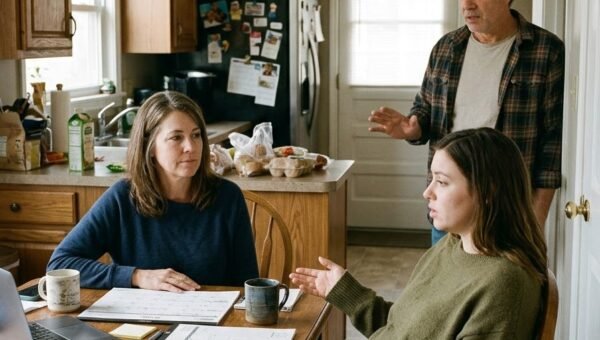
My brother, Daniel, was six years older than me. His fiancée, Charlotte, came from a wealthy family with a name people in Omaha knew.
My parents cared about that name more than they ever said out loud. They wanted the house to look polished, the family to sound polished, and no part of our life to be difficult to explain. I was the part they couldn’t arrange.
I had a stutter as a kid. It got better, but when I was nervous it still came out, especially if someone rushed me. I also drew buildings in the margins of everything. My parents called that a hobby, even after I got into architecture school. I don’t think they were ashamed of every part of me.
That would almost be easier to understand. They were ashamed when a part of me might show.
When Charlotte started coming over, my mother first asked me to spend Saturdays at the library. Then she said I should visit a friend. Then she started texting the time. My dad never made a big speech about it. He’d be in the kitchen with a newspaper folded beside his coffee and say, “It’s easier this way.” Easier for whom, I wanted to ask. I didn’t. I was good at swallowing words before they got stuck.
My mother said Charlotte’s family was used to a certain kind of home. “She comes from a good family,” she’d say, as if I’d asked why we were doing this. “Don’t embarrass us.” She meant well in the way people sometimes mean well when they’ve already decided your feelings are less important than their plans.
I knew she wanted Daniel to marry well. I knew she liked being invited to dinners where people had staff. I still went along with it.
For a while I told myself I didn’t mind. I’d go to the library, work on drawings, and get lunch on my own. When I had no money, I walked around the old buildings downtown and tried to guess what they’d looked like before someone covered their brick or changed their windows. I liked the work because it asked me to pay attention to what had been hidden without pretending it had never been there.
The Saturday before I left, Mom sent the text at 10:52, like always. I was at the table eating toast. The crumbs stuck to my wrist when I picked up the phone. “Be gone by 11.” Then, a minute later: “Charlotte’s bringing her parents.” I looked at the duffel beside my bed. I had already packed it the night before. My mother had started planning for my absence before I’d even woken up.
I didn’t leave at eleven. I sat there until almost noon. Then I went upstairs, put the duffel in the car, and drove. At first I pointed toward the same highway I used for the motels. I even passed the exit I usually took. My hands were tight on the wheel, and I kept thinking I could still turn around, still make it back before my father noticed. I didn’t take the exit.
I drove across the state line without a plan. I had a little money, my school papers, and a phone full of messages from my mother. I changed my number before the first night was over. I didn’t send a note. I know that hurt Daniel, at least for a while. I could have told him I was leaving. I didn’t want to hear him explain why I should make it easier for everybody else.
The first year was hard in plain, uninteresting ways. I rented a room, took whatever work I could get, and finished my degree while working long hours. I did not have some sudden moment where I knew I would be fine. I worried about rent. I got sick once and went to class anyway because I couldn’t afford to miss a shift. I was tired all the time, but no one texted me to be gone by eleven.
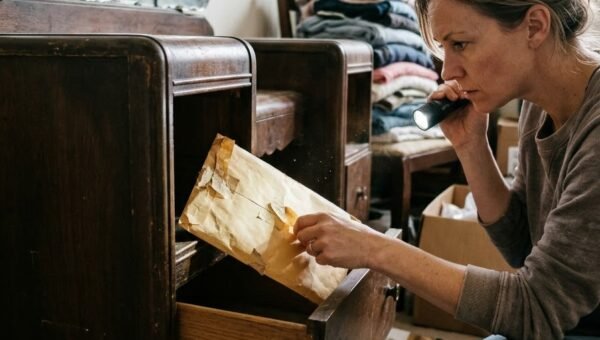
When I got a chance to work on a small restoration project, I took it. The old building had a stair rail that had been painted over so many times the edges were soft. I spent a whole afternoon scraping one patch clean. The wood underneath was still good. That detail has stayed with me. Not because it was magic. It was just proof that something could be covered up and still be there.
I built my work one job at a time. I learned how to write reports, how to deal with contractors, how to tell a committee that a cheaper fix would cause bigger trouble later. I made mistakes. I once approved a sample that looked right under office lights and wrong in daylight. I had to own it and help find another one. Nobody sent me away for being difficult. They expected me to learn, and I did.
I earned my license after years of school and supervised work. When I filled out the paperwork, I used my full name, Elise Varga. No shortening it, no trying to make it easier for someone else to say. I practiced the first and last name together until I could say them without rushing. It wasn’t a grand moment. I was sitting at my kitchen table with a cold cup of coffee and a stack of forms. Still, I signed every page.
I never told my family where I was. They didn’t know I’d finished school or that I was working for the city. I’d sometimes hear scraps through people we both knew. Daniel and Charlotte got married. My parents were busy with events and committees. Somebody said my mother told people I was “taking time to find myself.” I didn’t correct her. I wasn’t ready to be found.
Four years passed. I moved back to Omaha for a job with the historic preservation office. I became the lead architect there, reviewing work on older buildings and public spaces. The title sounded fancier than the day-to-day work. Most days involved plans, budgets, code questions, and people who wanted an answer before they’d finished telling me the problem. I was good at it. I liked being trusted to make a careful call.
I worked some Saturdays because the office was quiet then. I liked getting through reports without the phone ringing every three minutes. One Saturday, I was checking an application for a public building permit when I heard a woman at the front desk speaking in the tone my mother used when she wanted someone to hurry. “I need to talk to whoever handles the approval,” she said. “This is for an important event.”
I knew her voice before I heard her name. I couldn’t see the front desk from my office, but I heard the careful edge in the way she said “important.” I sat still for a second with my pen in my hand. Then I put the pen down. I wasn’t fourteen anymore, and nobody had asked me to leave. I walked to the doorway and asked the clerk to send her in.
The heavy oak door swung open. My mother stepped inside holding a folder against her chest. She looked past me at first, then saw the brass nameplate outside the door. Her eyes went back to my face. Her mouth opened, but no words came out. The office was quiet enough that I could hear the paper in her folder shift under her fingers.
“Oh my God… you know?” she whispered.
I didn’t ask what she meant. I knew she’d finally put it together: the child she’d sent away every Saturday had built a life in the same city, and the person reviewing her family’s event permit was me. I didn’t feel pleased about it. I felt strangely calm, the way I feel when a plan is clear and there’s no point pretending it says something else.
She came closer to my desk. “Elise, what are you doing here?”
“I work here.”
“But you never told us.”
“You never asked where I was.”
Her fingers tightened around the folder. “We thought you needed time.”
“You knew where I was every Saturday for eight years.”
She looked down at the paperwork, then back up at me. “This is for Daniel and Charlotte’s anniversary gala. The building is booked. We just need the city’s approval.”
I held out my hand for the folder. “I can review the application.”
“You can’t just do that to your own family.”
“I’m not doing anything to you. I’m doing my job.”
For a moment, she looked like she might reach for the old script. She’d spent years telling me what would embarrass us, what would look proper, what was easiest. I could almost hear the next sentence before she said it. “You could have made this simpler.”
I felt my shoulders pull up, the way they used to when I was getting ready to be told to pack. I let them drop. “I’m reviewing the permit by the same rules I use for everyone else.”
“But you’re my daughter.”
“Yes,” I said. “And I’m the architect assigned to this application.”
She stared at me. Then she looked toward the door, where my name was fixed to the brass plate. It wasn’t a family name there. It was mine, printed beside a job I had earned. She’d come in expecting to tell somebody what to do and found out there was nothing she could order me to do anymore.
My mother set the folder on my desk. “You don’t have to be so cold.”
“I’m not trying to be cold.”
“You left us for four years.”
“I left because you kept asking me to leave.”
She pressed her lips together. “We were trying to help Daniel.”
“I know what you were trying to do.”
“We wanted this family to have a chance.”
I looked at the permit papers. There was a signature missing and a section about the proposed temporary platform that needed more detail. “Then the application needs the platform plan and the updated crowd estimate. Once those are in, the office can review it.”
She waited, as if there was supposed to be another part. Maybe an apology. Maybe a promise to call. Maybe the old habit would take over and I’d fix it for her. I didn’t.
“Can you approve it?” she asked.
“I can review it. I can’t promise approval.”
“You really think you can talk to me like I’m a stranger?”
I took a breath. I didn’t want to punish her. I also didn’t want to make this easier by pretending the past was a misunderstanding. “I’m talking to you like someone who brought in an application.”
Her hand moved to the edge of the desk. “You could come to the gala. We could talk there.”
“No.”
She looked at me as if I had said something much worse. “No?”
“I’m not coming.”
“After all this?”
“After all this.”
She stayed by the desk for a few more seconds. I didn’t fill the quiet. I’d done enough filling for years. Finally, she picked up her folder. She didn’t get the permit that morning. She didn’t yell, either. She walked out without saying goodbye.
I finished the review notes and sent the application back with the missing items listed. It wasn’t denied, and it wasn’t approved. It was handled the same way any incomplete application would be. I did not call Daniel. I did not send my mother a message afterward. I went back to my work and revised the report I’d been reading before she arrived.
I used to think a boundary had to be dramatic to count. Maybe that’s what I learned from my parents, who made every small thing into a statement about the family. But I didn’t slam the door. I didn’t deny the permit because I was angry. I didn’t give her the answer she wanted just because she was my mother. I gave her the next step, and I let her decide what to do with it.
A few minutes later, the hallway was quiet again. The Saturday light caught the brass nameplate beside my door. I closed the heavy oak door, and the latch clicked between my office and the noise of the past.