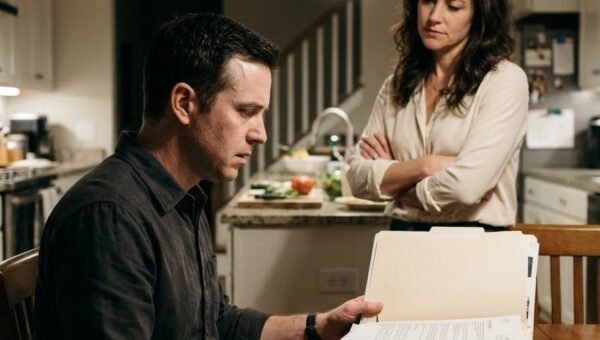
June’s damp school sweater left a little dark patch on the chair beside me, and I remember thinking I should move it before Callum got home. I had spent the afternoon getting her and Micah where they needed to be, then making supper. I was still standing in their kitchen when Tessa told me it was her house, her kids, and her business, and I needed to remember who was in charge.
I didn’t argue. I packed my suitcase, took back my emergency credit card, and left the key on the counter.
I’m Lenora Hayes. I was sixty-four, widowed, and two hours from my own little brick house. I’d gone to stay with my son Callum, his wife Tessa, and their kids, June and Micah, for six weeks. That was the agreement. Tessa was getting ready to open Juniper and Rye, her bakery, and Callum said they needed help with the children and a few things around the house.
I said yes before he finished asking. My house had been quiet since my husband Ray died. I missed hearing people move around. I missed having somebody ask if I wanted coffee. I thought being useful would make me feel close to my family again.
At first, it did. June would sit beside me at breakfast and tell me about choir. Micah liked to race me to the mailbox, though I let him win more often than I admitted. I liked having their shoes kicked under the bench by the door. I liked that the house sounded lived in.
I only packed one medium suitcase. Four sweaters, two pairs of jeans, and a paperback I thought I’d have time to read.
That was before the favors started stacking up.
“Mom, could you pick up June after choir?”
“Can you wait for the plumber?”
“Micah forgot his lunch.”
I said yes. Most of those things were easy enough on their own.
I made breakfast, packed lunches, drove to soccer, picked up prescriptions, and cooked when everybody came home tired. I also started helping with the bakery. I returned boxes, signed for equipment, and drove over with things Tessa had forgotten.
I didn’t mind helping. That’s what I kept telling myself.
What bothered me was the small change in how people asked. At first it was, “Could you pick up June?” Soon it was, “Remember, June needs pickup at three.” A request had turned into a reminder, though I had never agreed to be on call.
I bought a blue spiral notebook at the pharmacy. Three dollars. I wrote down what I did because by then I was having trouble remembering why I felt so tired.
School run. Groceries. Laundry. Bakery return. Dinner.
The list kept growing. I didn’t show it to anyone. I’m not proud of that. Part of me wanted somebody to notice without being asked. Another part was scared that if I said anything, I’d sound like I was keeping score.
Maris, Tessa’s mother, came to help with the bakery. She had invested money in it and had a paid consulting arrangement for branding, packaging, and press contacts. She was organized, with a binder full of tabs and a laptop she carried around the kitchen like another person at the table.
She called me “our lifesaver.” I liked hearing it at first. Then I noticed that it usually came right before another job.
One morning I had a headache and asked if she could keep Micah occupied for two hours while I rested. She kept typing.
“Oh, I can’t. I have a packaging call.”
“He can color at the table,” I said.
“I really need to concentrate, Lenora. You’ll manage.”
I did manage. I took two tablets, set Micah up with crayons, and sat on the couch while he asked me every few minutes to look at what he’d drawn. It was fine. Mostly.
But Maris had a call she couldn’t move. I had a headache I was expected to work around.
I tried to set a limit the next week. I told Tessa I wasn’t available Thursday from two to five because I was meeting Ruth from my book club for coffee.
“Okay,” she said.
The next morning, I checked the shared calendar. A red block had appeared over those hours: MOM, KIDS.
I found Tessa in the living room and told her I’d already said I was unavailable.
“The bakery photographer moved the shoot,” she said. “Mom has a vendor meeting.”
“Then you’ll need to find someone else.”
She rubbed her forehead. “Can’t you see Ruth another day?”
“I can,” I said. “That isn’t the point.”
Maris looked up from her binder. “Family steps in when family needs help.”
“Family should be allowed to choose what they can do,” I said.
Tessa looked worn out, and I knew the bakery was putting pressure on her. I also knew I was about to cancel coffee. I did cancel it. That was my choice, even if I made it because I couldn’t stand the thought of disappointing them.
I told myself I’d do better next time. I didn’t.
Three weeks later, the bakery held a preview night. I had been making staff lunchboxes, twenty-four of them, and assumed I would get to go. Maris told me it was really for the investors and business team.
“You can stay with the children for a few hours,” she said.
I did. June and Micah were good. They ate, watched a show, and went upstairs when I asked. After they were in bed, I watched part of the preview online. Tessa thanked the staff and vendors. Then she put an arm around Maris and said she could never have done it without her mother.
People clapped.
I was at the kitchen table with lunchbox lids still in front of me. I looked at the video, then at the stack of boxes. The paid work was easy to see. Mine was not.
June wandered in wearing her pajamas. She asked for water, and I poured it. Then she asked if I lived there now.
“No, sweetheart. I’m visiting.”
She frowned. “But Mom said you’re staying until Christmas.”
I set the glass down. I had agreed to six weeks. Christmas was almost three months away.
The next morning, I went into Callum’s home office to print a school form. Some papers were already in the printer tray. I lifted them because I needed to make room, and saw my name on one of them.
The page was titled “Juniper and Rye Q4 Cash Flow and Household Support Plan.” Under household costs, it said, “Childcare: $0, Lenora through December.”
Below that, there were lines for school pickup, meal support, household coverage, and bakery delivery support. My name was beside the work. Another line listed Maris Holloway’s consulting fee at $2,800 a month.
I held the paper for a while. The printer had left a faint warm smell on it. I don’t know why I remember that. Maybe because everything else on the page felt so cold.
That evening, I put a copy on the coffee table and asked Callum to explain it.
He looked at the page, then at me. “Mom.”
“When were you planning to tell me I was staying until December?”
“It’s just a tentative plan.”
“Then why am I listed for the whole semester?”
He looked down at his hands.
“You knew,” I said.
“We were going to ask.”
“When?”
“After the grand opening. Things are crazy right now.”
“Why after?”
He closed his eyes. “Because I knew you might say no.”
That hurt more than the number on the sheet. He knew I might say no, so he had helped them plan as if I’d already said yes.
He told me the budget was tight. Tessa was stressed. Maris was being paid because she had invested and had a contract. They couldn’t afford everything.
“So you cut childcare,” I said.
“Yeah.”
“No,” I said. “You budgeted me.”
I wanted to comfort him when I saw how ashamed he looked. That’s the problem with being a mother. Sometimes I start taking care of the person who hurt me before I’ve even finished telling him I’m hurt.
The next day, Tessa added a full weekend of work to the shared calendar. Babysitting Friday, bakery deliveries Saturday, and the children again that afternoon.
I deleted my name from every assignment.
She found me in the kitchen. Maris was nearby with her binder. Tessa told me it was her house, her kids, and her business, and I needed to remember who was in charge.
I nodded. “You’re absolutely right.”
I went upstairs and packed. I removed my name from the school pickup list and printed out the children’s schedules and phone numbers. I left the house key on the counter and took back my emergency credit card.
Callum stared at my suitcase when I came downstairs.
“Mom, the bakery opens Saturday.”
“I know.”
“Can you at least stay through Sunday?”
“No.”
Tessa came down in her robe. “You’re actually leaving?”
“Yes.”
“The timing is terrible.”
“I agree.”
“Then stay.”
“No.”
She looked scared then, not just angry. “Who’s going to pick up the kids?”
“You and Callum.”
“What about the deliveries?”
“You’ll have to decide.”
She folded her arms. “You’re punishing us.”
“No. I’m believing you.”
I told her I was returning the control to her.
For a few seconds, nobody moved. Then Callum took a step toward me. I picked up the suitcase handle.
“Mom, please.”
“I love you,” I said. “But I’m leaving.”
I walked out. I didn’t slam the door. I wanted to. I won’t pretend I didn’t. But I closed it the way I always did, gently, and drove to my own house.
The first night, I sat at my kitchen table and listened to the hallway clock. I had spent weeks wanting a house full of noise, and now I was back in the quiet. I ate toast over the sink because I didn’t feel like cooking for one.
I also kept checking my phone.
No one called that evening.
The bakery opened Saturday. I saw a picture on social media. Tessa was behind the counter, smiling beside Maris. I noticed the way she held her shoulders up, like she was trying to keep herself from leaning on anybody. I almost called to ask if she needed something.
I put the phone down.
That was harder than leaving.
The next week, Callum called twice. I didn’t answer the first time because I was angry and didn’t trust myself to speak kindly. The second time, I picked up.
He sounded tired. He said they were juggling childcare and bakery tasks. He told me the school pickup had been a scramble and they’d hired help for some of the deliveries. He didn’t ask me to come back. I was grateful for that, even though a mean part of me wished he would admit how much work I had done.
Then, two weeks after I left, he called again.
“We’ve had about $1,850 in unexpected expenses,” he said. “Childcare, deliveries, getting coverage for the bakery.”
I sat down. My hand was on the blue notebook.
“That’s what it cost to replace my help?”
“I’m not saying it like that.”
“How are you saying it?”
He was quiet for a moment. “I’m saying I didn’t understand how much you were doing.”
I wanted to believe him. I also wanted him to say he had known all along and done it anyway. Maybe both things were true. He’d seen the tasks. He hadn’t let himself see what they added up to.
We met at a coffee shop halfway between our houses. I brought the notebook. I didn’t plan to show it to him, but it was in my purse, and I took it out when he started explaining how hectic everything had been.
I opened to the first page. Then I opened to the next.
“This is what I did while I was there,” I said.
He looked down at the lists. “I’m sorry.”
I waited.
“I’m sorry I let you think it was six weeks when we were planning on more,” he said. “I thought once you were there, you’d want to stay.”
“I did want to be with the kids.”
“I know.”
“That doesn’t mean I agreed to become your childcare plan.”
He nodded. He didn’t argue. That mattered, though it didn’t fix it.
He told me Tessa was having a hard time. The bakery was new, and the bills were coming faster than the orders. He said Maris had helped them get the business off the ground. He wasn’t making excuses, he said. But he also sounded like he was still trying to make the choices feel smaller than they were.
I told him I understood the pressure. I did. I had seen Tessa work late and heard Callum trying to keep the children quiet when she was on a call.
“But you could have asked me,” I said. “And you could have accepted no.”
“I know.”
I wanted to reach across the table and touch his arm. I didn’t. I was not trying to punish him. I just needed to stop doing the part where I made everything comfortable for everybody else.
“I’ll come see the kids,” I told him. “But I won’t move in. I won’t be on the school list. And I’m not doing regular childcare unless we talk about it first.”
He nodded again. “That’s fair.”
I didn’t say it was fair. I said it was what I could do.
The next Sunday, June called me from Tessa’s phone. She asked when I was coming back. I heard Micah in the background asking if I could bring the cookies I used to make.
“I’ll come visit soon,” I told her.
“Can you stay over?”
“Not this time, honey.”
There was a pause. “Did we do something wrong?”
“No. You didn’t do anything wrong.”
I wanted to explain the whole thing. I didn’t. They were children, and I didn’t want to hand them the grown-up hurt to carry.
I drove over the following Saturday for lunch. I brought the cookies. Tessa opened the door, and we stood there for a second with the kids behind her.
“Hi, Lenora,” she said.
“Hi.”
She stepped aside. I went in, but I didn’t take off my coat until I knew how long I planned to stay. That sounds silly. It wasn’t.
Tessa had made lunch. The kitchen was busy, but no one had put my name on the calendar. I asked if she wanted help with dishes after we ate. She said, “Only if you want to.”
I said I’d wash what was already in the sink.
It wasn’t an apology. It wasn’t a full repair. But it was a question, and I noticed.
Callum walked me to my car afterward. He asked if I might come the next weekend too. I told him I couldn’t promise that. We could plan a visit, and I’d tell him what days worked for me.
“All right,” he said.
I hugged him. I hugged June and Micah longer. June tucked her head under my chin, and Micah asked if the cookies could stay at their house. I laughed and said yes.
Then I drove home. The quiet was still there. So was the clock.
I still miss the little things. June’s stories at breakfast. Micah racing me to the mailbox. The sound of everybody coming in at once. I miss them, and I’m glad I left. Both can be true.
The blue notebook is in my kitchen drawer now. I don’t use it to keep score. I keep it because when I start thinking I should say yes to everything, I can open it and remember what I meant when I said I was visiting.