The text from Julian popped up while I was pinning my name tag on at the rehearsal dinner.
“Laurent’s here. Please don’t be mad.”
I read it twice. Then I looked up and saw Chef Laurent Mercier walking into the room with Julian, his coat over one arm and that familiar serious look on his face. I hadn’t seen him in person in years. I was glad he’d come. I was also suddenly aware that I’d spent thirty years making sure nobody at my small bistro needed to know who I used to be.
That night, fifty guests were about to learn anyway.
I was standing near the kitchen doors, checking a tray of gougères. They were still warm. I’d helped make them that afternoon with the caterer, filling each one with duck confit and a little orange reduction. I used to make that same combination in Paris, though not for a wedding crowd. Eleanor had already told the event staff she wanted “something elegant, not rustic,” so I’d kept the seasoning gentle.
I didn’t know Eleanor had decided I was the one thing at the dinner that needed correcting.
She came in late, in a cream jacket, kissed Julian on both cheeks, and told him his place cards looked lovely. Then she saw me by the tray.
“Are you working the food?” she asked.
“I helped with these,” I said. “They’re gougères with duck.”
Her smile held for half a second. “Oh. I thought the caterer was handling everything.”
I could have explained. I could have said I’d cooked professionally before I ever met David, or that the caterer had asked for my help because I knew how to make the pastry hold. But it was a rehearsal dinner, not a job interview. I said, “They’re ready to pass around.”
Eleanor walked on. I thought that was the end of it.
That was clue one, though I didn’t call it that then. She hadn’t asked how I made them. She wanted to know whether I belonged near them.
I met David fifteen years ago. Julian was twelve, all elbows and quiet questions, and still hoping his mother might stay longer than a weekend when she visited. Eleanor sent thoughtful gifts. She also had a way of making promises that sounded warm until she left town again.
I never tried to replace her. I was there for school lunches, a cracked bike helmet, a science fair project that went wrong because I used the wrong kind of glue. I made food. Julian would come in from school and stand by the counter while I packed leftovers into containers.
“Can I have the crispy piece?” he’d ask.
“You always get the crispy piece,” I’d tell him.
He did. I think he still considers it his.
I ran a little bistro in town for years. It wasn’t fancy. The lunch crowd liked my soup, the Friday fish special, and the bread I baked before dawn. I didn’t need a sign announcing where I’d trained. People came back because the food was good and because I remembered who wanted extra pickles.
Eleanor visited a few times a year, usually for a holiday or a school event. She wore nice clothes and brought expensive gifts. She never asked much about the bistro. I let that go. I’m not pretending I was above wanting her approval. I did want her to see me as more than the woman who happened to be married to Julian’s father.
But I stopped trying after a while.
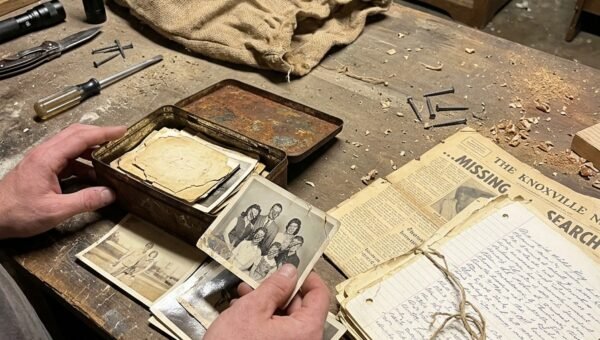
Two months before the dinner, Julian helped me sort boxes in the basement. I’d kept old certificates, some photos, and a medal in a tin that used to hold tea. I hadn’t looked at them in years. One picture showed me in a white jacket beside Laurent in the kitchen at L’Étoile d’Or. I was twenty-six and so tired I could barely smile.
Julian held the picture by the edges.
“That’s you?” he asked.
“Twenty-six-year-old me.”
“With Chef Mercier?”
“Laurent,” I said. “He was my chef.”
He looked at the medal, then at me. “Why didn’t you tell me?”
“I don’t know. It was a long time ago.”
That answer wasn’t quite true. I didn’t want to turn my past into a story I told every time somebody asked what I did before the bistro. I also didn’t want Julian to think my life with him was a lesser choice, or that I’d spent years wishing I were somewhere else.
He kept looking through the box after I went upstairs. A week later, he asked me for Laurent’s old address. I gave it to him without asking why.
That was clue two. I knew Julian was planning something, but I thought he’d found a way to send a note or maybe ask for a video greeting. I didn’t think Laurent would come all the way across the country.
The next clue was the text that night.
“Laurent’s here. Please don’t be mad.”
I walked toward the lobby. Laurent saw me and smiled, which was rare enough that it made me stop.
“Claire,” he said.
“Laurent. You came.”
“Julian asked me.”
I turned toward Julian. He was trying not to look pleased with himself.
“I wanted you to have one person there who knew,” he said.
My throat went tight, but I managed, “You didn’t have to do that.”
“I wanted to.”
Then Eleanor called us to dinner.
The appetizers had already been set around the room. I saw Eleanor take one from a tray, look at it, and put it back on her plate. She didn’t taste it. She lifted her glass and tapped it with a spoon.
The little chime got everyone’s attention.
“I’m sorry,” she said, with a smile that wasn’t sorry at all. “I just want to say that I hope the food tonight reflects the standard of the occasion.”
A few people laughed because they thought she was making a light comment. I knew her well enough to hear the point under it.
Then she glanced at me.
“I’m sure Claire means well, but she’s a low-budget line cook who lacks proper culinary refinement.”
The room went quiet. Someone’s chair squeaked against the floor. I could smell butter from the tray behind me, and it suddenly seemed too strong.
Eleanor picked up her plate and pushed the appetizer away.
“I won’t eat that,” she said. “It’s not what I’d call proper cooking.”
I could feel fifty people trying not to look at me and failing. I kept my hands still. My first thought was to apologize to the caterer, which makes no sense. My second was that Julian was going to have to carry this memory into his wedding day.
I wasn’t going to make that harder for him by shouting.
“I made it the way I was taught,” I said.
Eleanor gave a short laugh. “By whom?”
Laurent set his fork down.
The sound was small. It still carried.
He stood and wiped his mouth with his napkin. I knew that movement. I’d seen it before a hundred times when he was about to speak to a room full of cooks who thought they’d done enough.
“I trained Claire in Paris thirty years ago,” he said. “At L’Étoile d’Or.”
Nobody moved. Eleanor’s hand stayed beside her plate.
“I had the good fortune to work with her when she was young,” Laurent continued. “She was my sous-chef. Her hands were steady, her palate was better than most people twice her age, and she helped me earn my second Michelin star.”
I’d never heard him say it that way. He had never been one for praise. In Paris, “good” was usually the full review.
Julian stared at him. I knew he had read the old papers, but hearing Laurent say it in front of everyone was different.
Laurent looked directly at Eleanor.
“Only a peasant at heart rejects perfection because she cannot recognize the hand that made it.”
That was the line. No one spoke for a second.
Then Laurent pointed toward the untouched gougère. “That filling takes fifty hours of care from start to finish. The duck, the pastry, the balance of the orange. Money can buy an expensive plate, Eleanor. It cannot buy taste or class.”
He didn’t raise his voice. That made it worse, I think.
Eleanor looked down at her plate. The guests who had been holding their forks started eating. One woman at Julian’s new in-laws’ table took a bite and turned toward her husband.
“Oh, this is lovely,” she said.
A man near the end of the table asked if there were more.
There were. The caterer brought another tray in, and it went around quickly. I could hear people asking what was in the filling and where the recipe came from. I stayed where I was, because I didn’t know what else to do with my hands.
Julian stepped beside me. His shoulder touched mine.
“I found your medal and the notebooks,” he said. “I’m sorry I kept the plan from you.”
“You kept the plan from me?”
“I wanted it to be a surprise.”
He took a small velvet box from his jacket pocket. I’d thought it was his cuff links. He opened it enough for the closest guests to see the silver medal inside, worn around the edges. He’d brought it from home.
Then he lifted one of the old notebooks. The cover had softened, and the paper edges were stained from years in that tin. It had my handwriting in it, notes from Laurent’s kitchen, measurements and corrections and a few short comments in French.
“I found these in the basement,” Julian said to the room. “My stepmother was a sous-chef in Paris. She left all that to come home and help raise me.”
He looked at me before he went on.
“She was there when I was sick. She packed my lunches. She came to every school thing I asked her to come to, even when I was being a pain. She never made me feel like she was doing me a favor.”
I was crying by then. Not a lot. Just enough to make the edges of the room blur.
“I know who raised me,” Julian said. “I want everybody here to know too.”
David had been sitting close by. He reached for my hand under the table and held it. He didn’t say anything. He didn’t need to.
Eleanor was quiet. She didn’t storm out or make another scene. She sat through the rest of dinner with her back straight, taking tiny sips from her glass. People kept talking to her, but the room had moved on. The appetizers were gone. A few guests came over to thank me, and I thanked the caterers, because they’d done most of the work and deserved it.
I wasn’t suddenly comfortable being the center of attention. I still wanted to disappear into the kitchen and wash a stack of pans. But I didn’t take back what Laurent had said. I didn’t tell everyone he was exaggerating.
That part mattered.
The next afternoon, Eleanor stayed polite. She congratulated Julian and his bride, smiled for the family pictures, and spoke to me only when she had to. I didn’t chase her around trying to make the evening before feel smaller.
At the reception, Julian came to me before the music started.
“Mom,” he said, “will you dance with me?”
I glanced over at Eleanor. She was near the edge of the room, speaking to one of her friends. I could have said it wasn’t my place. I’d spent years using that phrase to make room for her.
Instead, I said, “Yes.”
Julian had asked for the mother-son dance to include me. He’d talked to his bride about it ahead of time, and she was the one who came over and took my hand before the song began.
“I’m glad you’re here,” she said.
“Me too,” I told her. I meant it.
I had my old silver tasting spoon with me. I’d carried it in my purse from home without thinking much about it. It was worn down on one side from years of use, and I’d kept it beside Julian’s boutonnière while we waited for the reception to begin.
When the song started, he held out his hand. I put the spoon back beside the boutonnière and let him lead me onto the floor.